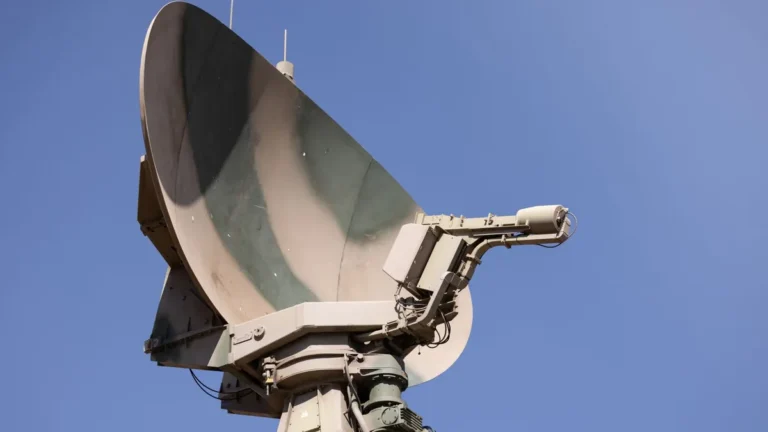
Military Space Commands Monitor Suspicious Satellites


Space has quietly become the most contested frontier in modern geopolitics, with dozens of nations and private actors launching objects into orbit every single month. Most people picture satellites as benign tools for GPS navigation or weather forecasting, but the reality unfolding above Earth’s atmosphere is far more strategically charged than that comfortable image suggests.
What makes the situation genuinely alarming is that not every object in orbit announces its true purpose — and some never do. Military satellite monitoring has evolved from a niche Cold War-era discipline into a round-the-clock operational necessity, driven by the emergence of so-called “inspector” satellites capable of maneuvering dangerously close to allied assets. represent a major operational focus.
Real-Time Tracking Networks Are Watching Every Orbital Move
Space domain awareness systems operated by commands like the U.S. Space Force and allied agencies now track more than 27,000 catalogued objects in Earth’s orbit at any given moment. These networks use a layered architecture of ground-based radar, optical sensors, and dedicated surveillance satellites to flag anomalous maneuvers within minutes of detection. The precision involved is staggering — some systems can resolve positional changes as small as a few meters across orbital altitudes spanning hundreds of kilometers.
Notably, spy satellite orbital intelligence has already demonstrated its operational value in real conflict scenarios, confirming that passive observation alone carries enormous strategic weight. International bodies including the United Nations Committee on the Peaceful Uses of Outer Space have attempted to formalize transparency protocols, but enforcement mechanisms remain critically underdeveloped. The gap between what nations agree to on paper and what their satellites actually do in orbit is, frankly, enormous.

Unidentified Orbital Objects Represent a Growing Asymmetric Threat
The most immediate danger isn’t a dramatic kinetic strike — it’s the slow, deliberate approach of an unidentified satellite that parks itself within close proximity to a critical military communications asset. These so-called “rendezvous and proximity operations” blur the line between inspection, intelligence gathering, and potential sabotage in ways that existing international law simply hasn’t caught up with. Defense planners are now treating orbital proximity as a hostile act requiring active countermeasures, not just diplomatic protests.
Advanced technologies enabling space domain awareness — including AI-driven pattern recognition and space telescopes built for military orbital monitoring — are giving commands faster decision windows than ever before. However, the sheer volume of new commercial launches in 2026 has created a cluttered environment where distinguishing a threatening maneuver from routine station-keeping is genuinely difficult. Analysts warn that this ambiguity is itself a vulnerability that adversaries are actively learning to exploit.
Military satellite monitoring has moved well beyond passive observation into a discipline that shapes alliance credibility, deterrence posture, and even diplomatic negotiations in real time. The orbital domain is no longer a backdrop to terrestrial conflict — it is the conflict’s most consequential and least visible theater. Share your perspective on how nations should govern this contested frontier in the comments below.