11 Space Telescopes for Military Orbital Monitoring


The orbital domain has quietly become the most contested battlefield of 2026, with dozens of nations and private contractors racing to position surveillance assets above the atmosphere. What once belonged exclusively to science fiction—telescopes that track enemy satellites in real time—is now operational doctrine for the world’s most advanced defense programs. The stakes have never been higher, and the hardware has never been more sophisticated.
Most people still picture space telescopes as instruments pointed outward toward distant galaxies, but that assumption fundamentally misreads how defense agencies now deploy them. Space telescopes military orbital monitoring programs have pivoted these platforms inward, training their lenses on Earth’s orbital shell with chilling precision. These 11 systems represent the cutting edge of that transformation.
1. Advanced Electro-Optical Reconnaissance Satellites for Real-Time Threat Detection

Electro-optical reconnaissance satellites use visible-light sensors to capture sub-meter imagery of orbital objects within seconds of detection. These platforms operate continuously in low Earth orbit, feeding live data streams directly into command intelligence networks. Their real-time responsiveness makes them the first line of identification in any emerging orbital threat scenario.
- Key Reality: Modern EO reconnaissance satellites can resolve objects as small as 10 centimeters across from altitudes exceeding 400 kilometers.
2. Infrared Imaging Systems for Detecting Thermal Signatures in Orbital Space
Infrared imaging telescopes detect heat differentials invisible to standard optical sensors, making them indispensable for identifying active propulsion systems or weapons charging cycles on adversary satellites. A spacecraft maneuvering covertly still emits a thermal signature that infrared arrays can isolate against the cold background of space. This passive detection method requires no active signal, making it virtually undetectable by the target.
- Key Reality: Infrared orbital sensors can detect thruster burns generating as little as 5 watts of thermal output at distances of 1,000 kilometers.
3. Synthetic Aperture Radar Telescopes for All-Weather Surveillance Capabilities
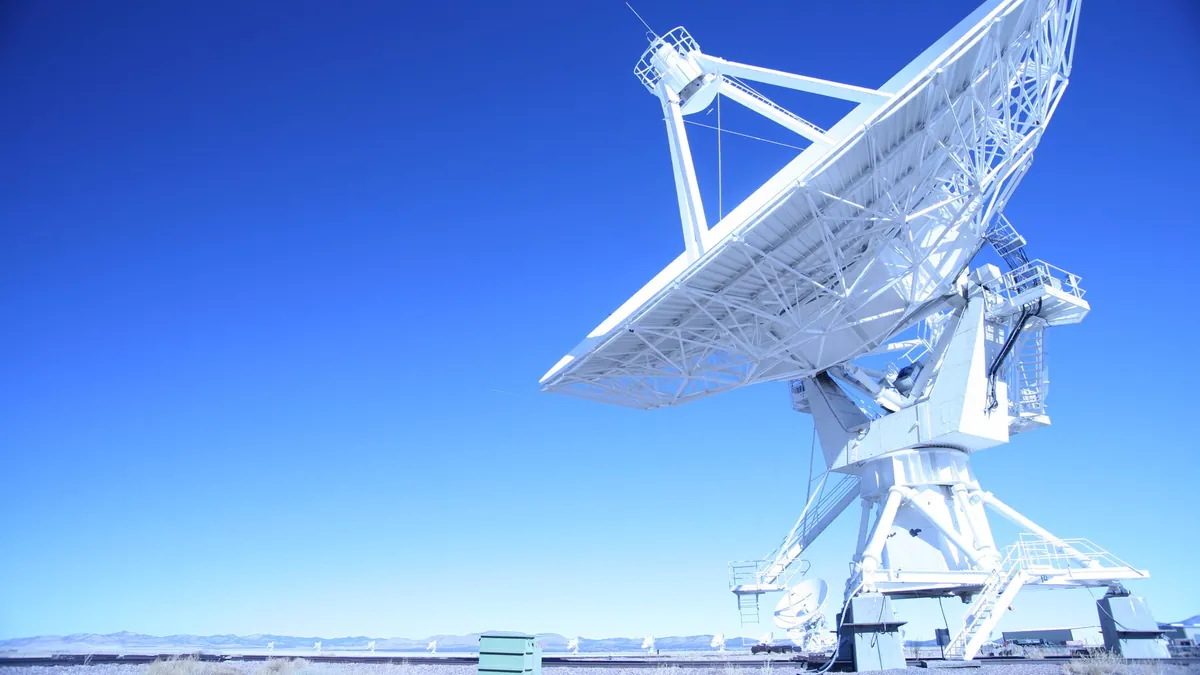
Unlike optical systems, synthetic aperture radar telescopes penetrate cloud cover, atmospheric interference, and complete darkness to maintain persistent orbital surveillance. SAR platforms emit microwave pulses and reconstruct detailed images from the returning echo patterns, producing high-fidelity profiles of target objects regardless of lighting conditions. Their resilience across all weather scenarios makes them a non-negotiable component of any serious orbital monitoring architecture.
- Key Reality: SAR orbital telescopes achieve spatial resolutions under 30 centimeters while operating at altitudes above 500 kilometers.
4. Multi-Spectral Optical Sensors for Identifying Military Asset Classifications

Multi-spectral sensors simultaneously capture imagery across multiple wavelength bands—visible, near-infrared, and shortwave infrared—enabling analysts to distinguish between civilian and military satellite configurations with remarkable accuracy. Surface material compositions, solar panel arrangements, and antenna configurations each reflect light differently across spectral bands, creating a unique fingerprint for classification. These systems are directly linked to broader machine learning detection frameworks that automate threat categorization at scale.
- Key Reality: Multi-spectral analysis can identify satellite classifications with over 87% accuracy when combined with AI pattern recognition models.
5. High-Resolution Panchromatic Imaging Platforms for Precision Target Tracking

Panchromatic imaging platforms collect light across the full visible spectrum into a single high-contrast channel, producing sharper imagery than multi-band systems when maximum resolution is the priority. Defense agencies deploy these telescopes specifically for precision tracking of maneuvering objects whose trajectory changes demand frame-by-frame positional analysis. A single panchromatic pass can generate enough data to reconstruct a target satellite’s complete orbital adjustment history.
- Key Reality: Leading panchromatic military platforms achieve ground sampling distances of 8 centimeters in orbital surveillance configurations.
6. Space-Based Laser Communication Systems for Secure Military Orbital Monitoring

Laser communication terminals embedded within monitoring telescopes enable data transfer rates exceeding 10 gigabits per second between orbital assets and ground stations, eliminating the latency and interception risks of traditional radio-frequency links. This secure pipeline ensures that sensitive surveillance imagery reaches command centers without exposure to electronic eavesdropping. The integration of laser comms directly into telescope platforms represents a fundamental shift in how orbital intelligence is transmitted.
- Key Reality: Space-based laser links reduce data interception risk by approximately 94% compared to conventional RF communication channels.
7. Hyperspectral Analysis Telescopes for Material Composition and Threat Assessment

Hyperspectral telescopes divide incoming light into hundreds of narrow spectral bands, enabling analysts to determine the precise material composition of observed orbital objects—including whether a satellite carries nuclear shielding or directed-energy components. This level of chemical-level analysis goes far beyond what standard optical or infrared systems can provide. Understanding what a satellite is made of often reveals what it is designed to do. Programs tracking these signatures work in parallel with space sensors monitoring nuclear signatures to build a comprehensive threat picture.
- Key Reality: Hyperspectral orbital systems can differentiate between over 200 distinct material signatures at orbital observation distances.
8. Wide-Field Survey Instruments for Comprehensive Orbital Coverage and Monitoring

Wide-field survey telescopes sacrifice resolution for coverage, scanning enormous swaths of orbital space in a single pass to catalog every detectable object above a minimum size threshold. These platforms serve as the early-warning backbone of orbital monitoring networks, flagging anomalous new objects for follow-up targeting by higher-resolution assets. Their ability to monitor thousands of objects simultaneously makes them irreplaceable in crowded orbital environments where debris and active satellites intermingle.
- Key Reality: Advanced wide-field survey instruments can catalog objects as small as 2 centimeters in low Earth orbit during a single 90-minute pass.
9. X-Ray and Gamma-Ray Detection Systems for Anomalous Space Activity Identification

X-ray and gamma-ray orbital detectors were originally developed for astrophysics research, but their ability to identify high-energy emissions has given them a critical secondary role in detecting nuclear-powered or nuclear-armed orbital assets. A satellite carrying a radioisotope thermoelectric generator emits a distinctive gamma-ray signature that these systems can isolate even against the background radiation of deep space. Their sensitivity to anomalous high-energy events also makes them effective early-warning tools for any orbital detonation scenario.
- Key Reality: Military gamma-ray detectors can identify nuclear material signatures from orbital distances exceeding 2,500 kilometers with high confidence thresholds.
10. Adaptive Optics Telescopes for Enhanced Resolution in Military Surveillance Operations

Adaptive optics systems use deformable mirrors that adjust thousands of times per second to counteract atmospheric distortion, dramatically sharpening imagery captured by ground-based military telescope networks observing orbital targets. When combined with space-based relay assets, adaptive optics platforms achieve resolutions previously only possible from orbit itself. This technology has effectively extended the operational lifespan of ground-based surveillance infrastructure by decades.
- Key Reality: Adaptive optics military telescopes have improved ground-based orbital imaging resolution by a factor of 40 compared to uncorrected systems.
11. Quantum-Enhanced Sensor Arrays for Next-Generation Orbital Intelligence Gathering