Spacecraft Radiation Shielding Secrets for Deep Space

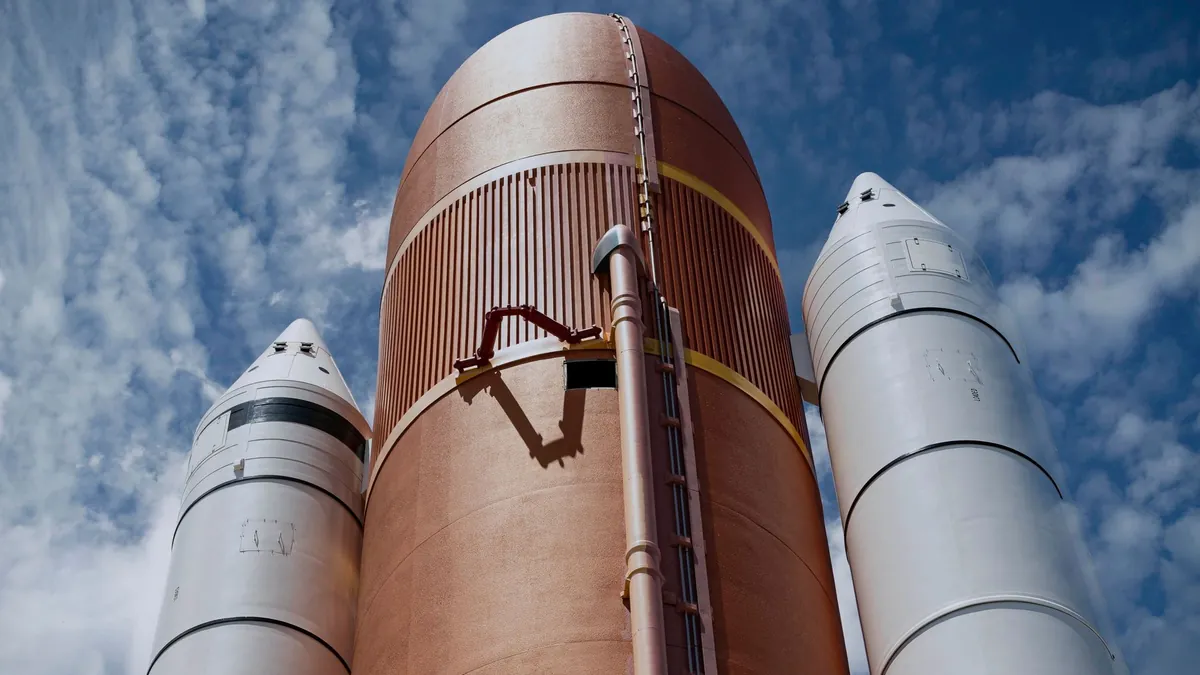
Deep space has always captured humanity’s imagination as a frontier of infinite possibility, but the reality lurking between planets is far more hostile than most people picture. Beyond Earth’s protective magnetosphere, astronauts and spacecraft face a relentless bombardment of high-energy particles that no science fiction film has ever truly captured.
The common assumption is that thicker metal walls solve the radiation problem — but that belief is dangerously incomplete. In fact, certain heavy materials can make radiation exposure worse by generating secondary particle showers, a counterintuitive physics phenomenon that has forced engineers to completely rethink spacecraft radiation shielding from the ground up.
Cosmic Rays and Solar Storms Are 2 Entirely Different Threats
Spacecraft face 2 distinct radiation environments: galactic cosmic rays (GCRs), which are high-energy particles streaming in from outside the solar system, and solar particle events (SPEs), which are intense bursts of proton radiation ejected during solar flares. GCRs are chronic and nearly impossible to fully block, while SPEs are acute, predictable with some warning, and potentially lethal within hours without proper shelter.
NASA’s data from the Mars Science Laboratory mission revealed that astronauts traveling to Mars would absorb roughly 300 millisieverts of radiation during transit alone — equivalent to approximately 15 times the annual radiation limit for nuclear power plant workers. This figure has made spacecraft radiation shielding one of the single most critical engineering challenges of the deep space era, influencing mission architecture decisions explored alongside other lunar and deep space programs operating in 2026.
Polyethylene, Hydrogen-Rich Materials, and Active Magnetic Fields Are Rewriting the Rules
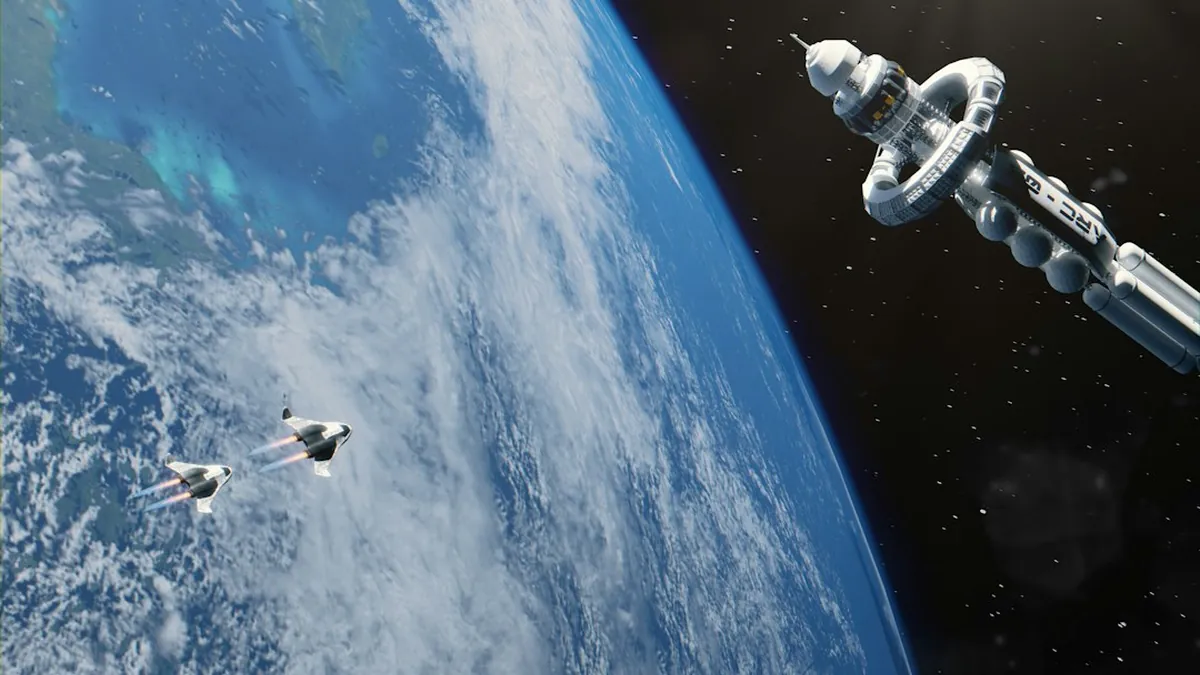
Modern shielding strategies have moved decisively away from aluminum toward hydrogen-rich materials like polyethylene and water walls, which scatter and absorb high-energy particles far more efficiently without producing dangerous secondary radiation. Some mission designers are even proposing liquid hydrogen fuel tanks be strategically positioned around crew quarters, turning propellant storage into a passive radiation barrier.
Active shielding systems — using superconducting magnets to deflect charged particles around the spacecraft, mimicking Earth’s own magnetosphere — represent the most ambitious frontier, though the power and mass requirements remain enormous engineering obstacles. Electrostatic shielding concepts, which create charged fields around a vessel to repel incoming protons, are also advancing rapidly and share conceptual DNA with precision electromagnetic technologies examined in fields like drone laser and optical guidance systems.
Long-duration missions to Mars or beyond will ultimately require layered solutions — combining passive material shielding, storm shelters hardened for SPE events, active magnetic deflection, and real-time radiation monitoring to dynamically protect crew. Spacecraft radiation shielding is no longer a single engineering problem but a full systems discipline reshaping how humanity designs every vehicle intended to leave the inner solar system. Drop your thoughts in the comments — do you think active magnetic shielding or advanced materials will crack this problem first?