Planetary Defense Radar: Military Dual-Purpose Technology


Space has always carried a romantic danger in the public imagination — distant rocks hurtling through the void, largely ignored until Hollywood decides otherwise. Most people assume planetary defense is purely a scientific endeavor, run by astronomers in observatories, disconnected from the harder machinery of national security and military strategy.
That assumption is collapsing fast. The radar infrastructure being built to track near-Earth objects is architecturally identical to systems designed for military surveillance, missile detection, and strategic domain awareness — and defense agencies on multiple continents have taken notice in a serious way.
Dual-Use Architecture Blurs the Line Between Science and Defense
Planetary defense radar arrays operate by emitting powerful microwave pulses across vast distances and reading the return signatures of objects moving through cislunar and near-Earth space. That same signal processing capability — resolving trajectory, velocity, and object composition at extreme range — is functionally indistinguishable from what military early-warning radar networks require to track hypersonic missiles or adversarial satellites. The physics does not discriminate between an asteroid and a warhead.
The United States Space Force and NATO-aligned defense planners have openly acknowledged that planetary defense radar arrays offer military applications that extend well beyond asteroid cataloging. A single high-power phased-array installation can simultaneously monitor thousands of objects in low Earth orbit, providing persistent space domain awareness that no dedicated military radar system currently matches in raw coverage efficiency.
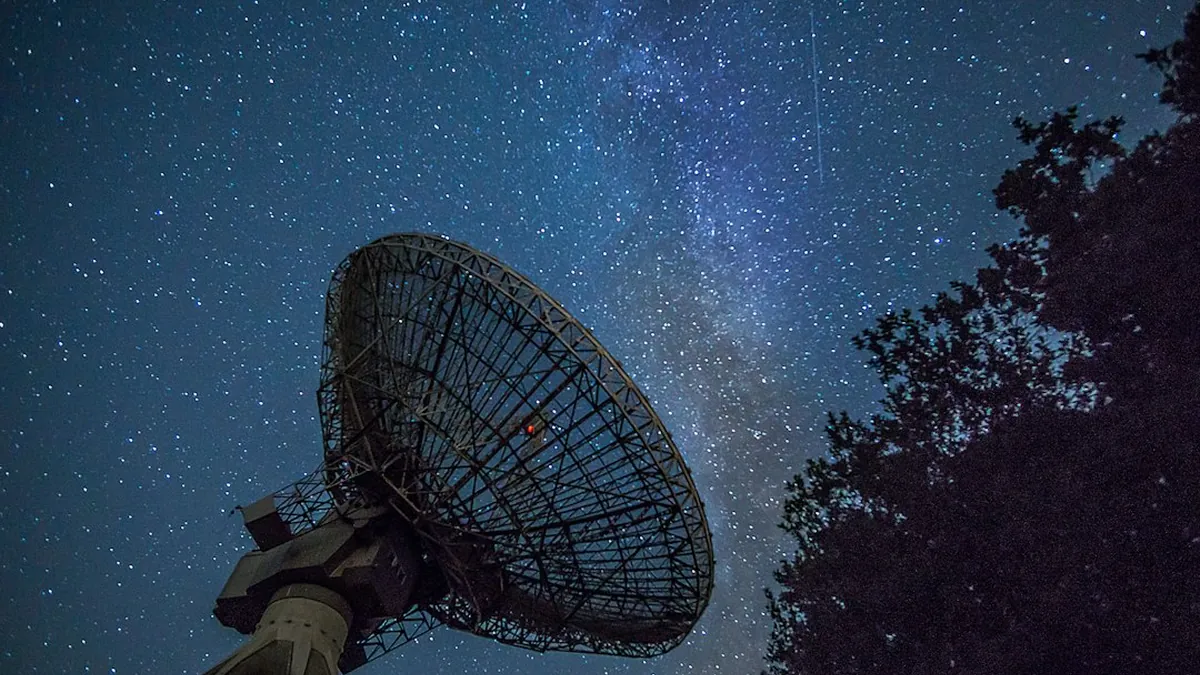
Strategic Detection Networks Are Already Serving 2 Masters
The convergence is not theoretical — it is operational. Facilities like the upgraded Goldstone Solar System Radar in California and next-generation installations planned across Europe and the Indo-Pacific are being funded through hybrid budgets that blend NASA planetary science allocations with Pentagon space domain awareness contracts. This dual-funding model reflects a deliberate strategic calculation: 1 infrastructure investment yields 2 distinct mission capabilities simultaneously.
Military planners integrating these networks face a critical challenge around data security and signal integrity, which is why quantum communication links have emerged as a priority for transmitting radar telemetry between installations without interception risk. Additionally, adversaries are developing countermeasures that exploit gaps in radar coverage, a problem compounded by the rise of AI-driven satellite deception techniques designed to spoof orbital object signatures entirely.
The practical implication for defense strategy is profound: nations that invest in planetary defense radar infrastructure are quietly acquiring a tier-1 military space surveillance capability at a fraction of the standalone cost. Countries that dismiss asteroid monitoring as low-priority science are, in effect, ceding strategic high ground in the space domain without ever realizing the trade-off they are making.
Planetary defense radar arrays and military applications are no longer parallel tracks — they are the same track, and the geopolitical implications of that convergence are only beginning to surface. If this dual-use reality changes how you think about space defense funding and national security priorities, drop your perspective in the comments below.