Space Radiation Shielding: Deep-Space Mission Challenge

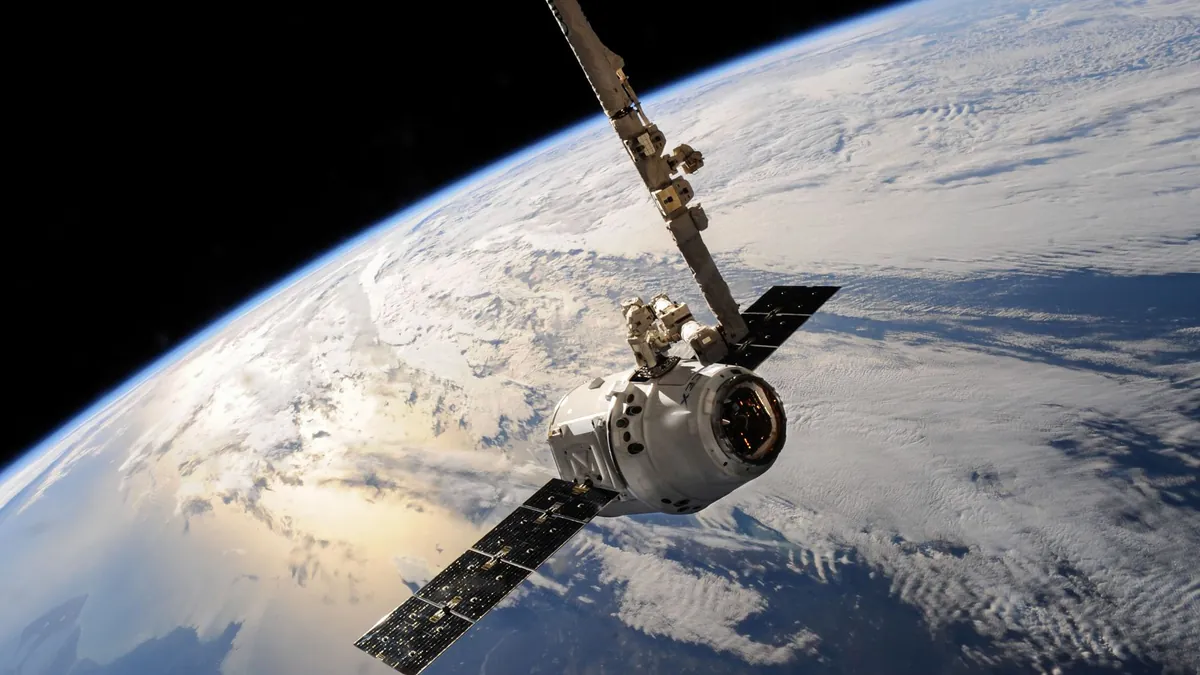
The dream of sending humans to Mars and beyond has captured public imagination for decades, fueled by rocket launches, cinematic storytelling, and bold agency announcements. Most people picture the dangers of deep space as mechanical failures, oxygen shortages, or the cold vacuum itself — visible, dramatic threats that engineers can visibly solve. What rarely enters the popular conversation is the invisible killer that no rocket booster or life-support system can simply outrun.
Space radiation shielding is not a solved problem, and that gap between public perception and scientific reality is growing more urgent as crewed missions push further from Earth’s protective magnetosphere. The standard assumption — that thicker metal walls equal safer spacecraft — turns out to be dangerously incomplete. Some heavy shielding materials actually generate secondary particle showers when struck by high-energy cosmic rays, making the interior more hazardous, not less.
Cosmic Ray Exposure Rewrites the Rules of Deep-Space Survival
Beyond low Earth orbit, astronauts face 2 primary radiation threats: galactic cosmic rays (GCRs) originating from outside the solar system, and solar energetic particles (SEPs) ejected during solar flares and coronal mass ejections. GCRs are particularly insidious because they carry energies measured in billions of electron volts, allowing them to penetrate virtually any conventional shielding material. Unlike radiation on Earth, these particles interact with matter in cascading, unpredictable ways that standard dosimetry models still struggle to fully capture.
NASA’s own research estimates that a Mars-transit crew could absorb radiation doses exceeding 1,000 millisieverts — roughly 3 times the current career limit set for astronauts on the International Space Station. The magnetic pole shift defense data emerging from geophysical research further complicates mission planning, since Earth’s weakening magnetosphere affects the baseline radiation environment crews train against. Every additional month in transit multiplies cumulative exposure in ways that mission planners cannot afford to underestimate.
Next-Generation Materials and Mission Design Are Changing the Calculus
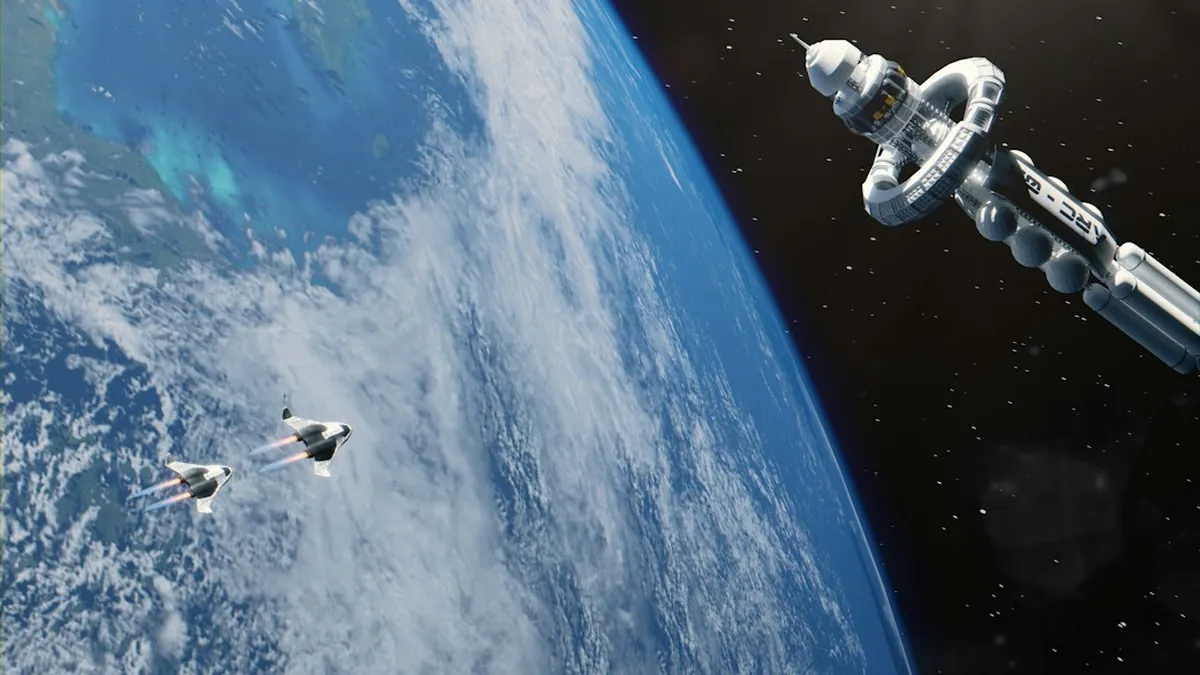
The most promising advances in space radiation shielding have moved away from dense metals toward hydrogen-rich polymers, liquid hydrogen barriers, and experimental materials like polyethylene composites and boron nitride nanotubes. Hydrogen atoms are uniquely effective at absorbing and scattering high-energy particles without generating dangerous secondary radiation, making them the preferred building block for next-generation hull designs. Researchers are also exploring active magnetic shielding — essentially creating a miniature magnetosphere around the spacecraft — though the power requirements remain a significant engineering obstacle.
Mission architecture itself has become a shielding strategy, with designers routing trajectories to minimize time in the most radiation-intense regions of space and scheduling EVAs around solar weather forecasts. The detailed engineering principles behind these layered approaches are explored extensively in spacecraft radiation shielding research that continues to evolve rapidly as crewed deep-space timelines accelerate. Biological countermeasures — including pharmaceutical radioprotectants and targeted antioxidant therapies — are now being developed in parallel with hardware solutions, recognizing that no single intervention will be sufficient on its own.
Space radiation shielding sits at the intersection of materials science, astrophysics, and human biology, making it one of the most genuinely complex challenges humanity has ever attempted to engineer around. The missions that will define this century depend on solving it — not partially, but comprehensively. Drop your thoughts in the comments: do you think current shielding technology is ready for a crewed Mars mission, or are we moving too fast?