Stealth Destroyers: Radar Signature Reduction Explained

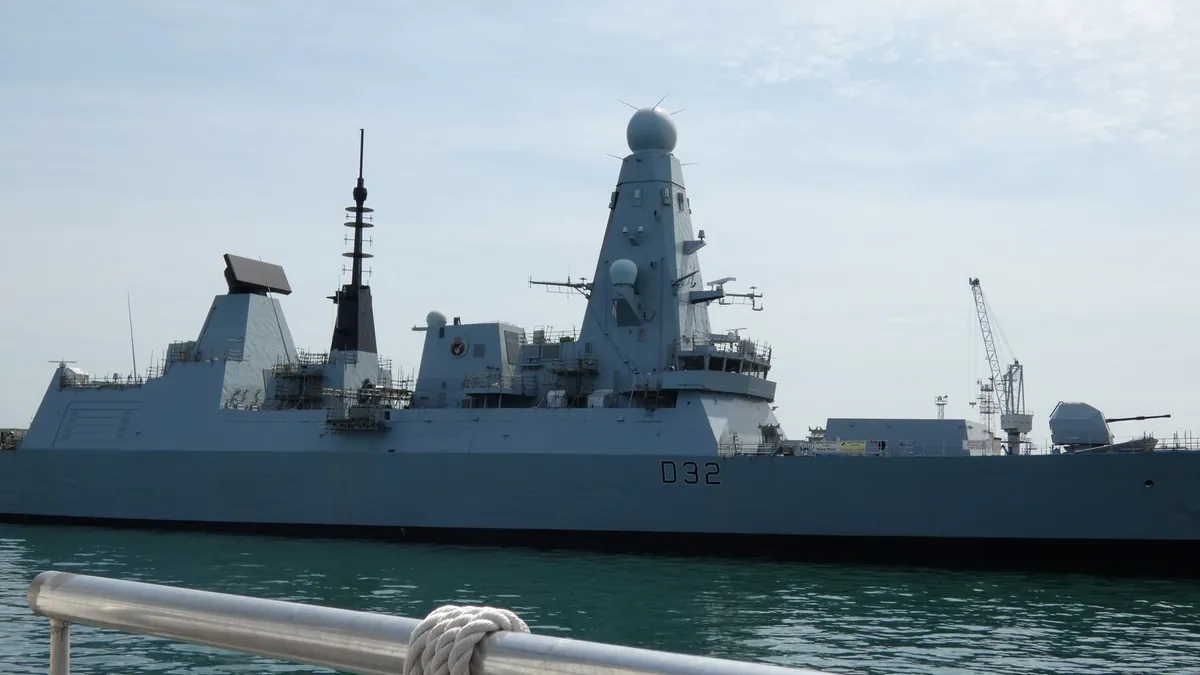
Modern naval warfare has entered an era where visibility is a liability. The world’s most powerful navies are no longer racing solely for firepower — they are racing to disappear. Stealth destroyers represent the sharpest edge of that competition, engineered from the keel up to defeat detection.
Yet the paradox is striking: a warship displacing 8,000 to 15,000 tons must somehow register on enemy radar as little more than a fishing vessel. Achieving that requires far more than a coat of special paint. The engineering behind stealth destroyer radar signature reduction spans geometry, materials science, and electronic warfare simultaneously.
Angular Hull Architecture Is the First Line of Radar Defeat
The most fundamental weapon against radar detection is geometry itself. Stealth destroyers like the USS Zumwalt feature dramatically angled, tumblehome hulls that deflect incoming radar waves away from the source rather than bouncing them directly back. Every surface angle is calculated to scatter energy outward, fragmenting the return signal into noise too weak for enemy systems to resolve.
Naval architects eliminate vertical surfaces, exposed gun mounts, and sharp 90-degree junctions wherever possible, since perpendicular surfaces create powerful corner reflectors. Superstructures are fused into single continuous forms, reducing the number of distinct radar-bright edges by as much as 50% compared to conventional destroyers. This geometric discipline alone can shrink a vessel’s radar cross-section to that of a small boat.

Radar-Absorbing Materials and Electronic Countermeasures Complete the Stealth Picture
Hull shaping handles deflection, but radar-absorbing materials (RAM) handle absorption — and the distinction matters enormously in practice. RAM coatings, typically composite layers embedding ferrite or carbon-fiber compounds, convert incoming radar energy into negligible heat rather than reflecting it. Navies that neglect RAM application on internal deck structures or exhaust funnels often inadvertently create radar hotspots that betray an otherwise well-shaped vessel.
Active countermeasures add a dynamic layer that passive shaping cannot provide alone. Electronic jamming systems, decoys, and low-probability-of-intercept radar suites allow a stealth destroyer to operate without broadcasting its own position — a threat that parallels the autonomous surface threats explored in drone boat naval tactics. Meanwhile, space-based surveillance assets increasingly complicate stealth strategies, a pressure detailed in analysis of satellite imagery military detection.
Operational stealth integration demands that every crew procedure, emission protocol, and mission profile reinforce the ship’s physical invisibility. A stealth destroyer that transmits aggressively on radio or radar negates billions of dollars in engineering within seconds. In 2026, naval doctrine increasingly treats electromagnetic silence as a tactical discipline equal in importance to weapons readiness.
Stealth destroyer radar signature reduction is not a single technology — it is an orchestrated system of geometry, materials, electronics, and human discipline working in concert. As adversary detection capabilities grow sharper, the margin for error in stealth naval design narrows further every year. Share your thoughts on where stealth warship technology is headed next in the comments below.