High-Altitude Spy Balloons with SAR Payloads Explained

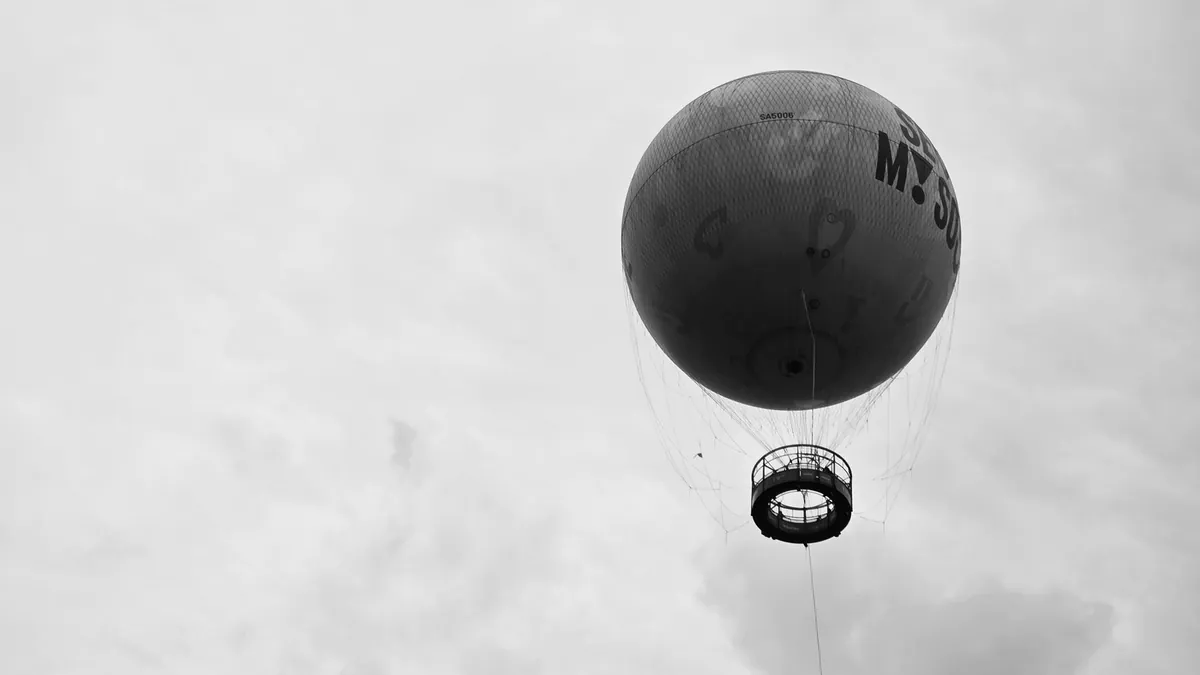
For most people, balloons conjure images of weather research or childhood celebrations — not cutting-edge military intelligence operations. Yet stratospheric balloon platforms have quietly re-emerged as 1 of the most contested and technically sophisticated tools in modern aerial surveillance, drawing intense scrutiny from defense analysts and governments alike. Their apparent simplicity is precisely what makes them so deceptive.
The common assumption is that satellites dominate global surveillance, rendering slower, lower-tech platforms irrelevant. That assumption, however, significantly underestimates what high-altitude balloon systems can accomplish when paired with advanced sensor arrays — particularly the kind of persistent, high-resolution imaging that satellites structurally cannot provide. The real story lies in the payload, not the platform.
Synthetic Aperture Radar Turns Balloons Into All-Weather Intelligence Machines
Synthetic aperture radar, or SAR, works by emitting microwave pulses toward a target and processing the reflected signals to construct extraordinarily detailed ground imagery — regardless of cloud cover, darkness, or adverse weather. When mounted aboard high-altitude spy balloons, SAR payloads operate at stratospheric altitudes between 18 and 37 kilometers, placing them well above commercial air traffic and most defensive countermeasures. This combination produces a surveillance asset that is both persistent and remarkably difficult to neutralize quickly.
Unlike satellites locked into predictable orbital paths, balloon-based SAR platforms can loiter over a target region for days or even weeks, accumulating layered imagery that reveals changes in infrastructure, military positioning, and vehicle movement with granular precision. As explored in depth through high-altitude surveillance balloon capabilities, these platforms routinely capture intelligence windows that orbital assets simply cannot replicate. The dwell time advantage alone represents a paradigm shift in persistent area monitoring.

Stratospheric Radar Payloads Carry Real Operational Costs and Hard Physical Limits
Operating SAR systems at stratospheric altitudes introduces severe engineering constraints that defense contractors are still actively working to solve. Power generation is the most critical bottleneck — SAR requires substantial electrical energy to drive its radar transmitters, and balloon platforms rely almost entirely on solar arrays that perform unpredictably during polar winters or heavy atmospheric turbulence. Payload weight limits further restrict antenna aperture size, which directly caps the system’s ground resolution and detection sensitivity.
Navigation and station-keeping present equally serious challenges, since stratospheric wind currents can push a balloon hundreds of kilometers off its intended surveillance corridor within 24 hours. Defense engineers have increasingly turned to AI-assisted altitude management systems — similar in concept to the adversarial techniques discussed in synthetic terrain AI deception research — to predict and exploit favorable wind layers for course correction. Even so, balloon-based SAR remains an imprecise instrument compared to purpose-built satellite constellations, demanding careful mission planning to extract maximum value.
High-altitude spy balloons with synthetic aperture radar represent neither a silver bullet nor a relic — they occupy a genuinely unique operational niche that satellites and drones cannot fully replace, defined by persistence, affordability, and all-weather imaging reach. As geopolitical tensions continue driving investment in unconventional ISR platforms, this technology will only grow more sophisticated and more contested. Drop your perspective in the comments — do you think balloon-based SAR will become a mainstream military tool, or will countermeasures outpace the platform?