Directional Energy Lasers: Drone Defense in 2026


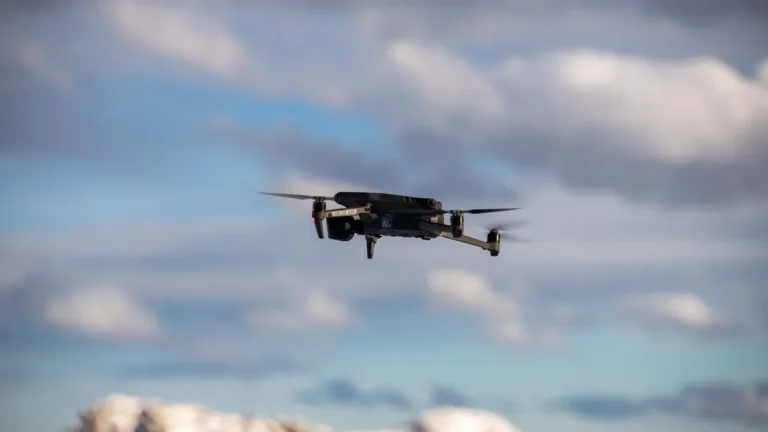
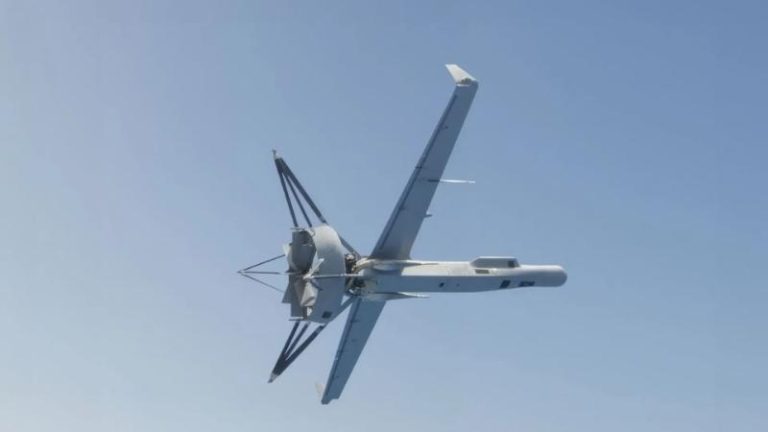
Drone threats have escalated from a niche military concern into a mainstream security crisis that governments, airports, and military installations can no longer afford to treat casually. From commercial airspace intrusions to coordinated swarm attacks on critical infrastructure, the aerial threat landscape in 2026 looks nothing like it did even 3 years ago. Public attention has finally caught up to what defense analysts have been warning about for years.
The instinctive response — deploying traditional missile systems or jamming arrays — is proving dangerously inadequate against fast, cheap, and numerically overwhelming drone incursions. A single interceptor missile can cost upward of 100,000 dollars, while the commercial drone it destroys may have cost a hostile actor less than 500 dollars. That asymmetry is exactly why directed energy weapons drone defense has moved from experimental labs into frontline deployment at a pace few anticipated.
Directed Energy Systems Are Rewriting the Rules of Aerial Threat Neutralization
At their core, directed energy weapons — primarily high-energy lasers and high-powered microwave systems — defeat aerial threats by delivering concentrated energy onto a target with near-zero cost per shot. A laser system can engage a drone for roughly 1 dollar in electricity per firing, compared to thousands of dollars for kinetic alternatives. This cost-per-kill advantage is the single most disruptive factor reshaping modern air defense doctrine.
Laser-based platforms like the U.S. Army’s 300-kilowatt High Energy Laser Mobile Demonstrator have demonstrated the ability to track and destroy small UAVs within seconds at ranges exceeding 5 kilometers. Meanwhile, directed energy microwave systems have proven particularly effective against swarm configurations, disabling entire clusters of drones simultaneously by frying onboard electronics rather than physically destroying each unit.

Operational Gaps and Real-World Deployment Realities Still Demand Honest Assessment
Despite the promise, current directed energy systems carry significant operational limitations that defense planners cannot ignore — atmospheric interference, beam diffusion in rain or fog, and thermal management challenges all reduce effective engagement windows. Many installations are discovering that a layered approach, combining laser systems with proven drone countermeasure technologies, delivers far more reliable coverage than any single solution alone. No single system in 2026 offers a complete answer.
Integration into existing air defense infrastructure is also proving more complex than initial procurement timelines suggested, with power supply requirements and sensor fusion demanding significant facility upgrades. Military and civilian operators are learning that deploying these systems effectively requires not just hardware investment but sustained operator training, AI-assisted targeting software, and robust maintenance pipelines. The technology is formidable — but only when the surrounding ecosystem is equally mature.
Directed energy weapons drone defense represents one of the most consequential shifts in aerial security strategy of this decade, offering cost-effective, scalable, and increasingly precise solutions to a threat that conventional systems were simply never designed to handle. The gap between laboratory capability and battlefield reliability is closing fast, but it demands honest, rigorous evaluation at every stage of deployment. If you’re following the evolution of drone defense technology, drop your thoughts or questions in the comments below — we’d love to hear what aspects of directed energy systems you find most compelling or most concerning.