7 Military Autonomous Robot Dogs: Threats & Applications

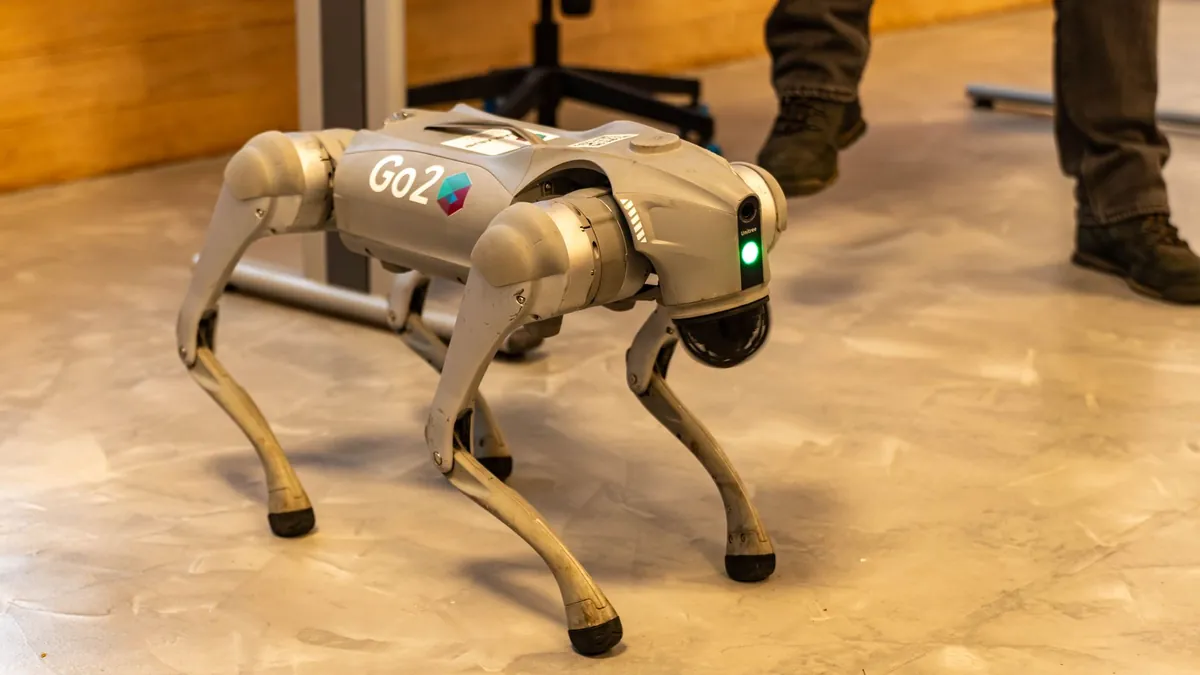
What once belonged exclusively to science fiction films and viral robotics demos has quietly crossed into active military deployment. Autonomous robot dogs are no longer prototype curiosities—they are operational assets being tested, refined, and fielded by defense forces across at least 14 countries in 2026. The pace of adoption has outrun public awareness by a significant margin.
Most people still picture these machines as novelty tech, but defense analysts are framing autonomous robot dogs military applications as a genuine strategic pivot—one that reshapes risk, logistics, and the ethics of warfare simultaneously. The 7 applications below reveal exactly why militaries are investing billions into four-legged autonomous platforms, and why the implications cut in multiple directions at once.
1. Reconnaissance and Surveillance Operations in Hostile Terrain
Robot dogs can navigate rubble, steep inclines, and collapsed structures where wheeled drones simply cannot operate. Equipped with thermal imaging and LiDAR sensors, they transmit real-time battlefield intelligence without risking a single human life. Several units deployed in 2026 field exercises demonstrated sustained autonomous patrol over 12-hour operational windows.
- Key Reality: Sensor payloads on current military robot dogs can detect heat signatures through 30 centimeters of concrete.
2. Explosive Detection and Ordnance Disposal Capabilities

IED detection remains one of the most lethal challenges in modern conflict zones, and robot dogs are being engineered specifically to absorb that risk. Their low ground clearance and precise limb placement allow them to probe suspicious terrain with chemical sniffers and ground-penetrating radar. Disposal units report a measurable reduction in EOD casualties during trials where robot dogs led initial approach routes.
- Key Reality: Autonomous EOD robot dogs can process and flag 3 times more ground area per hour than a human disposal team.
3. Perimeter Security and Autonomous Patrol Systems

Forward operating bases and military installations are deploying robot dogs as tireless perimeter sentinels that never fatigue, lose focus, or require rotation. Integrated with facial recognition and anomaly-detection AI, these systems can flag unauthorized movement and alert human operators within seconds. The documented autonomous patrol capabilities of current-generation platforms already exceed human guard performance on standardized detection benchmarks.
- Key Reality: A single robot dog patrol unit can cover a 2-kilometer perimeter loop continuously for up to 8 hours on 1 charge cycle.
4. Supply Chain Logistics and Equipment Transport

Carrying ammunition, medical supplies, and equipment across terrain that vehicles cannot access is a persistent logistical bottleneck in active conflict zones. Military-grade robot dogs rated for 50-kilogram payloads are being tested as autonomous mules that follow GPS waypoints or soldier-tracking signals. This application dramatically reduces the exposure of support personnel during forward resupply missions.
- Key Reality: Logistics robot dogs in 2026 trials sustained load-bearing movement across 8-kilometer rough terrain routes without human intervention.
5. Chemical and Biological Hazard Assessment Technology

Sending human teams into environments with suspected chemical or biological contamination carries catastrophic risk, making robot dogs an obvious first-responder substitute. Fitted with spectrometry modules and air-sampling arrays, they can identify agent concentrations and transmit contamination mapping data in near real-time. This capability pairs directly with broader CBRN defense doctrine that militaries are aggressively modernizing in 2026.
- Key Reality: Current sensor suites can detect nerve agent concentrations as low as 0.001 milligrams per cubic meter.
6. Urban Warfare Navigation and Building Clearance
Urban combat is among the most dangerous operational environments soldiers face, with stairwells, tight corridors, and multi-floor structures creating extreme ambush vulnerability. Robot dogs are being trained on simulated urban environments to autonomously clear rooms, relay interior layouts, and identify armed combatants before human entry. Much like the strategic disruption documented in next-generation battlefield systems, robot dogs are fundamentally rewriting close-quarters engagement doctrine.
- Key Reality: Urban clearance trials show robot dogs reduce soldier entry risk by an estimated 40% during initial building breach phases.
7. Cybersecurity Vulnerabilities and Autonomous System Threats

The same connectivity that makes robot dogs operationally powerful makes them a high-value target for adversarial hacking, signal spoofing, and AI manipulation. A compromised autonomous unit operating inside a secure perimeter represents a catastrophic insider threat with no human conscience to override bad commands. Defense researchers are treating this vulnerability with the same urgency as physical armor design, recognizing that software integrity is now a frontline concern.
- Key Reality: Classified red-team exercises in 2026 successfully hijacked autonomous robot dog navigation systems within 90 seconds using commercially available spoofing hardware.
Autonomous robot dogs military applications represent one of the most consequential and underreported technological shifts in modern defense strategy—delivering genuine capability gains while introducing equally serious new vulnerabilities. The machines are already in the field, the doctrine is being written in real time, and the ethical frameworks are still catching up. Drop your thoughts in the comments—do you think the battlefield advantages outweigh the risks these autonomous systems introduce?