Tungsten Kinetic Bombardment Weapons Explained


Space has long captured the human imagination as a frontier of exploration and scientific wonder, but defense strategists have quietly mapped its potential as a battlefield for decades. The concept of raining destruction from orbit sounds like the plot of a summer blockbuster, yet the engineering principles behind it are grounded in cold, calculable physics. Kinetic bombardment weapons represent one of the most sobering intersections of aerospace ambition and military doctrine ever conceived.
Most people assume that the most dangerous weapons require explosives, nuclear warheads, or sophisticated guidance systems loaded with volatile chemistry. The deeply unsettling reality is that a dense metal rod dropped from low Earth orbit needs none of those things to cause catastrophic destruction. Velocity alone, governed by gravity and orbital mechanics, does the work — and that simplicity is precisely what makes these systems so strategically compelling and so legally contentious.
Orbital Velocity Turns Simple Metal Into a Devastating Weapon
The core mechanic behind kinetic bombardment weapons is Newton’s second law operating at terrifying scale. A tungsten rod measuring roughly 6 meters long and 30 centimeters in diameter, released from orbital altitude, re-enters the atmosphere at speeds exceeding 11 kilometers per second. By the time it impacts its target, it carries kinetic energy comparable to a small tactical nuclear device — without any radioactive fallout.
This concept, often nicknamed “Rods from God” in defense circles, was seriously studied by the U.S. Air Force as far back as the Cold War era, with modern interest resurging sharply among multiple spacefaring nations. The system requires no propellant at the point of strike, no chemical warhead, and produces no electromagnetic pulse — making it uniquely difficult to detect and counter. Defense analysts tracking space weapons banned by treaties have flagged kinetic bombardment as among the most legally ambiguous capabilities currently under development.
Tungsten Is the Only Material That Survives the Physics
Tungsten’s selection as the optimal material for kinetic strike rods is not arbitrary — it is the direct result of its extraordinary physical properties. With a melting point of 3,422 degrees Celsius and a density nearly 2.5 times that of steel, tungsten can survive atmospheric re-entry friction that would vaporize virtually any other metal. This density also maximizes the kinetic energy delivered per unit of cross-sectional area, concentrating destructive force into a precise impact point.
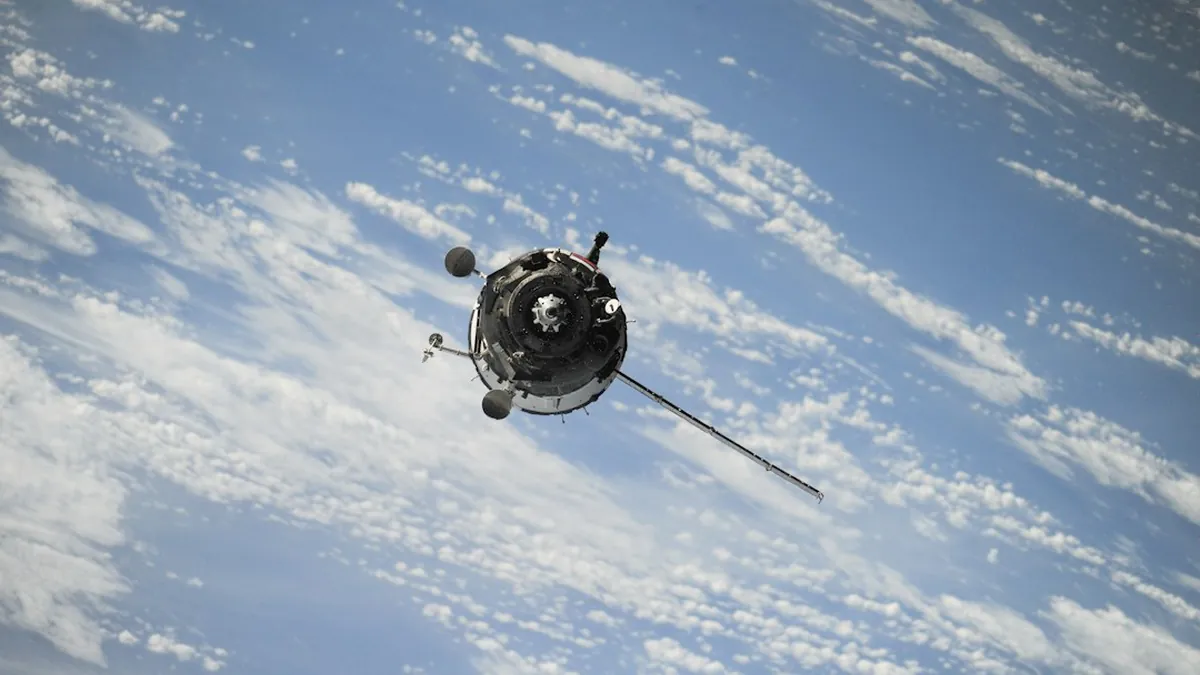
Strategic deployment would involve pre-positioned satellites carrying multiple rods in stable orbits, capable of striking any point on Earth within roughly 15 minutes of authorization. The logistical and financial barriers are enormous — estimates place the cost of a single operational platform in the tens of billions of dollars. Those costs, combined with the murky legal framework surrounding orbital strike systems, have kept these weapons theoretical for now, though the underlying technology gap is narrowing rapidly, a concern also raised in analyses of AI targeting in modern warfare.
Kinetic bombardment weapons occupy a uniquely destabilizing position in the global security landscape — powerful enough to reshape deterrence doctrine, yet unregulated enough to invite a dangerous new arms race in orbit. The line between theoretical capability and deployable reality is growing thinner every year as launch costs drop and orbital infrastructure expands. If you have thoughts on where this technology is headed and what guardrails the international community should impose, share your perspective in the comments below.