
The Incredible Disappearing Steering Wheel: Hyundai Mobis Redefines the Autonomous Cockpit

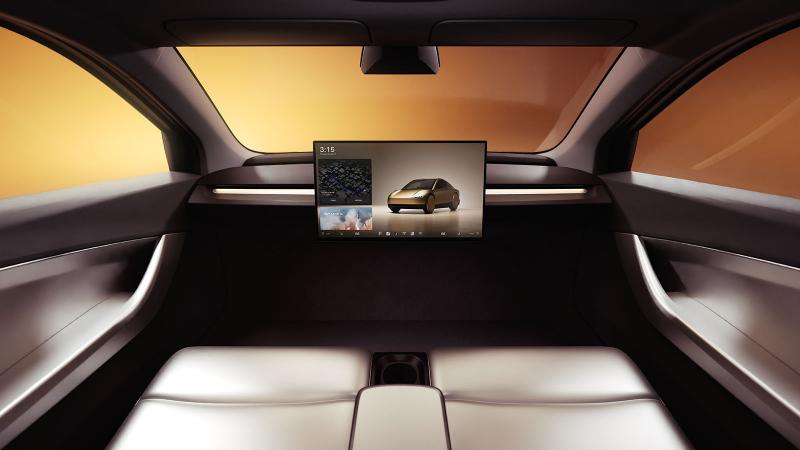
The concept of the automobile is currently undergoing its most radical transformation since the transition from horse-drawn carriages to combustion engines. As the industry inches closer to fully autonomous driving, the interior design of vehicles is shifting from a driver-centric cockpit to a passenger-focused lounge. One of the biggest obstacles to this new reality has always been the steering wheel itself, a rigid mechanical necessity that takes up prime real estate. Hyundai Mobis has officially challenged this century-old convention with a new foldable steering system that can vanish into the dashboard when not in use.
This innovative technology marks a significant departure from the fixed steering columns we have known for generations. The new system allows the steering wheel to retract by up to 25 centimeters, effectively folding itself away to create a spacious open environment in front of the driver’s seat. This is not merely a parlor trick; it is a functional redesign intended for Level 4 and Level 5 autonomous vehicles where human intervention is rarely, if ever, required. By removing the physical barrier of the wheel, the cabin can be transformed into a mobile office, a relaxation pod, or a meeting space where the front seats can rotate 180 degrees to face the rear passengers.
The engineering behind this “disappearing act” is complex and relies heavily on next-generation automotive architecture. The system utilizes a newly developed sliding rail mechanism that ensures the retraction is smooth and durable enough for daily use. Because the wheel needs to fold completely flat to slide into the dashboard, Hyundai Mobis had to reinvent the steering column and the reaction-force control device. The result is a rectangular, yoke-style interface that looks more like the controls of a futuristic aircraft than a traditional family sedan.
Crucial to this innovation is the implementation of Steer-by-Wire (SBW) technology. In a standard car, a mechanical shaft connects the steering wheel directly to the rack and pinion on the front axle. This physical connection transfers every bump and vibration from the road into the driver’s hands. The folding system eliminates this mechanical link entirely, replacing it with electrical signals that transmit steering inputs to the wheels. This allows the system to filter out unwanted vibrations from potholes or rumble strips, providing a smoother and more luxurious driving experience when the human is actually in control.
Safety remains the paramount concern with any system that disconnects the driver from the road. Hyundai Mobis has integrated redundant safety protocols to ensure reliability. The electronic control unit (ECU) and various sensors are designed with backup circuits, ensuring that the vehicle maintains steering ability even if the primary electrical signal encounters a fault. This redundancy is essential for gaining regulatory approval and consumer trust in a fully electronic steering setup.
While this folding steering wheel is the current headliner, the studio behind the production, Hyundai Mobis, has been incredibly active on the global stage with a slate of other futuristic projects. As the parts and service arm of the Hyundai Motor Group, the company functions much like a specialized tech giant within the automotive world. They have recently been making waves with their “e-Corner” module, another breakout technology that allows all four wheels of a car to turn 90 degrees. This capability enables vehicles to “crab walk” sideways into parking spots or perform zero-turn spins, maneuvers that were previously impossible for standard passenger cars.
The company has also been focused on the “software-defined vehicle” (SDV) trend, positioning itself as a leader in semiconductor and software solutions. In recent announcements from their 2025 CEO Investor Day, executives outlined a massive push into high-tech electronics, moving away from simple mechanical parts. They are currently developing standardized software platforms that will act as the “nervous system” for future cars, allowing for over-the-air updates and feature integration that rivals the smartphone industry.
Furthermore, their upcoming collaboration with German optics company Zeiss is set to revolutionize how we view the road. Unveiled at CES 2025, this partnership is developing a holographic windshield display that turns the entire front glass of the car into a transparent screen. This technology would replace the traditional dashboard instrument cluster and infotainment screens, projecting speed, navigation, and entertainment data directly onto the windshield without blocking the driver’s view. It is expected to hit the market around 2029, promising to clean up vehicle interiors even further.
Hyundai Mobis is clearly positioning itself not just as a supplier, but as a primary architect of the future mobility experience. Their work suggests a future where the car is less of a machine you operate and more of a living space that transports you. The foldable steering wheel is just the first step in clearing the clutter to make room for this vision. As these technologies mature and move from concept phases to mass production, the very definition of what it means to “drive” is set to change forever.
We would love to hear what you think about handing over control to a wire and letting your steering wheel hide away in the dashboard, so please leave your thoughts in the comments.