Military Drone Swarms: Electronic Warfare Threats


The image of hundreds of autonomous drones moving in perfect, synchronized formation has shifted from science fiction to battlefield reality faster than most defense analysts predicted. Military drone swarms now represent one of the most disruptive force-multipliers in modern conflict, capable of overwhelming traditional air defense systems through sheer coordinated volume. Governments across NATO, China, and Russia are pouring billions into swarm development, treating it as the next decisive edge in peer-to-peer warfare.
Yet the same decentralized intelligence that makes swarms so lethal also introduces a web of critical vulnerabilities that adversaries are actively learning to exploit. The assumption that more autonomous nodes means more resilience is proving dangerously incomplete. Electronic warfare countermeasures are evolving rapidly, and the communication architecture binding these swarms together may be their single greatest weakness.
Swarm Architecture Relies on Fragile Signal Ecosystems
Modern military drone swarms operate through layered autonomous coordination, where individual units share positional data, threat assessments, and task assignments in real time across mesh networks. This architecture allows swarms to adapt dynamically without a single human operator directing every action. However, that inter-drone communication depends entirely on radio frequency links that exist within a contested electromagnetic spectrum.
Researchers addressing intentional interference have proposed a 2-level anti-jamming scheme, where low-altitude satellites in low Earth orbit relay group instruction data to UAV clusters as a first-stage countermeasure — a system detailed in recent communications security literature. The challenge is that even this layered approach introduces latency and new attack surfaces. The ACM security research community has flagged that no current architecture fully eliminates signal interception risk at scale.
Jamming and Spoofing Are Already Dismantling Swarm Cohesion
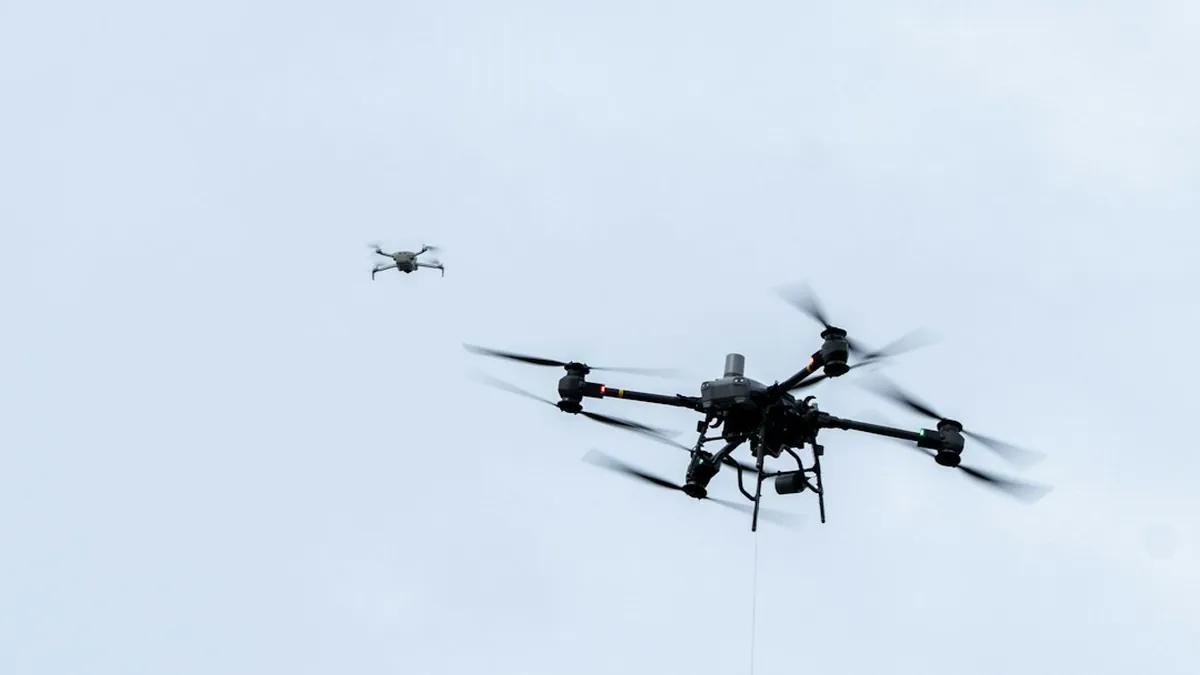
Electronic warfare units targeting military drone swarms don’t need to destroy every unit — they only need to sever the coordination layer to render the swarm tactically incoherent. GPS spoofing, directional jamming, and command-signal hijacking are all documented tactics being deployed in active conflict zones, as explored in analysis of Iranian drone challenges in Gulf air defenses. Once positional consensus breaks down among swarm nodes, autonomous decision-making collapses into unpredictable, potentially dangerous behavior.
Beyond jamming, legal frameworks are also struggling to keep pace with swarm autonomy. The ICRC’s guidance on autonomous weapons stresses that systems must retain the capacity to comply with International Humanitarian Law, including meaningful collateral damage assessment — a standard that swarm AI has not yet reliably demonstrated. The U.S. military’s own Collateral Damage Assessment Methodology further underscores that autonomous targeting decisions require human-verifiable accountability chains, which distributed swarm logic complicates enormously.
Military drone swarms represent both the apex of autonomous warfare innovation and a stark reminder that technological complexity creates proportional fragility. The race between swarm capability and electronic countermeasures will define the next decade of defense strategy more than any single weapons platform. Share your perspective on how nations should govern autonomous swarm warfare in the comments below.