How Electronic Attack Pods Blind Fighter Radar


Modern aerial combat has evolved far beyond dogfights and missile exchanges — today, the pilot who controls the electromagnetic spectrum often controls the sky. Nations are pouring billions into technologies that don’t just evade radar but actively destroy its ability to function in real time. The battlefield is increasingly invisible, fought in frequencies rather than formations.
Most people assume radar jamming is a blunt, last-resort tool — a desperate flare in the dark. In reality, the most advanced electronic attack pods fighter radar systems encounter are precision instruments capable of surgical signal manipulation that leaves enemy operators staring at screens full of convincing lies. Understanding how these pods actually work dismantles nearly every popular assumption about aerial stealth.
Electronic Attack Pods Rewrite the Rules of Radar Physics
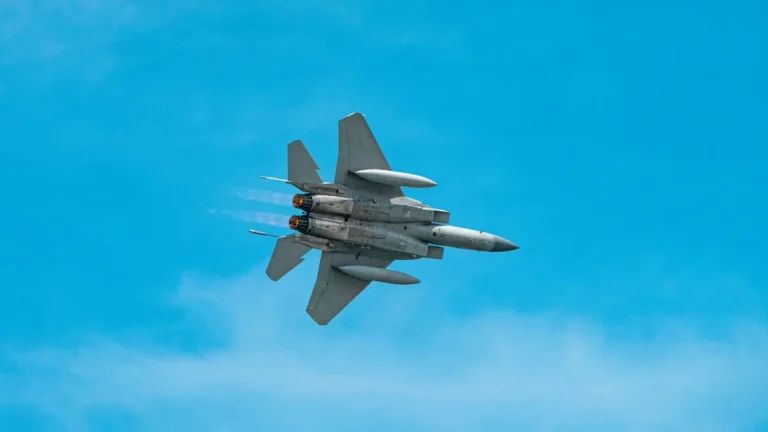
An electronic attack pod is an externally mounted system — typically carried under a fighter’s wing or fuselage — that actively emits, intercepts, and corrupts radar signals in the surrounding environment. Unlike passive stealth coatings that simply absorb radar energy, these pods fight back, transmitting tailored electromagnetic pulses designed to overwhelm or deceive enemy receivers. The AN/ALQ-99 and its successor-generation systems represent the gold standard, capable of covering multiple radar frequency bands simultaneously.
The core mechanism relies on detecting an incoming radar pulse, analyzing its frequency and waveform within microseconds, and retransmitting a corrupted or amplified version back at the source. This process — called reactive jamming — can generate false target returns that make a single aircraft appear as a formation of 12 or simply erase it from the display entirely. Tactics like these are deeply connected to broader electronic warfare fake signal strategies that have reshaped how air defense networks are designed and defeated.

Integration With Fighter Systems Turns Every Mission Into an EW Operation
Modern fighter aircraft don’t treat electronic attack as a secondary capability — it is baked into mission planning from the first briefing. Platforms like the EA-18G Growler are purpose-built around pod integration, with onboard systems that share targeting data between the pod and the aircraft’s own radar, creating a closed-loop electronic suppression environment. This means the pilot isn’t just flying; they are actively managing a rolling electromagnetic siege against networked air defense systems.
The operational effectiveness of these pods against contemporary threats has accelerated dramatically as adversaries deploy frequency-agile and AESA-based radar systems that rapidly hop between bands to resist jamming. Pod developers have responded with cognitive electronic warfare algorithms that learn and adapt mid-mission, a development closely mirroring advances in autonomous cyber defense systems operating against adaptive digital threats. The result is an arms race measured not in warheads but in processing cycles per second.
Electronic attack pods have quietly become 1 of the most decisive force multipliers in any modern air campaign, shifting the advantage toward whichever side masters the spectrum first. The gap between nations that field mature pod technology and those that don’t is widening at a pace that traditional aircraft performance metrics simply cannot capture. Drop your perspective on where electronic warfare is headed in the comments below — the conversation is just getting started.