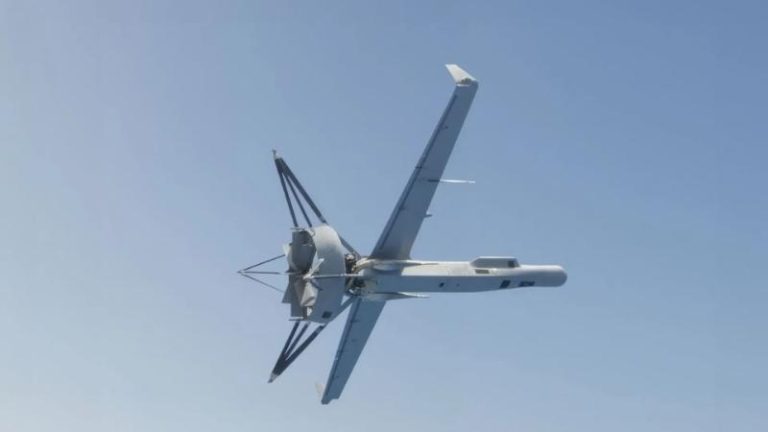
Fiber-Optic Tethered Drones: Jamming-Proof Flight in 2026


Drone technology has dominated defense and infrastructure headlines throughout 2026, with autonomous systems pushing further into contested airspace than ever before. Most of the public conversation still centers on wireless platforms — sleek, untethered machines guided by radio frequency signals across open skies. That framing, however, leaves out 1 of the most disruptive shifts quietly reshaping how militaries and critical infrastructure operators deploy aerial assets.
The dominant assumption has always been that cutting the cord makes a drone more capable, more flexible, and more tactically viable. That logic collapses entirely in environments where RF jamming is not a theoretical risk but a guaranteed operational reality — and that is exactly where fiber-optic tethered drones are proving their worth in 2026.
A Physical Cable Is Now the Most Sophisticated Defense Against Signal Warfare
Fiber-optic tethered drones eliminate RF jamming vulnerabilities by replacing wireless communication entirely with a hardened optical cable connecting the drone to its ground station. Because light pulses through glass fiber rather than radio waves through open air, there is simply no electromagnetic signal for adversarial jamming systems to target or intercept. This architecture makes the drone functionally invisible to the electronic warfare tools that have neutralized conventional wireless drones across multiple active conflict zones in 2026.
The fiber-optic cable simultaneously handles 2 critical functions: high-bandwidth data transmission and, in many modern configurations, direct power delivery to the drone itself. This dual-purpose design, explored in depth alongside other emerging aerial threats in coverage of loitering munitions battlefield roles, means the platform can sustain extended hover operations without battery constraints — a limitation that has historically capped wireless drone endurance at under 45 minutes per sortie.

Tethered Platforms Are Filling the Gaps Wireless Systems Cannot Survive
Real-world deployments in 2026 span border surveillance, power grid monitoring, port security, and forward military observation posts — all environments where persistent aerial coverage and data integrity are non-negotiable. The most common operational mistake organizations make is assuming tethered systems sacrifice mobility for stability; in practice, modern ground stations are vehicle-mounted and fully mobile, allowing rapid repositioning without sacrificing the hardened link. Defense analysts tracking AI drone manufacturing risks have noted that tethered platforms also sidestep several autonomous decision-making vulnerabilities that plague fully wireless systems.
Operationally, fiber-optic tethered drones offer latency figures below 1 millisecond for control inputs — a performance ceiling that no long-range wireless system has matched under contested conditions. The tether cable itself typically spans between 100 and 200 meters, which positions the drone well above most ground-level interference sources while keeping the optical link structurally secure. For operators prioritizing mission-critical uptime over maximum range, this tradeoff is not a compromise — it is the entire point.
Fiber-optic tethered drones represent a deliberate architectural choice to prioritize resilience over freedom of movement, and in 2026’s electronic warfare landscape, that choice is increasingly the smarter one. The technology signals a broader industry reckoning with the limits of wireless dependency in high-stakes environments. Drop your thoughts in the comments — are tethered systems the future of persistent aerial surveillance, or will wireless platforms eventually close the gap?