Cyber Warfare on Deep-Sea Cables: Why They’re Hard to Stop

Most people picture cyberattacks as invisible strikes launched from darkened server rooms, targeting power grids or financial networks. What rarely enters the public conversation is the far more physical, far more catastrophic vulnerability lurking 4 miles beneath the ocean’s surface. The world’s internet, financial transactions, and military communications all flow through a fragile web of submarine cables — and that web is increasingly in the crosshairs.
The assumption has long been that deep-sea infrastructure is simply too remote and too inaccessible to be a realistic target. That assumption is dangerously outdated. Cyber warfare on deep-sea communication cables has evolved from theoretical threat to documented geopolitical strategy, and the mechanisms for stopping it remain frustratingly limited.
Submarine Cable Networks Are the Nervous System of Global Power
Roughly 95% of all international data — including military intelligence, banking transfers, and civilian internet traffic — travels through approximately 400 submarine cable systems worldwide. A single severed cable can reroute billions of dollars in transactions and degrade communications across entire continents. These aren’t backup systems; they are the primary infrastructure, and their disruption is an act of war by any functional definition.
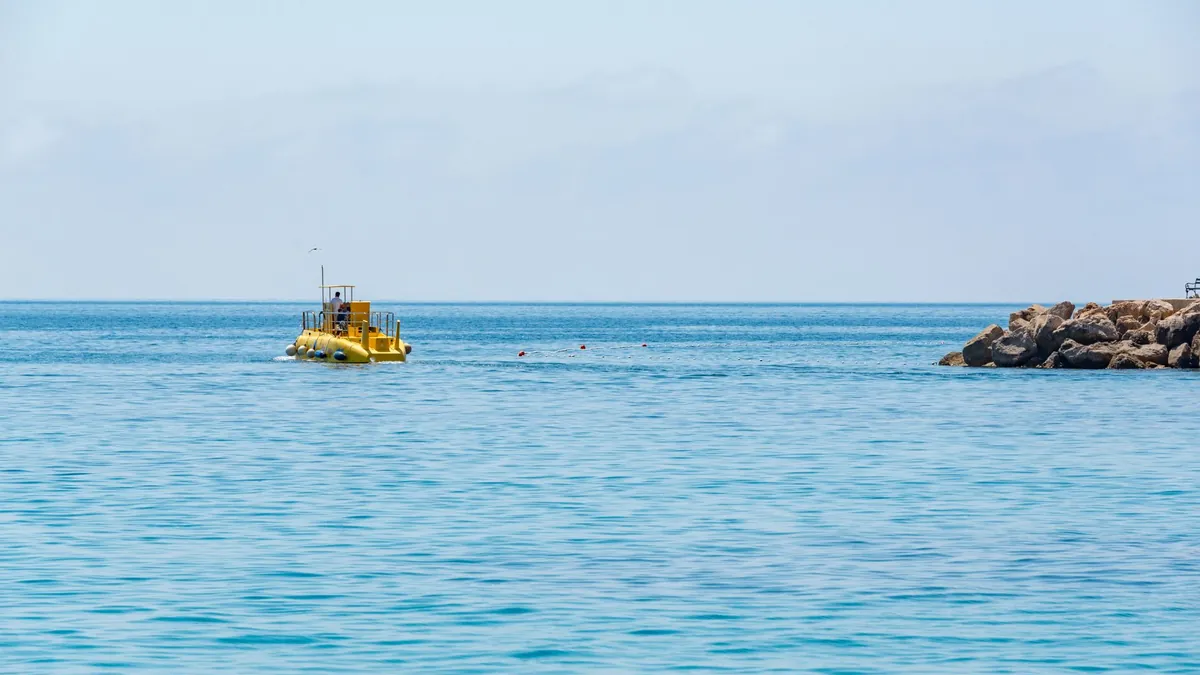
State-sponsored actors have already demonstrated the capability to physically tap and manipulate these cables using specialized submarines and remotely operated vehicles. Defense analysts tracking autonomous naval submarines have documented a sharp increase in vessel activity near critical cable landing points across the Atlantic and Indo-Pacific. The threat isn’t hypothetical — it’s operational.

Detection Failures and the Geopolitical Paralysis Slowing Every Response
The core problem with defending deep-sea cables is detection latency — by the time a cable disruption is confirmed and its cause investigated, the responsible actor is long gone. Underwater surveillance technology capable of real-time monitoring across thousands of miles of ocean floor simply does not exist at scale in 2026. Nations are effectively defending a highway they cannot see, against threats they cannot immediately attribute.
Geopolitically, the response mechanisms are equally fractured. International maritime law creates ambiguous jurisdictions that hostile actors exploit deliberately, and no binding multilateral framework exists to govern undersea cable protection. Emerging AI-driven monitoring tools — similar in concept to the pattern-recognition systems explored in AI use cases across other industries — are being fast-tracked by NATO members, but deployment timelines remain years away from meaningful coverage.
The uncomfortable reality is that cyber warfare on deep-sea communication cables represents one of the few attack vectors where the offense holds an almost structural advantage over defense. Resilience strategies — including redundant cable routing, hardened landing stations, and satellite failover systems — are advancing, but they are racing against a threat that moves faster than international consensus. Drop your perspective in the comments below — do you think global powers are moving fast enough to protect this critical infrastructure?