10 Heavy Bomber Aircraft With Nuclear Payloads

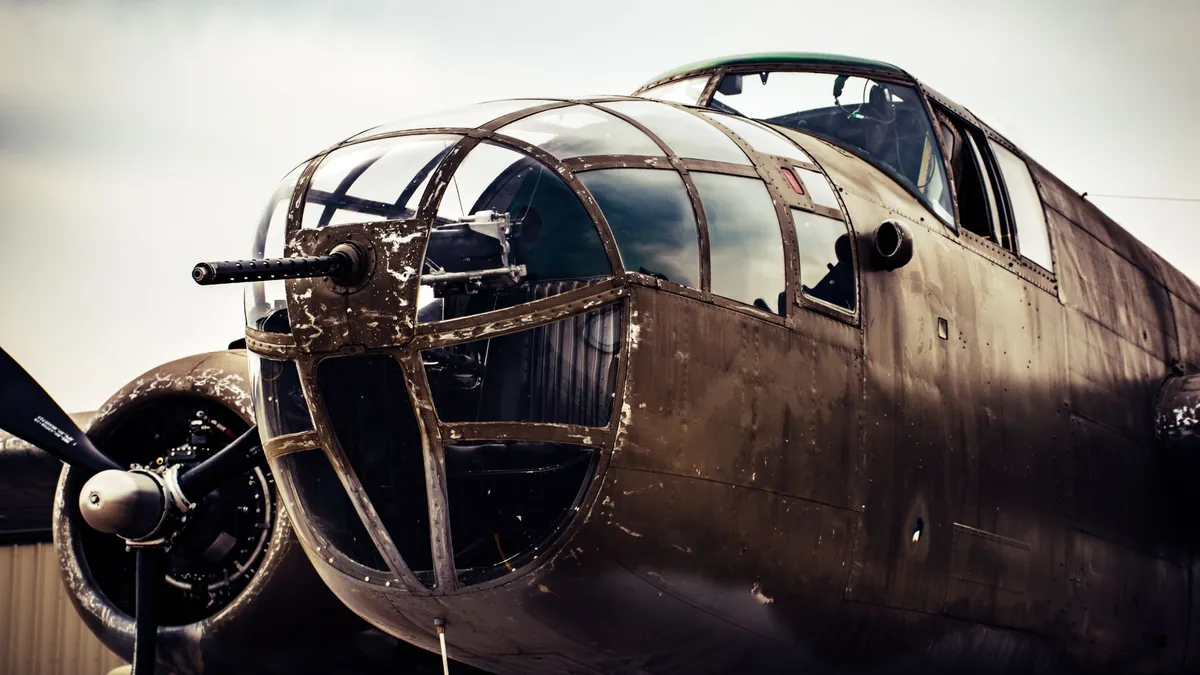
Few instruments of modern geopolitics carry the psychological weight of a nuclear-armed bomber cutting silently through sovereign airspace. These aircraft don’t merely represent firepower — they represent entire doctrines of deterrence, diplomacy, and existential calculation that have shaped international order for decades.
Most people assume nuclear deterrence lives exclusively inside missile silos or submarine hulls, but the heavy bomber aircraft nuclear payload remains one of the most flexible and politically visible legs of the nuclear triad. The 10 platforms below reveal just how diverse — and enduring — airborne nuclear delivery has truly become. represent a major operational focus.
1. B-52 Stratofortress: The Enduring Strategic Deterrent with Advanced Cruise Missile Integration

First flying in the early 1950s, the B-52 Stratofortress has outlasted virtually every strategic doctrine it was built to serve. Its ability to carry the AGM-86B air-launched cruise missile keeps it lethally relevant well into the 2026 operational landscape. No other bomber has served across so many distinct nuclear eras.
- Key Reality: Each B-52H can carry up to 20 nuclear-tipped cruise missiles on external pylons alone.
2. Tupolev Tu-95 Bear: Russia’s Long-Range Nuclear Delivery Platform with Turboprop Propulsion

The Tu-95 Bear is immediately recognizable by its contra-rotating turboprop engines, which produce a distinctive acoustic signature detectable by NATO listening systems from extraordinary distances. Despite its vintage design, Russia continues operating updated variants armed with Kh-102 stealth cruise missiles. It remains a cornerstone of Russian strategic aviation in 2026.
- Key Reality: The Tu-95MS variant has a combat range exceeding 10,500 kilometers without aerial refueling.
3. Tupolev Tu-160 Blackjack: Supersonic Strategic Bomber Designed for Intercontinental Nuclear Strikes

The Tu-160 Blackjack is the world’s heaviest combat aircraft ever built, capable of reaching Mach 2.05 at altitude while carrying a devastating nuclear payload. Russia’s modernized Tu-160M variant incorporates updated avionics and extended-range cruise missile compatibility. Its sheer speed and payload capacity make it among the most formidable heavy bomber aircraft nuclear payload platforms ever conceived.
- Key Reality: The Tu-160 can carry 12 Kh-55SM cruise missiles across a range of roughly 12,000 kilometers.
4. Northrop Grumman B-2 Spirit: Stealth Technology Revolutionary in Nuclear Payload Concealment and Delivery
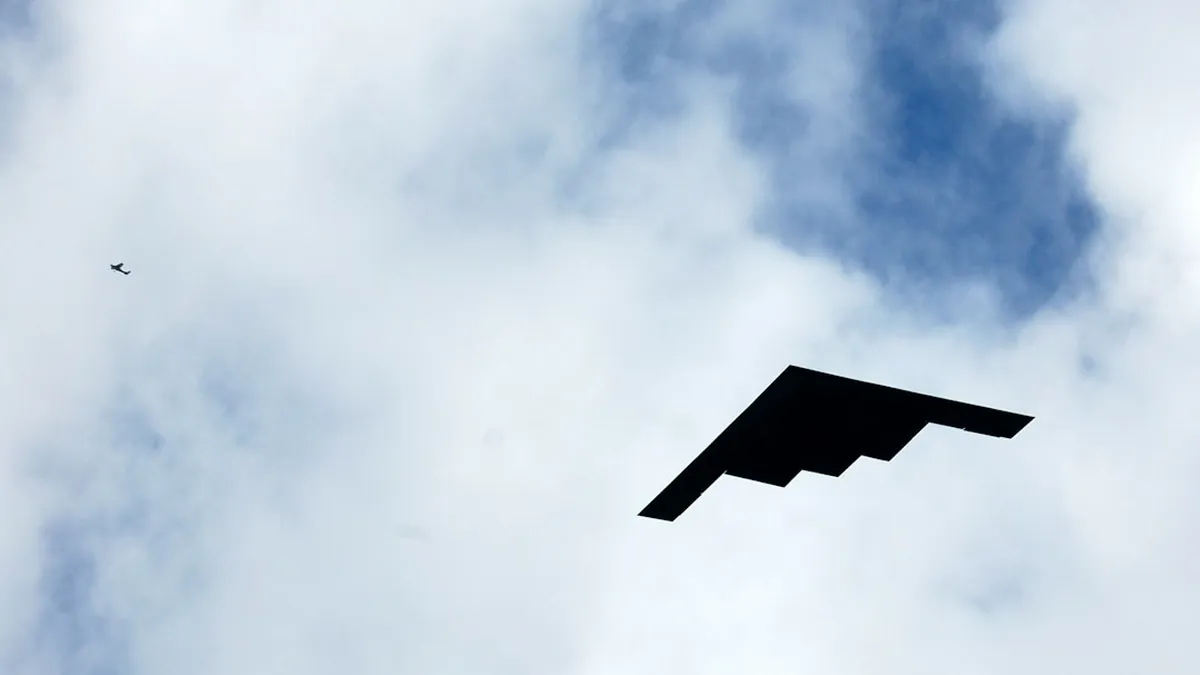
The B-2 Spirit fundamentally changed what nuclear delivery could look like by making a bomber nearly invisible to radar systems. Its flying-wing design and radar-absorbent materials allow it to penetrate the most sophisticated integrated air defense networks. Much like how electronic attack pods suppress enemy radar, the B-2 exploits electromagnetic invisibility as its primary survival strategy.
- Key Reality: Each B-2 costs approximately 2.1 billion dollars — making it the most expensive bomber ever produced.
5. Avro Vulcan: Britain’s Historic Delta-Wing Strategic Bomber with Nuclear Deterrent Capability
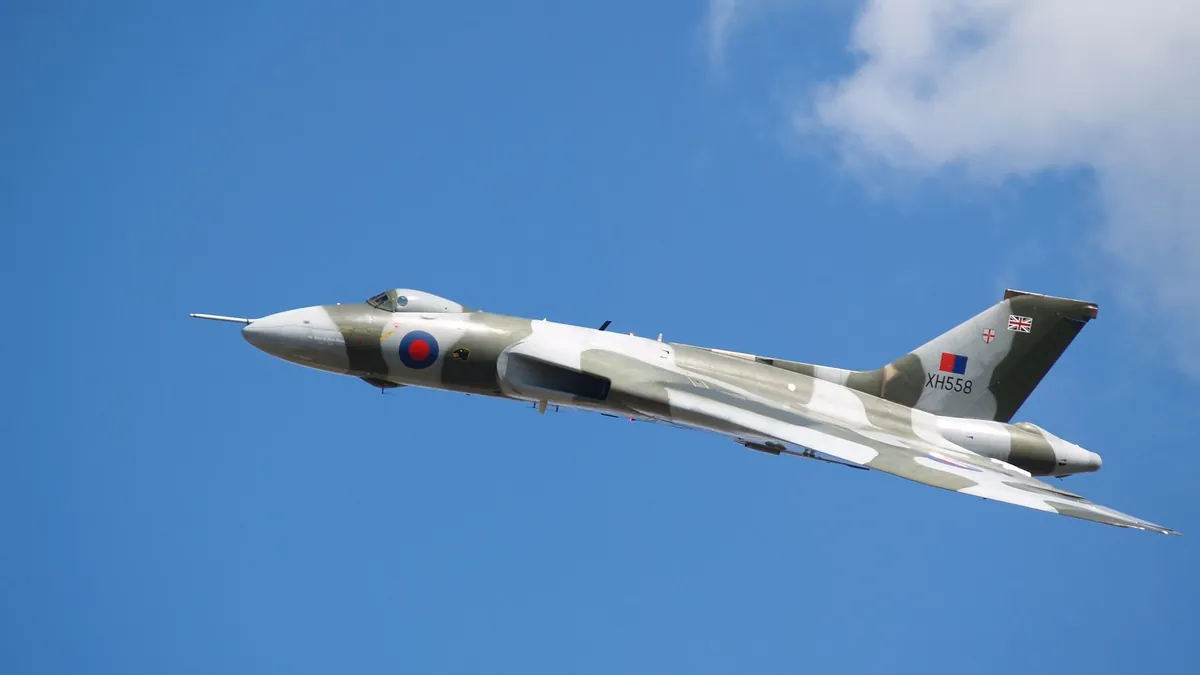
The Avro Vulcan gave Britain an independent nuclear deterrent during the Cold War’s most volatile decades, operating with a haunting delta-wing silhouette that became iconic. It was designed to fly high and fast enough to evade Soviet interceptors while delivering the Blue Steel nuclear standoff missile. Its retirement marked the end of Britain’s airborne nuclear deterrent era.
- Key Reality: The Vulcan B2 could reach altitudes above 55,000 feet during its high-level nuclear strike profile.
6. Handley Page Victor: RAF’s Distinctive Crescent-Wing Bomber for Nuclear Weapons Deployment
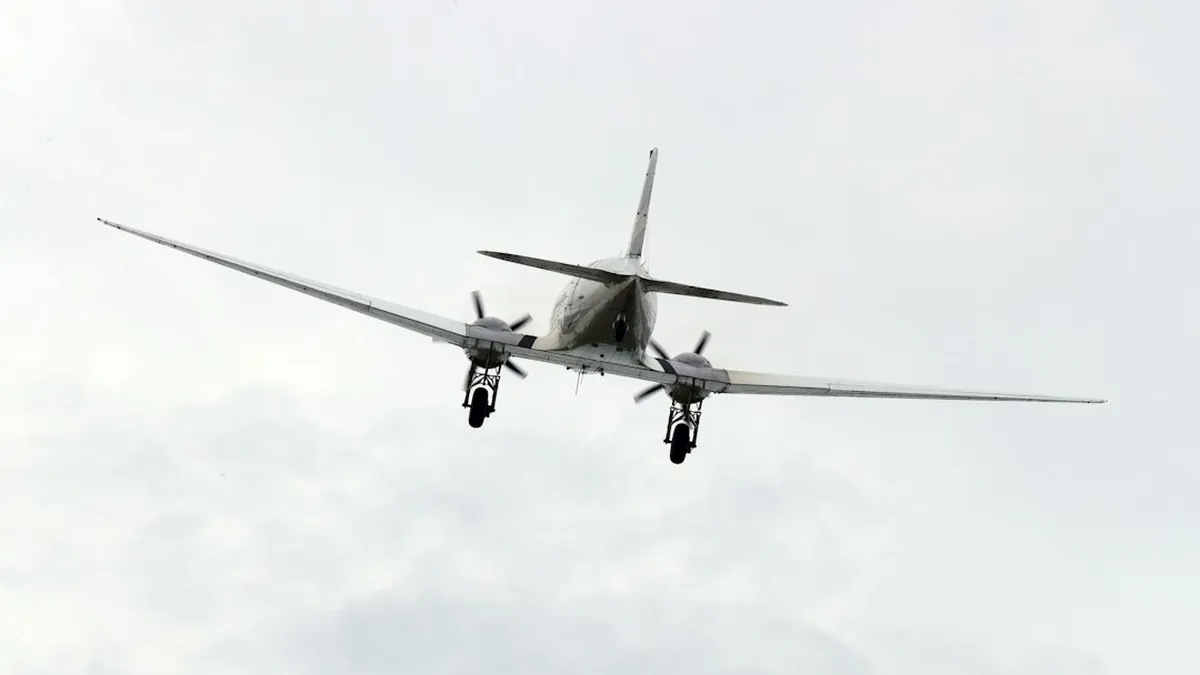
The Victor’s unusual crescent-shaped wing was an aerodynamic innovation designed to delay compressibility effects at high subsonic speeds. As part of Britain’s V-bomber force alongside the Vulcan and Vickers Valiant, it carried the WE.177 nuclear weapon during its operational peak. The Victor later transitioned to a tanker role, extending the reach of other strike aircraft.
- Key Reality: At its peak, the Victor could carry a single Yellow Sun thermonuclear bomb with a yield of approximately 1.1 megatons.
7. Convair B-58 Hustler: Mach 2 Capable Supersonic Bomber with Nuclear Payload Capacity
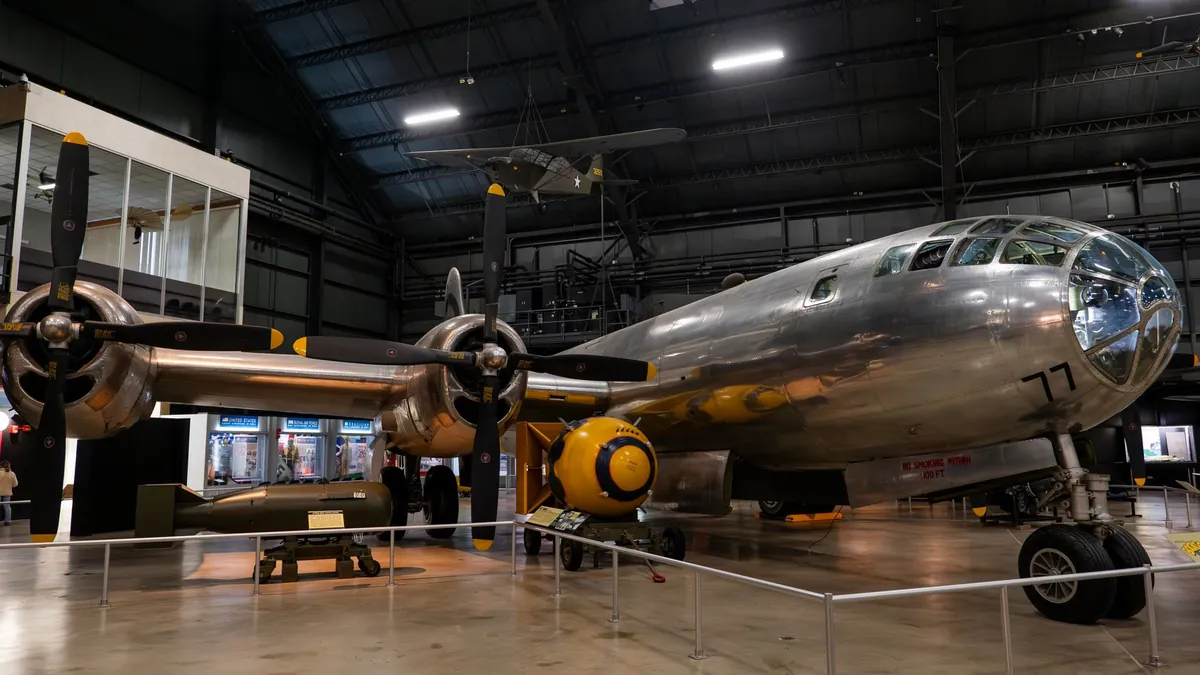
The B-58 Hustler was America’s first operational supersonic bomber, capable of sustained Mach 2 flight while carrying a nuclear weapon pod beneath its fuselage. Its delta-wing configuration and area-ruled fuselage were engineering breakthroughs that influenced aircraft design for years. High operational costs and maintenance complexity ultimately led to its early retirement despite impressive performance figures.
- Key Reality: The B-58 set 19 world speed and altitude records during its operational service life.
8. Myasishchev M-4 Bison: Soviet Strategic Bomber Developed for Long-Range Nuclear Missions

The M-4 Bison was the Soviet Union’s answer to America’s B-52, developed urgently to provide a credible intercontinental nuclear delivery capability. Its range limitations compared to U.S. counterparts were a persistent operational concern that shaped Soviet nuclear doctrine significantly. Intelligence efforts to monitor Soviet bomber fleets — not unlike modern military orbital monitoring assets — were heavily focused on tracking M-4 deployments.
- Key Reality: The M-4’s unrefueled combat radius of roughly 5,600 kilometers limited true intercontinental strike capability against American targets.
9. Boeing B-47 Stratojet: Pioneering Jet-Powered Strategic Bomber with Nuclear Armament Capability

The B-47 Stratojet was a revolutionary aircraft that introduced swept-wing jet propulsion to American strategic bombing doctrine and directly informed the design of the B-52. At its peak, over 2,000 B-47s were operational, forming the backbone of SAC’s nuclear strike force. Its swept-wing configuration became the foundational template for virtually every subsequent large jet aircraft.
- Key Reality: The B-47 could carry a single nuclear weapon and reach speeds approaching Mach 0.9 at altitude.
10. Ilyushin Il-28 Beagle: Soviet Light Bomber Platform Adapted for Tactical Nuclear Weapons Delivery
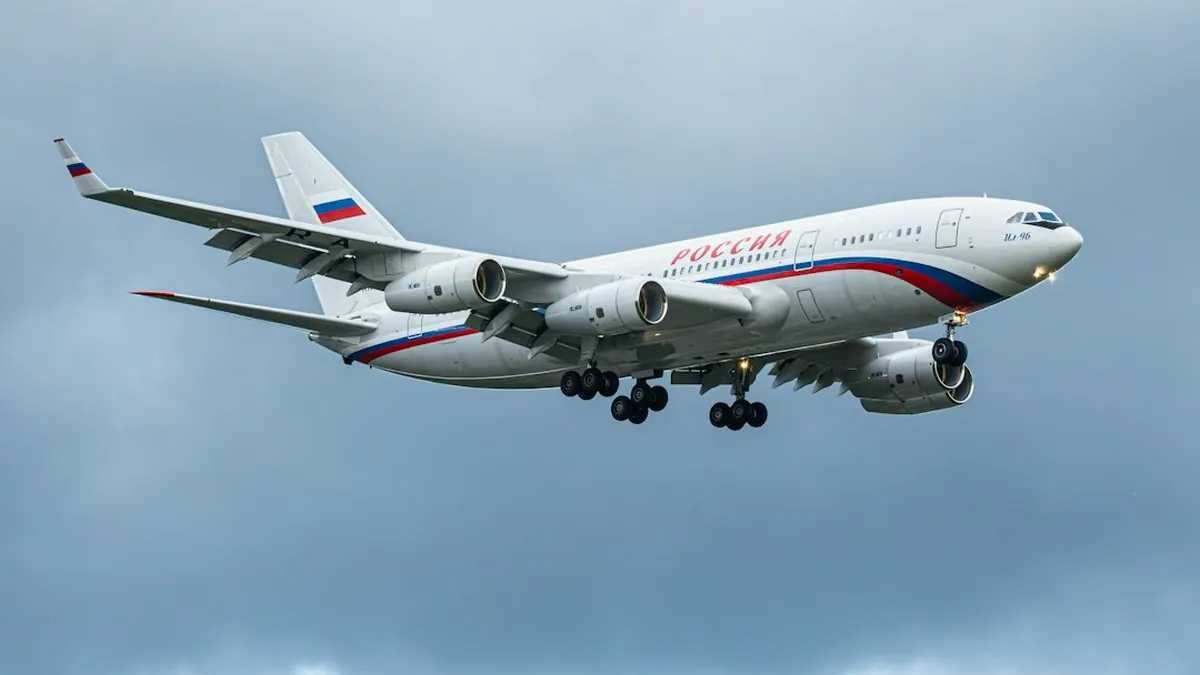
The Il-28 Beagle occupies a unique position in nuclear history as a tactical rather than strategic platform, designed to deliver battlefield nuclear weapons against front-line targets. It became internationally notorious when Soviet Il-28s were deployed to Cuba in 1962, triggering direct superpower confrontation. Its relatively simple design made it widely exported, spreading nuclear-capable airframes across multiple Cold War-era client states.
- Key Reality: The Il-28 had a combat radius of approximately 1,100 kilometers, limiting it to regional rather than intercontinental nuclear missions.
From the thundering turboprops of the Tu-95 to the radar-invisible silhouette of the B-2, these heavy bomber aircraft nuclear payload platforms collectively illustrate how airborne deterrence has evolved