12 Uncrewed Underwater Vehicles for Mine-Clearing

Beneath the world’s most strategically vital shipping lanes and coastal chokepoints, thousands of legacy naval mines sit dormant—waiting. The threat they pose to military vessels, commercial shipping, and civilian infrastructure has never been more urgent, and the window for human-led clearance operations is rapidly closing.
Most people assume mine-clearing is still a slow, diver-dependent process lifted from Cold War doctrine—and that assumption is dangerously outdated. A new generation of uncrewed underwater vehicles is rewriting the rulebook entirely, combining autonomous navigation, AI-driven sensor fusion, and modular payloads to neutralize threats at scale.
1. Autonomous Mine Countermeasures Vehicles with Advanced Sonar Detection Systems
These purpose-built platforms deploy high-frequency synthetic aperture sonar to classify seafloor objects with sub-centimeter resolution, dramatically reducing false-positive rates. They operate fully autonomously across pre-programmed search corridors, removing human operators from the danger zone entirely.
- Key Reality: Modern sonar suites on these vehicles can classify mine-like objects at depths exceeding 300 meters with 94% accuracy.
2. Remotely Operated Vehicle Platforms Equipped with Mechanical Arm Manipulation
When a mine requires physical intervention rather than remote detonation, ROV platforms with 7-function hydraulic manipulator arms become the tool of choice. Operators guide these systems from surface vessels or shore stations, maintaining safe standoff distances while executing precise ordnance handling.
- Key Reality: Leading ROV manipulator arms can exert up to 45 kilograms of gripping force at depths beyond 600 meters.
3. Torpedo-Shaped AUVs Designed for High-Speed Mine Reconnaissance Missions
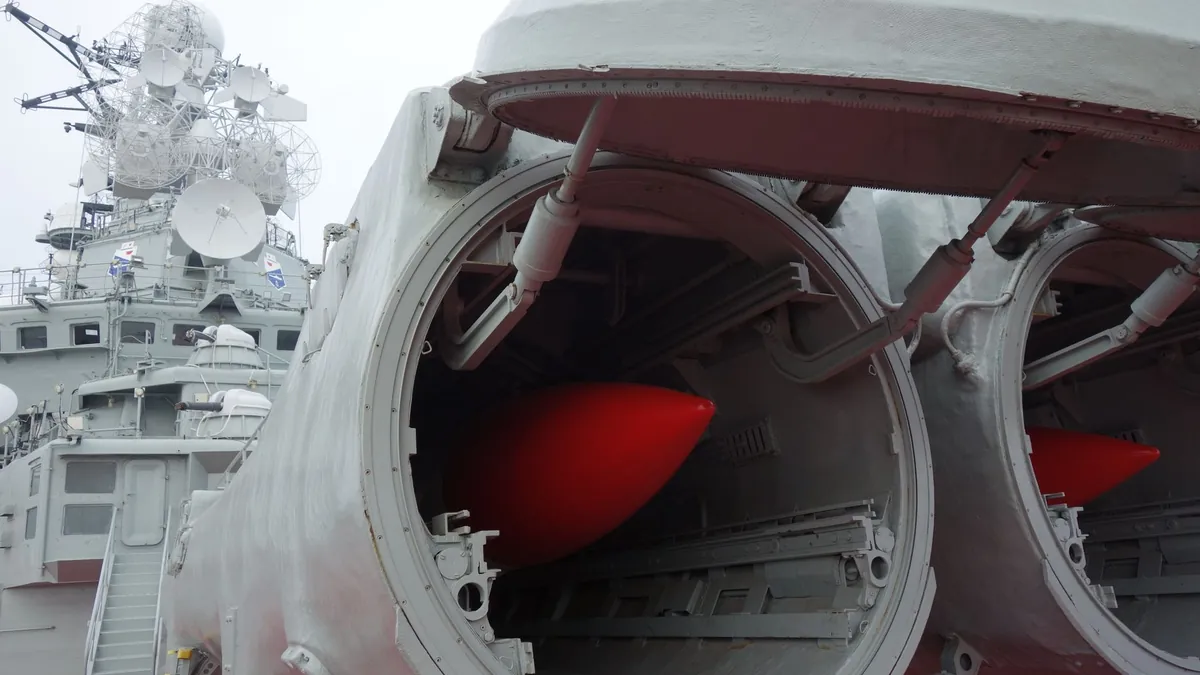
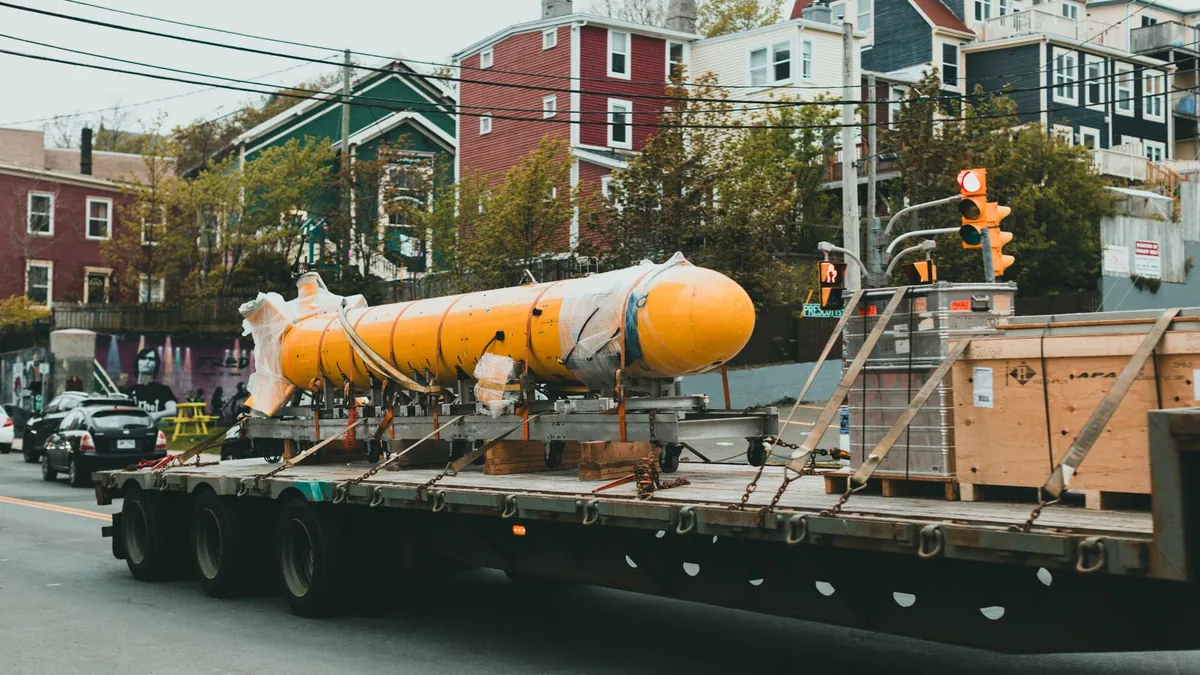
Hydrodynamically optimized for speed, these torpedo-form AUVs can survey large minefield areas at speeds up to 8 knots, compressing multi-day reconnaissance timelines into hours. Their slim profiles allow covert deployment from standard torpedo tubes aboard submarines.
- Key Reality: A single sortie can map up to 15 square kilometers of seabed in under 4 hours.
4. Hovering Uncrewed Submersibles with Precision Positioning Capabilities
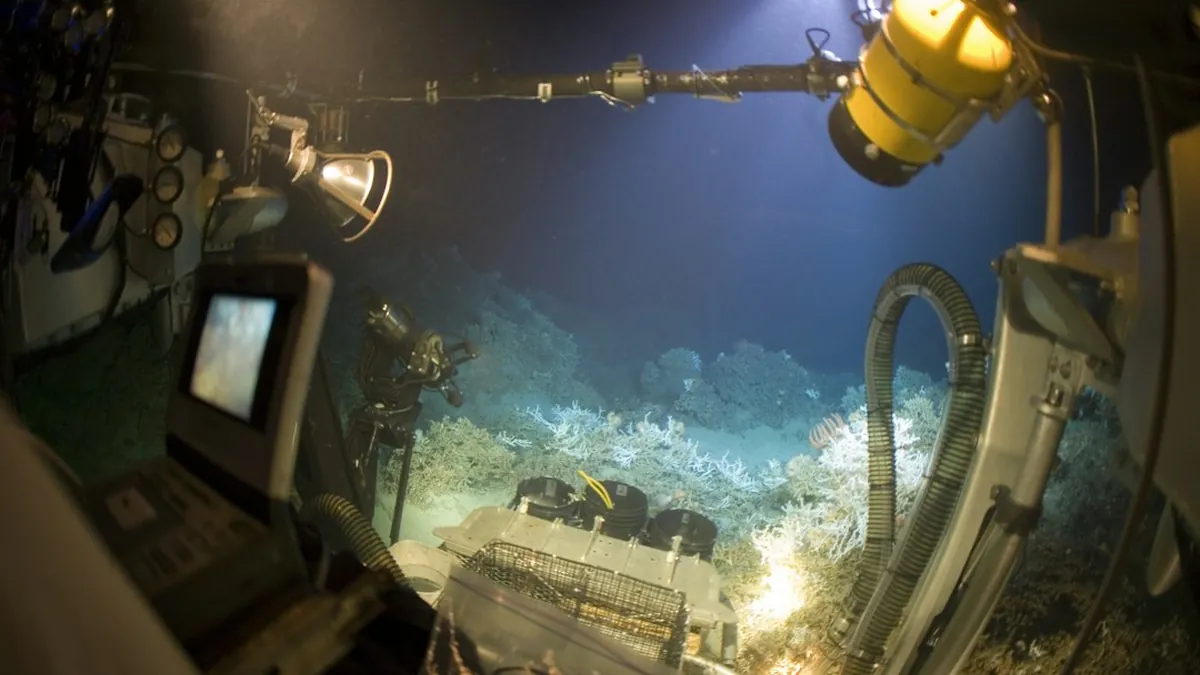
Unlike torpedo-form vehicles, hovering UUVs use multi-thruster configurations to hold station within centimeters of a target—critical when placing neutralization charges on contact mines. This precision positioning capability makes them indispensable for the final, most delicate phase of mine disposal.
- Key Reality: Advanced dynamic positioning systems maintain station-keeping accuracy within 5 centimeters even in 2-knot currents.
5. Multi-Sensor Fusion Platforms for Real-Time Underwater Threat Identification

These vehicles integrate sonar, LiDAR, optical cameras, and electromagnetic sensors into a unified AI processing pipeline, enabling real-time threat classification without surfacing for data uplink. The fusion architecture mirrors concepts explored in deep-sea acoustic monitoring systems designed for persistent seabed surveillance.
- Key Reality: Multi-sensor fusion reduces mine misidentification rates by up to 60% compared to single-sensor sonar platforms.
6. Lightweight Portable UUVs for Shallow-Water and Coastal Mine Clearance
Weighing as little as 12 kilograms, man-portable UUVs can be launched from rigid inflatable boats or directly from shorelines, making them ideal for harbor clearance and amphibious assault preparation. Their compact form factor enables rapid deployment by small special operations teams without heavy logistical support.
- Key Reality: Several NATO-fielded portable UUVs operate in water as shallow as 1 meter, covering critical surf-zone threats.
7. Heavy-Duty Tethered Vehicles for Deep-Water Ordnance Neutralization

At depths where pressure crushes conventional battery systems, tethered ROVs draw continuous power from surface vessels through armored umbilicals, enabling unlimited operational endurance. These heavy-duty platforms carry shaped explosive charges capable of neutralizing influence mines buried in sediment at depths exceeding 2,000 meters.
- Key Reality: Tethered systems can sustain continuous dive operations for 72-plus hours without recovery, far outpacing AUV battery limits.
8. Swarm-Capable Micro-Vehicles for Distributed Mine Detection Operations

Deploying dozens of coordinated micro-UUVs simultaneously, swarm systems can blanket a minefield with overlapping sensor coverage that no single vehicle could achieve alone. This distributed architecture, analogous to strategies seen in next-gen drone carrier platforms, ensures no gap in coverage even if individual units are lost.
- Key Reality: Swarm deployments of 20-plus micro-UUVs can reduce area-search time by 80% versus single-vehicle operations.
9. Hybrid AUV-ROV Systems Combining Autonomous and Manual Control Functions
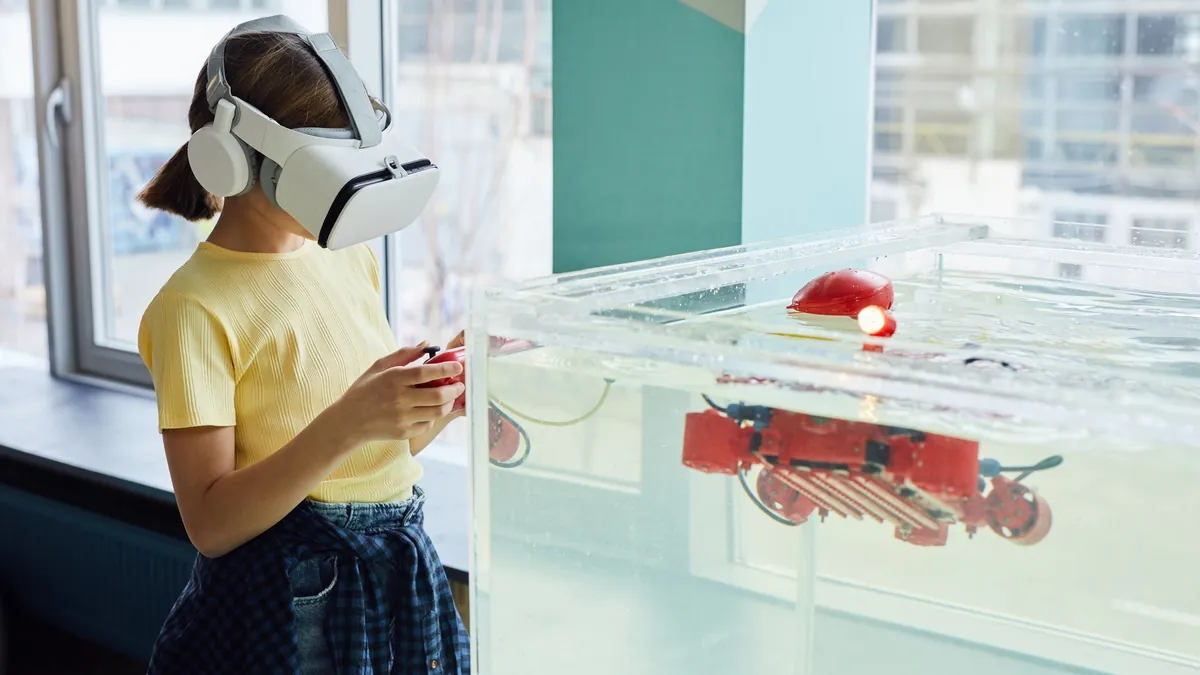
Hybrid vehicles launch autonomously to conduct wide-area survey passes, then seamlessly transition to tethered ROV mode when a contact requires human-supervised intervention. This dual-mode capability eliminates the need to deploy 2 separate vehicle types, cutting operational costs and surface vessel exposure time significantly.
- Key Reality: Hybrid AUV-ROV systems reduce mission asset costs by an estimated 35% compared to running parallel dedicated platforms.
10. Magnetic and Acoustic Sensor-Equipped Vehicles for Metallic Mine Location
Buried or partially sediment-covered mines that defeat optical and sonar detection are prime targets for vehicles carrying fluxgate magnetometers and low-frequency acoustic projectors. These sensors detect the ferromagnetic signature and acoustic resonance of metallic mine casings even when completely obscured from visual inspection.
- Key Reality: Magnetometer-equipped UUVs can detect buried steel-cased mines at standoff distances of up to 8 meters through sediment.
11. Modular Payload Platforms Supporting Interchangeable Mine-Clearing Equipment
Rather than designing single-purpose vehicles, modular UUV platforms use standardized payload bays that accept interchangeable mission modules—sonar arrays, neutralization charges, water-jet cutters, or marking buoy dispensers—swapped dockside in under 30 minutes. This flexibility dramatically extends the operational utility of each hull across the full mine-countermeasures mission spectrum.
- Key Reality: Modular platforms can reduce fleet procurement costs by up to 40% by eliminating redundant single-mission hulls.
12. Long-Endurance Battery-Powered Vehicles for Extended Operational Deployment

Advances in solid-state and lithium-sulfur battery chemistry have pushed AUV end