Autonomous Drone Swarms: Urban Threats Explained


Cities have always been complex ecosystems of movement, infrastructure, and vulnerability — and the skies above them are no longer empty. Autonomous drone swarms urban environments are increasingly being studied not just by defense agencies, but by urban planners, law enforcement, and civil liberties advocates trying to understand what coordinated aerial AI actually means at street level. The technology has moved faster than the conversation surrounding it.
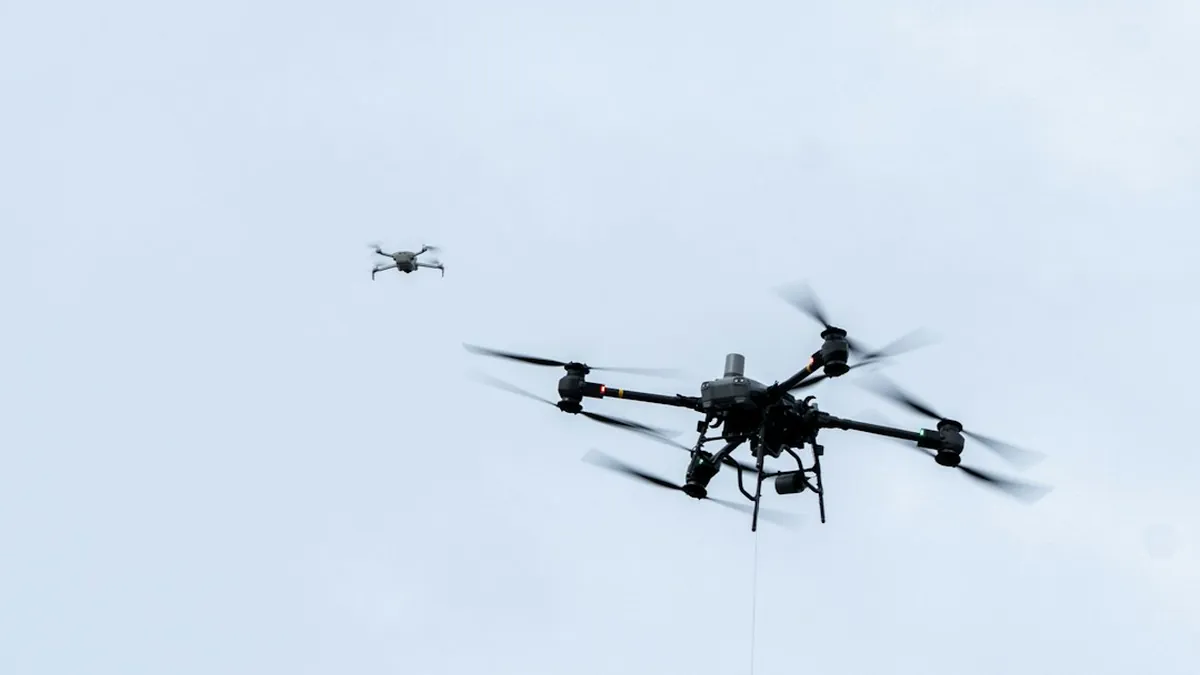
Most people still picture drones as singular, remotely piloted devices — a hobbyist’s toy or a delivery vehicle. The more unsettling reality is that swarm-based systems don’t require a human operator for each unit; they share processing intelligence, adapt collectively to obstacles, and can execute complex objectives with minimal external input. That fundamental shift in how these machines operate is what makes the urban threat calculus so difficult to resolve.
Swarm Intelligence Turns Urban Density Into a Tactical Advantage
Autonomous drone swarms operate through distributed AI architectures, meaning no single drone is the “brain” — the entire fleet communicates in real time, redistributing tasks when individual units are lost or disabled. In dense urban environments, this design actually thrives; buildings, bridges, and narrow corridors that would confuse a single drone become navigable data points for a coordinated swarm. Research emerging from defense contractors in 2026 confirms that urban canyons reduce radar detection windows by as much as 60%, giving swarms a significant stealth advantage.
The security implications are severe and multi-layered. A swarm can simultaneously surveil, jam communications, deliver payloads, or simply overwhelm traditional point-defense systems through sheer numerical volume — a concept explored in depth within military AI simulations with catastrophic tactics that have already modeled exactly these urban scenarios. The gap between theoretical threat and operational capability has narrowed considerably in 2026.
Regulatory Gaps and Countermeasures Are Racing to Catch Up
Current regulatory frameworks governing swarm technology remain fragmented across national and municipal jurisdictions, with most existing drone laws written for single-unit, human-piloted systems that bear little resemblance to today’s autonomous fleets. The FAA and its international counterparts have introduced provisional swarm-specific airspace rules in 2026, but enforcement mechanisms in real-time urban scenarios remain largely untested. Cities are essentially operating under regulations designed for a fundamentally different threat profile.
On the countermeasures front, detection and neutralization technology is advancing rapidly — from RF signal jamming to AI-driven intercept drones — and a detailed breakdown of these tools is available through coverage of drone countermeasures that take down UAVs in active deployment scenarios. Directional energy systems and mesh-radar networks are emerging as the most promising urban-scale solutions, though costs remain prohibitive for most mid-sized cities. The asymmetry between swarm deployment costs and defensive infrastructure costs is, right now, tilted heavily in the attacker’s favor.
Autonomous drone swarms represent 1 of the most consequential technological inflection points in urban security history, demanding policy, infrastructure, and public awareness to evolve in parallel. The cities that treat this as a distant future problem will find themselves dangerously underprepared when the skies above them become contested airspace. Share your thoughts on how cities should be responding to this threat in the comments below.