7 Space Defense Projects Blurring Science and Warfare


The cosmos was once humanity’s shared frontier—a realm of exploration, wonder, and scientific ambition that transcended national borders. In 2026, that romantic vision is colliding hard with geopolitical reality, as military powers race to establish dominance in an arena that has no internationally enforced rules of engagement.
Most people still picture space defense as a Cold War relic—bulky satellites and theoretical missile shields gathering dust in declassified archives. What’s actually unfolding across government agencies and defense contractors is far more sophisticated, urgent, and consequential than most headlines suggest.
1. Orbital Surveillance Networks Transforming Real-Time Intelligence Collection

Constellations of low-Earth-orbit surveillance satellites now provide military commanders with near-continuous visual and signals intelligence across any theater of conflict. These networks can refresh imagery every 30 minutes, collapsing the traditional intelligence cycle from days into minutes. Nations without access to this capability are operating strategically blind by comparison.
- Key Reality: The U.S. Space Force manages over 80 dedicated intelligence-gathering satellites as of 2026, with allied networks adding hundreds more.
2. Anti-Satellite Weapons Systems Reshaping Space Conflict Doctrine

Direct-ascent missiles, co-orbital interceptors, and ground-based laser systems capable of blinding or destroying satellites have shifted from theoretical threat to operational reality. The danger isn’t just losing a single asset—it’s the cascading debris field that follows, a catastrophic risk explored in depth through space debris collision research that warns of trapping humanity below a debris shell. Doctrine is scrambling to catch up with hardware that already exists.
- Key Reality: A single ASAT test can generate over 1,500 trackable debris fragments, each capable of destroying operational satellites.
3. Hypersonic Delivery Platforms Merging Aerospace and Defense Technology

Hypersonic glide vehicles launched from near-orbital altitudes travel at Mach 5 or faster, maneuvering unpredictably to evade traditional missile defense systems. They represent the most disruptive convergence of aerospace engineering and offensive weapons development seen in decades. The 3 major powers actively deploying or testing these systems—the U.S., China, and Russia—have fundamentally altered strategic deterrence calculations.
- Key Reality: Hypersonic weapons can strike targets over 6,000 kilometers away in under 30 minutes with minimal warning time.
4. Space-Based Missile Defense Architecture Extending Protection Beyond Atmosphere

The Golden Dome initiative represents the most ambitious missile defense architecture since Reagan-era proposals, positioning intercept layers from ground level to low-Earth orbit. Thousands of contractors are now embedded in this effort, as detailed through coverage of the MDA SHIELD contract expansion reshaping the defense industrial base. Intercepting ballistic missiles during their midcourse phase from space dramatically increases kill-chain efficiency.
- Key Reality: Space-based intercept layers can theoretically reduce response decision windows from 7 minutes to under 90 seconds.
5. Autonomous Space Stations Enabling Persistent Military Operations
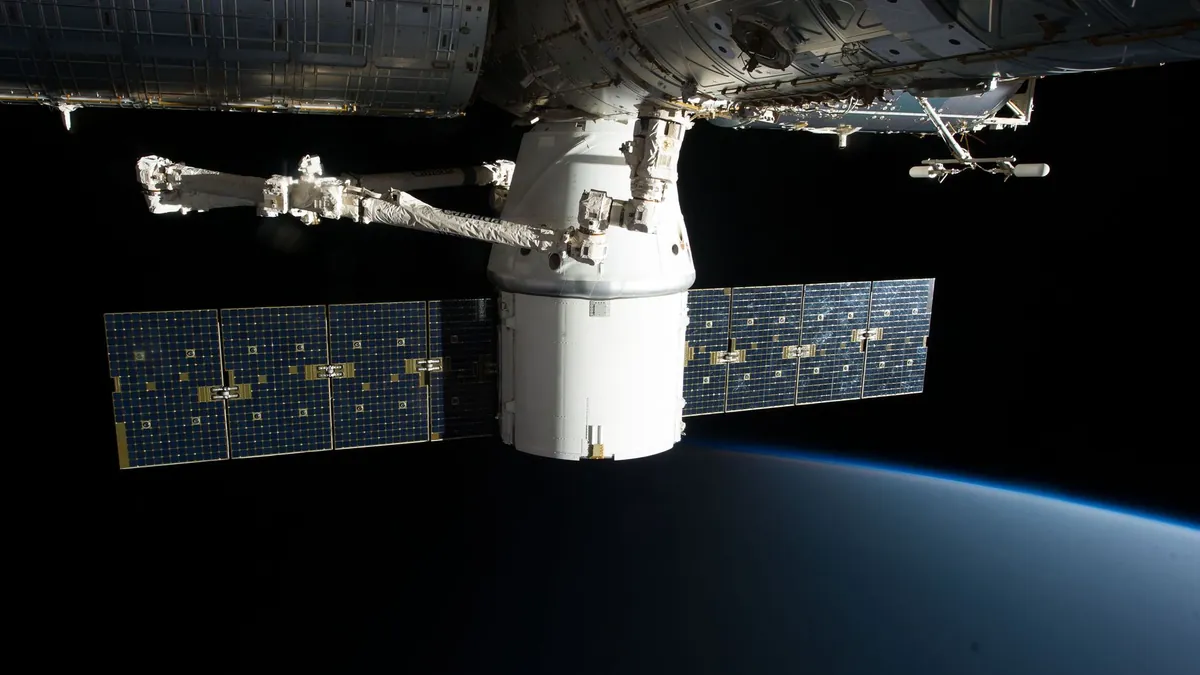
Uncrewed orbital platforms equipped with sensor arrays, refueling depots, and weapons bays are moving from concept to procurement phase across multiple national programs. These stations can loiter indefinitely over strategic regions, providing persistent overwatch without the political liability of human crews. Autonomy isn’t a convenience here—it’s a core tactical requirement.
- Key Reality: China’s Tiangong-derived military station program has an estimated operational budget exceeding 12 billion dollars through 2028.
6. Directed Energy Weapons Platforms Establishing New Deterrence Capabilities
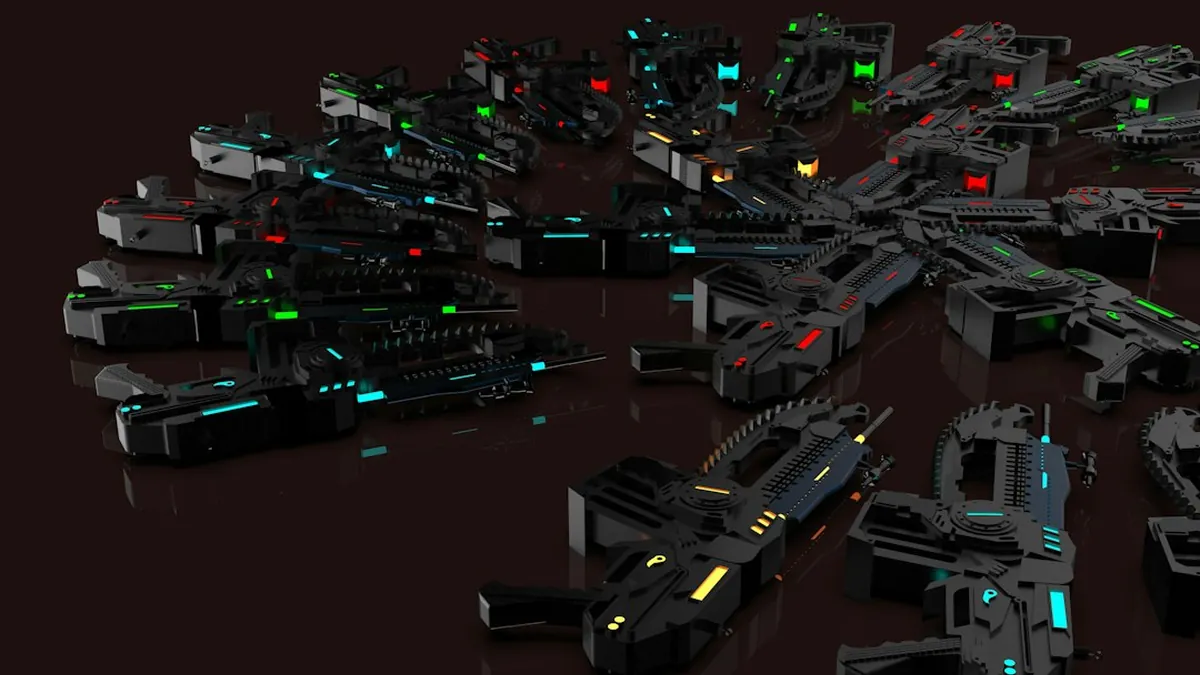
High-energy lasers and microwave weapons mounted on orbital platforms can disable adversary satellites, incoming missiles, or ground infrastructure at the speed of light. These systems eliminate the logistical constraints of conventional munitions—no reload cycles, no supply chains, and near-zero marginal cost per shot. Deterrence theory is being rewritten around weapons that can strike without a detectable launch signature.
- Key Reality: Directed energy systems tested in 2026 have demonstrated effective engagement ranges exceeding 500 kilometers in low-Earth orbit conditions.
7. Quantum Communication Satellites Securing Military Command and Control Networks

Quantum key distribution satellites create theoretically unhackable communication channels between military command nodes, eliminating the vulnerability that has plagued encrypted radio and fiber networks for decades. A compromised command-and-control link during a conflict could be catastrophic, making this technology one of the highest-priority space defense investments globally. Nations achieving quantum communication dominance will hold an asymmetric intelligence advantage that conventional encryption simply cannot match.
- Key Reality: The U.S. and China each have at least 3 quantum communication satellites operational as of 2026, with 8 more launches scheduled within 18 months.
These 7 space defense projects collectively signal that the next major conflict will be decided as much above the atmosphere as on any terrestrial battlefield. The science enabling these systems is extraordinary—but so are the ethical, legal, and existential stakes attached to deploying them. If any of these developments surprise you or raise questions you think deserve more public attention, drop your perspective in the comments below.