6 Reasons Against Cloud Nuclear Infrastructure

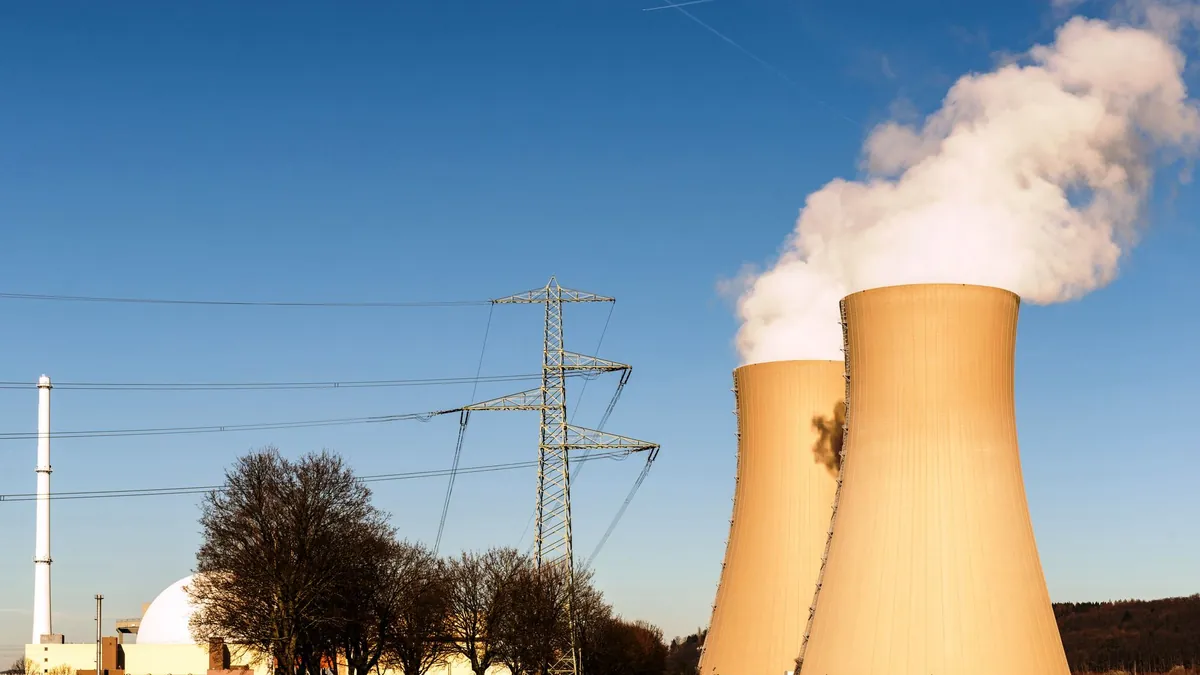
The push to modernize critical infrastructure through cloud adoption has swept across nearly every major industry in 2026, and nuclear facilities are no exception to that pressure. Governments, tech vendors, and efficiency consultants have collectively championed cloud migration as an inevitable evolution — a smarter, leaner way to manage complex operational systems at scale.
But nuclear infrastructure operates under an entirely different set of stakes, where a single misconfiguration can cascade into a national security crisis rather than a customer service disruption. The nuclear infrastructure cloud security risks that experts quietly acknowledge behind closed doors are far more sobering than the industry’s optimistic press releases suggest, and these 6 realities make a compelling case for extreme caution. represent a major operational focus.
1. Regulatory Compliance Barriers Lock Cloud Deployment Out of Nuclear Facilities

Nuclear facilities operate under some of the most rigorous regulatory frameworks on the planet, including mandates from the Nuclear Regulatory Commission and equivalent international bodies that were never designed with commercial cloud environments in mind. These regulations impose strict controls over data handling, system access, and operational continuity that most cloud providers structurally cannot satisfy. The compliance gap alone is enough to disqualify standard cloud deployments before a single server is provisioned.
- Key Reality: Nuclear facilities must meet 10 CFR Part 73.54 cybersecurity standards, which explicitly restrict internet-connected architectures common in commercial cloud platforms.
2. Data Sovereignty Rules Make Cross-Border Cloud Operations a Legal Minefield

Cloud providers routinely distribute data across geographically dispersed server farms to optimize performance and redundancy, but that architecture directly conflicts with nuclear data sovereignty requirements. Sensitive operational data crossing international borders — even momentarily — can trigger treaty violations and national security protocols that carry severe legal consequences. No performance optimization is worth the geopolitical exposure that cross-border nuclear data transfer creates.
- Key Reality: At least 34 countries maintain explicit legal restrictions on where nuclear operational data can physically reside, making multi-region cloud deployments legally untenable.
3. Third-Party Cloud Dependencies Dramatically Expand the Attack Surface
Every third-party dependency introduced into a nuclear facility’s operational environment creates a new potential entry point for adversarial actors, and cloud providers bring hundreds of those dependencies by default. Shared infrastructure models mean that a vulnerability in an unrelated tenant’s environment can theoretically become a vector into critical nuclear systems. The same hidden risks explored in discussions of AI synthetic biology blueprints apply here — complexity conceals danger until it’s catastrophically too late.
- Key Reality: Major cloud providers average over 300 third-party software dependencies per core service offering, each representing a potential supply chain compromise point.
4. Latency in Cloud Control Systems Threatens Real-Time Nuclear Safety Functions

Nuclear safety systems demand microsecond-level response times to execute emergency shutdowns, coolant adjustments, and pressure regulation functions that prevent catastrophic failures. Cloud architectures introduce network latency that, even at its most optimized, cannot reliably meet the sub-millisecond thresholds that nuclear control systems require. When milliseconds separate a controlled response from a meltdown scenario, cloud-based latency is not an acceptable engineering trade-off.
- Key Reality: Industry safety benchmarks require nuclear control system response times under 5 milliseconds — a threshold commercial cloud networks routinely exceed by 10x or more.
5. Legacy Security Protocols Inside Nuclear Plants Are Fundamentally Incompatible With Cloud

Nuclear facilities rely on decades-old industrial control systems built with proprietary encryption and communication protocols that predate modern cybersecurity architecture entirely. Bridging these legacy systems to cloud environments requires translation layers and middleware that introduce new, poorly-audited vulnerabilities into the security chain. Much like how military satellite systems require hardened, isolated communication channels, nuclear infrastructure demands security architectures that commercial cloud simply wasn’t built to accommodate.
- Key Reality: An estimated 60% of active nuclear plant control systems globally run on firmware and protocols that are over 20 years old and incompatible with modern cloud security standards.
6. Vendor Lock-In Strips Facilities of Operational Control Over Mission-Critical Systems

Migrating nuclear infrastructure to a commercial cloud provider creates a dependency relationship where the vendor’s business decisions, outages, or policy changes can directly impact a nation’s most sensitive operational systems. If a provider discontinues a service, raises prices prohibitively, or suffers a prolonged outage, the facility’s ability to maintain safe operations becomes contingent on a corporation’s internal priorities. Sovereign control over nuclear infrastructure is not a feature that can be outsourced to a vendor’s service-level agreement.
- Key Reality: Cloud vendor outages in 2026 have averaged 4.7 hours of downtime per major incident — an eternity for systems where continuous monitoring is a non-negotiable safety requirement.
The nuclear infrastructure cloud security risks outlined here aren’t theoretical edge cases — they are structural, legal, and physical realities that no amount of vendor marketing can engineer away. Cloud adoption has transformed countless industries for the better, but nuclear facilities represent 1 domain where the consequences of getting it wrong are simply too irreversible to gamble on. If you work in critical infrastructure security or have a perspective on where the industry should draw the line, share your thoughts in the comments below.