Space Debris Cascade: Why Defense Planners Fear Runaway Destruction


Most people picture outer space as an infinite, empty frontier — a place where satellites drift in peaceful isolation among the stars. That romantic image has quietly become one of the most dangerous misconceptions of the modern technological era. Low Earth orbit is now a congested highway of over 27,000 tracked debris objects, with hundreds of thousands of smaller fragments too tiny to monitor but large enough to destroy operational hardware on impact.
The assumption that space is self-regulating — that debris simply burns up or drifts harmlessly away — is precisely the kind of thinking that has defense planners losing sleep. A single high-velocity collision can produce thousands of new fragments, each capable of triggering further collisions in a compounding chain reaction that no agency can stop once it begins. This is the catastrophic logic at the heart of the space debris cascade communications crisis unfolding right now.
Kessler Syndrome Turns Orbital Debris Into an Exponential Threat
The Kessler Syndrome, first theorized by NASA scientist Donald Kessler, describes a self-sustaining cascade where orbital debris collisions generate more debris faster than natural decay can remove it. At certain debris density thresholds, the process becomes irreversible — no cleanup mission, no international treaty, and no deorbit technology can outpace the destruction. What makes 2026 particularly alarming is that several modeling agencies now estimate certain orbital shells are approaching precisely those critical density thresholds.
Collision prediction has improved dramatically, and tools like the satellite collision forecasting system now give operators windows as short as 72 hours to execute emergency maneuvers. But even with advanced warning, the sheer volume of active satellites — many operated by private commercial entities with minimal coordination protocols — makes systematic avoidance nearly impossible at scale. The math is working against everyone simultaneously.
Global Communications Infrastructure Sits Directly in the Cascade’s Path
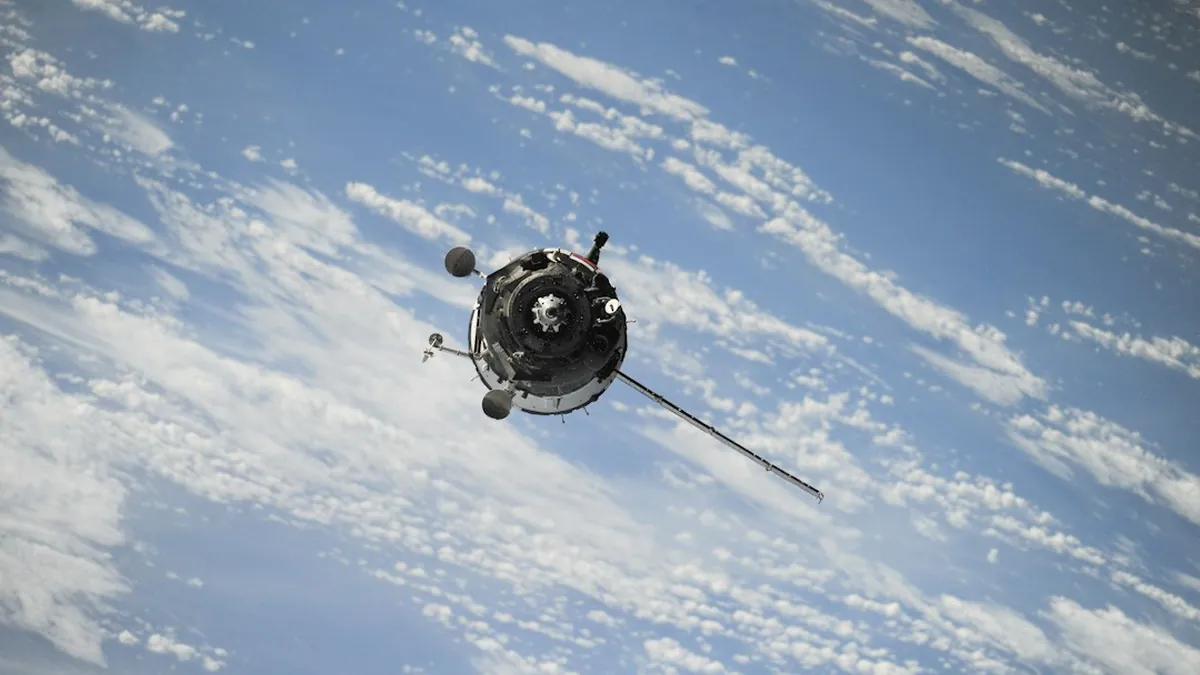
The practical stakes of a runaway debris cascade extend far beyond military assets — they reach directly into civilian life through GPS navigation, broadband internet, weather forecasting, and financial transaction networks. A cascading event concentrated in the 550-kilometer orbital band, where the densest commercial satellite constellations operate, could sever global connectivity for years, not weeks. Defense planners are acutely aware that LEO satellite security vulnerabilities compound the risk by making critical nodes susceptible to both physical debris strikes and deliberate electronic interference.
Mitigation strategies in 2026 include active debris removal missions, mandatory deorbit compliance windows of 5 years or fewer for new satellite operators, and experimental drag-sail technologies that accelerate natural orbital decay. Several space agencies are also developing real-time debris mesh networks — distributed sensor arrays that track fragment clouds with centimeter-level precision. However, regulatory enforcement across sovereign launch programs remains fractured, and without binding international accountability, even the best technical solutions face a coordination gap that debris doesn’t wait for.
The space debris cascade communications threat is no longer a theoretical worst-case scenario buried in academic journals — it is an active, accelerating risk that touches every piece of technology orbiting Earth today. The window to establish meaningful orbital governance is narrowing with every uncontrolled reentry and every untracked fragment added to an already overcrowded sky. Share your thoughts in the comments — do you think international space agencies are moving fast enough to prevent a cascade before it becomes irreversible?