Hypersonic Missiles vs Air Defense Systems


Modern warfare has always been defined by the tension between the spear and the shield — but in 2026, that tension has reached a genuinely alarming new threshold. Nations across the globe are pouring hundreds of billions of dollars into military modernization, and hypersonic weapons have emerged as the single most disruptive technology reshaping the strategic landscape. The public conversation has largely framed this as a story of offensive dominance, but the full picture is far more complicated.
The uncomfortable truth is that the world’s most sophisticated air defense systems were fundamentally engineered for a different era of threat. Missiles traveling at Mach 5 or beyond, maneuvering unpredictably through the upper atmosphere, expose critical gaps that legacy platforms were never designed to close. Understanding why hypersonic missiles air defense has become the defining military challenge of this decade requires a hard look at both the physics and the geopolitics involved.
Hypersonic Weapons Exploit the Physics That Conventional Defenses Rely On
Traditional ballistic missiles follow predictable parabolic trajectories, giving radar networks precious seconds — sometimes minutes — to calculate intercept solutions. Hypersonic glide vehicles and hypersonic cruise missiles shatter that assumption entirely, flying at speeds exceeding Mach 5 while executing lateral maneuvers that make trajectory prediction nearly impossible. This combination of speed and unpredictability is not an incremental upgrade; it is a categorical shift in the offense-defense calculus.
The engineering challenge is staggering: intercepting a target moving at 2 kilometers per second demands sensors, processors, and kill vehicles operating at response times measured in milliseconds. Nations investing in underground military bunkers as a passive defense layer are essentially acknowledging that active interception alone cannot be guaranteed. The physics of hypersonic flight currently favor the attacker in almost every engagement scenario modeled by defense analysts.
Next-Generation Defense Architecture Is Racing to Close a Dangerous Gap
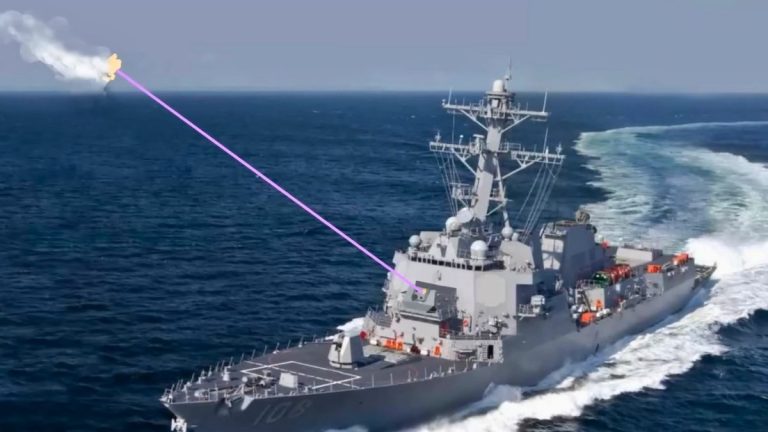
The most credible near-term responses involve layered sensor networks, space-based tracking constellations, and directed-energy weapons capable of engaging targets at the speed of light. Russia’s deployment of advanced systems like the S-500 — designed specifically with hypersonic interception in mind — signals that at least 1 major power believes the defense gap can be narrowed, even if not fully closed. A closer look at the S-500 air defense regiment reveals just how aggressively Moscow is betting on this technology to restore deterrence parity.
The United States, meanwhile, is accelerating programs under the Missile Defense Agency and funding hypersonic defense research at a pace not seen since the Strategic Defense Initiative of the 1980s. Directed-energy platforms, including high-powered microwave and laser systems, offer the cost-per-shot advantage that kinetic interceptors simply cannot match against saturation attacks. The strategic logic is shifting from “shoot down every missile” to “make hypersonic strikes prohibitively expensive and tactically uncertain.”
The hypersonic arms race is ultimately a story about deterrence theory being stress-tested in real time, with no guaranteed outcome for either side. Whichever nations crack the interception problem first will hold an extraordinary strategic advantage for the decades that follow — and the window to do so is narrowing fast. Share your perspective on where you think this arms race is headed in the comments below.