Electronic Warfare: Fake Radio Signals vs Air Defense

Modern warfare has never been purely about firepower. For decades, militaries have understood that controlling the electromagnetic spectrum — the invisible layer of radio waves, radar pulses, and communication signals surrounding every battlefield — can be just as decisive as any missile or aircraft. The side that dominates this spectrum often controls the outcome of an engagement before a single shot is fired.
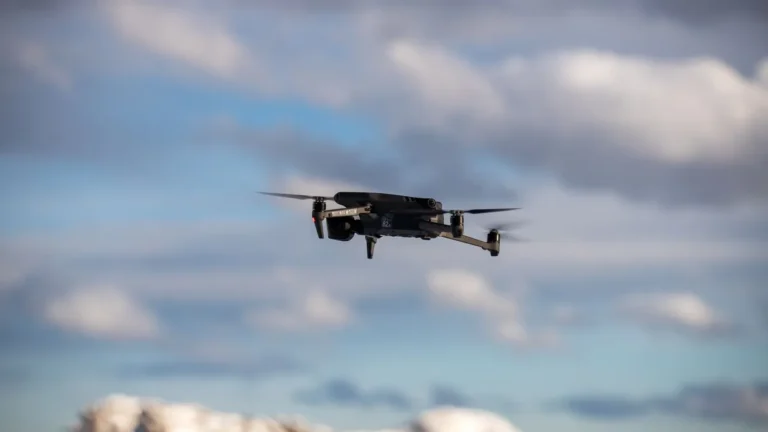
What most people don’t fully grasp is how aggressively nations now exploit fake signals to blind, mislead, and paralyze sophisticated air defense networks. The assumption that radar systems simply “see” everything in the sky is dangerously outdated. Electronic warfare fake radio signals have evolved into precision instruments of deception that can make a single drone appear to be a full fighter squadron — or make an entire incoming strike disappear from a screen entirely.
Fake Radio Signals Are the First Weapon Fired in Any Air Battle
At its core, electromagnetic deception works by flooding an enemy’s radar and communication systems with fabricated data. Spoofing techniques inject false positional signals into radar returns, convincing operators they’re tracking real aircraft on specific trajectories when none exist. This forces air defense crews to commit resources, fire interceptors, or — critically — expose their own radar emissions, making them targetable.
Jamming represents the blunter sibling of spoofing: rather than deceiving, it overwhelms. High-powered noise jamming saturates radar receivers with interference, creating blind zones that attacking aircraft can exploit. Military analysts tracking banned weapons nations still test have noted that electromagnetic suppression tools frequently appear in the same development pipelines as next-generation offensive systems, underscoring how central signal warfare has become to modern doctrine.

Air Defense Systems Are Fighting Back With Adaptive Signal Intelligence
Modern air defense networks are no longer passive radar dishes waiting to be fooled. Systems like the Patriot PAC-3 and S-500 now incorporate multi-spectral sensor fusion, cross-referencing radar data against infrared, optical, and signals-intelligence feeds simultaneously to validate whether a detected contact is real or manufactured. A ghost signal that fools 1 sensor rarely survives scrutiny across 4 independent data streams running in parallel.
The countermeasure arms race has also pushed militaries toward AI-assisted signal classification, a domain where the risks of over-reliance are well-documented — research into AI trained on synthetic data reveals how systems fed artificial inputs can degrade in exactly the real-world conditions electronic warfare creates. Operators are now trained to treat AI threat-classification outputs as advisory rather than authoritative, keeping human judgment embedded in the kill chain.
The battlefield reality is that electronic warfare fake radio signals have permanently changed the calculus of air defense — no system, regardless of sophistication, can afford to trust a single data source. As autonomous platforms and AI-driven jamming pods grow cheaper and more accessible, the electromagnetic contest above every future conflict will only intensify. Drop your perspective in the comments — do you think AI-assisted defenses can ever fully outpace signal deception technology?