
Space Radar Satellites Track Submerged Submarines

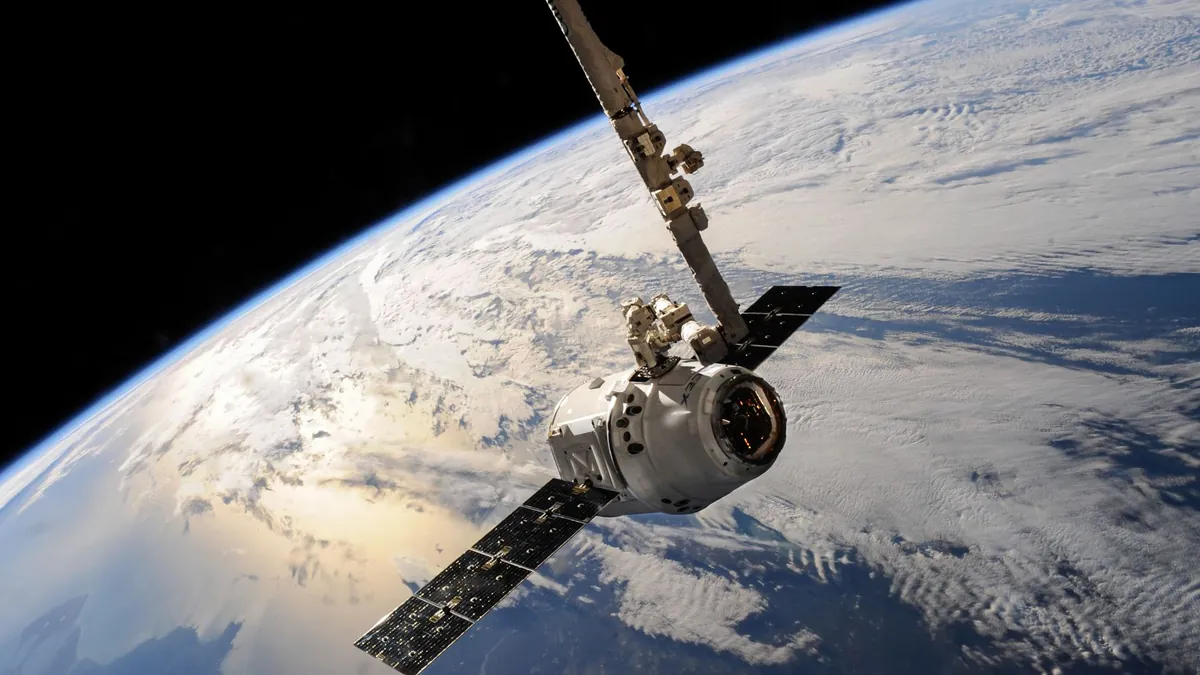
For decades, the ocean’s depth was considered the ultimate shield for nuclear-armed submarines — a vast, dark sanctuary where stealth was virtually guaranteed. Navies spent billions engineering vessels specifically to disappear into the sea, operating on the assumption that no technology could reliably pierce thousands of meters of saltwater from above. That assumption is now being aggressively challenged by a new generation of orbital systems.
The counterintuitive reality is that satellites don’t need to see through water to detect a submarine — they only need to read the ocean’s surface. Physics, not brute-force optics, is the weapon here, and militaries worldwide are racing to exploit it. Space-based radar satellites submarine detection programs have quietly shifted from theoretical research into active strategic deployment in 2026.
Synthetic Aperture Radar Turns Ocean Physics Into a Targeting Tool
Synthetic Aperture Radar, or SAR, works by bouncing microwave pulses off the ocean surface and analyzing the returning signal with extraordinary precision. A moving submarine displaces water and generates internal waves — called Kelvin wakes — that create measurable surface disturbances stretching for kilometers behind the vessel. SAR satellites can resolve these subtle patterns from altitudes exceeding 500 kilometers, making the invisible suddenly legible.
Modern SAR constellations can revisit the same ocean coordinates every 30 to 90 minutes, dramatically compressing the detection window that submarines once relied upon. This capability is increasingly paired with machine learning systems — similar in principle to the emergent neural network behaviors reshaping defense analytics — to filter genuine submarine signatures from noise like storm swells or shipping traffic. The result is a persistent, automated surveillance layer that never sleeps.

Strategic Advantages Are Real, But Operational Limits Remain Significant
The strategic implications are enormous — a credible space-based detection network fundamentally undermines second-strike nuclear doctrine, which depends on submarines remaining undetectable. Nations with large submarine fleets, including Russia and China, have accelerated counter-space programs specifically in response to this threat, targeting the orbital infrastructure that makes detection possible. Analysts tracking radar detection limits in modern warfare note that this creates a dangerous escalation dynamic between space and undersea domains.
However, current SAR-based detection is far from a solved problem — rough sea states, deep-water operations, and deliberate low-speed maneuvering can all suppress or eliminate detectable surface signatures. Cloud cover does not impede SAR, but signal interpretation remains computationally intensive and prone to false positives at scale. Operational detection still requires corroborating data from acoustic sensors, maritime patrol aircraft, and signals intelligence to reach actionable confidence levels.
Space-based radar satellites submarine detection represents one of the most consequential technological shifts in undersea warfare in a generation, compressing the stealth advantage that submarines have held for over 80 years. The ocean floor remains silent, but the surface above it is becoming an open book to anyone with the right orbital assets and algorithmic firepower. If you follow defense technology or naval strategy, drop your perspective in the comments — we want to know what you think this means for global security.


