Samsung Launches Galaxy Z TriFold Smartphone with Three-Panel Design

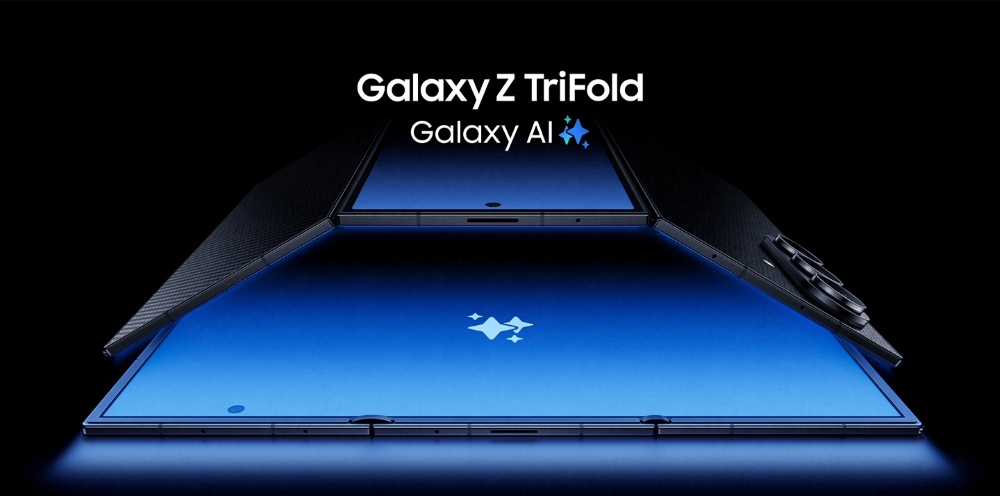
Samsung has unveiled the Galaxy Z TriFold, its first tri-fold smartphone featuring three expandable panels that unfold to a 9.96-inch inner display. The device integrates a 200-megapixel primary camera, Snapdragon 8 Gen 4 processor, and 5,000mAh battery supporting 65W wired charging. Priced at $1,799 for the 256GB model, it targets premium users seeking tablet-like multitasking in a pocketable form factor.
The tri-fold mechanism employs dual hinge systems with carbon fiber reinforcements, allowing a flat 7.2-inch phone mode, an 8.6-inch book-style fold, and the full 9.96-inch tablet expansion. Samsung’s Flex Hinge technology reduces the crease visibility by 40 percent compared to the Galaxy Z Fold 6, using ultra-thin glass layers bonded with optical adhesive. The outer cover display measures 6.5 inches at 2520×1080 resolution with 120Hz refresh rate, enabling full app functionality without unfolding.
Under the hood, the device runs One UI 7 based on Android 15, with AI features like Circle to Search enhanced for the larger canvas and real-time translation across split-screen modes. It includes 16 gigabytes of RAM and up to 1 terabyte of storage, with IPX8 water resistance certified for submersion up to 1.5 meters. The camera array adds a 12-megapixel ultrawide and 10-megapixel telephoto with 3x optical zoom, supporting 8K video at 30 frames per second.
Samsung positions the TriFold as a productivity tool, with S Pen Fold Edition compatibility on the inner display for note-taking and diagramming. The frame uses aerospace-grade aluminum, weighing 283 grams despite the expanded surface area. Pre-orders begin December 15 in the U.S., with shipments starting January 10, 2026, through carriers like Verizon and AT&T offering trade-in credits up to $800.
This launch precedes Apple’s rumored foldable iPhone expected in late 2026, escalating competition in the $15 billion flexible display market projected to grow 25 percent annually through 2030. Samsung’s display division supplies panels for 60 percent of global foldables, leveraging vapor deposition printing for thinner, more durable screens. The TriFold supports DeX mode for desktop-like interfaces when connected to monitors via USB-C.
Battery efficiency derives from a dual-cell lithium-polymer setup optimized for the variable form factors, achieving up to 22 hours of video playback in tablet mode. Cooling incorporates a vapor chamber 1.5 times larger than the Z Fold 6, maintaining thermal throttling under 5 percent during sustained gaming. Software updates guarantee seven years of OS and security patches, aligning with Google’s Pixel extended support.
U.S. availability emphasizes integration with Samsung’s ecosystem, including seamless Galaxy Watch and Buds pairing for health data syncing across modes. The device’s under-display front camera uses a 4-megapixel sensor with pixel-binning for improved low-light selfies. Analysts forecast 2 million units sold in the first year, driven by enterprise adoption for mobile workflows.
This innovation addresses longstanding foldable critiques on durability, with Samsung claiming 500,000 fold cycles before hinge degradation. The TriFold’s anti-reflective coating on displays reduces glare by 75 percent, enhancing outdoor usability. Accessories like a $99 slim case with built-in kickstand launch alongside the phone, supporting landscape video calls.