Pentagon and AI Giants Grapple with Chinese Battery Dependence

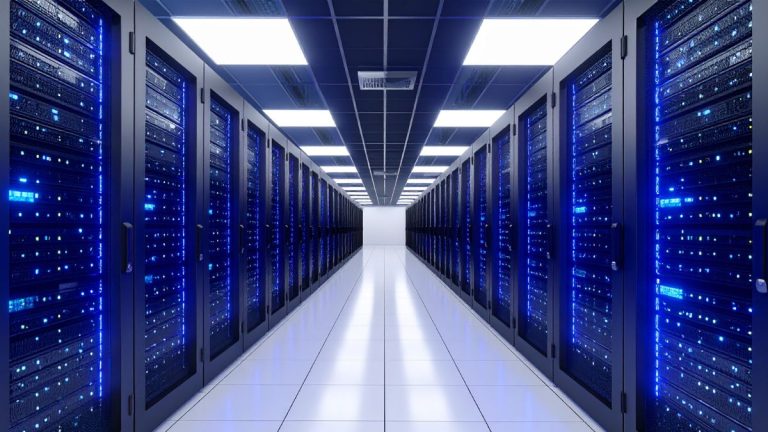
In Northern Virginia’s data center alley, sprawling windowless structures the size of aircraft hangars drive the United States’ artificial intelligence industry in its competition against China. These facilities draw power equivalent to that of a small city. Brief electricity flickers can corrupt sensitive AI software. Technology companies plan to spend billions of dollars on large lithium-ion batteries to ensure uninterrupted operations.
China leads in nearly every industrial component of battery production. This includes mining, refining, and manufacturing of key materials. Dan Wang, an expert on China’s technology sector at Stanford’s Hoover Institution, stated that China is ahead both technologically and in terms of scale. United States military and tech sectors face vulnerabilities from this reliance.
The Pentagon observes how warfare evolves in Ukraine with increased use of drones and directed-energy weapons. Military strategists project a need for millions of batteries to power such systems. Govini, a defense analytics firm, reports that United States forces depend on Chinese supply chains for approximately 6,000 individual battery components across various weapons programs. This extends beyond traditional industries like automotive manufacturing.
Lithium iron phosphate batteries represent the most common type for energy storage applications. International Energy Agency data from 2024 shows China controls 86 percent of global graphite mining, compared to one percent by the United States. For phosphorus mining, China holds 46 percent. In lithium mining, China accounts for 22 percent while the United States manages four percent. Manganese mining sees China at four percent.
Refining processes further amplify China’s dominance. China refines 73 percent of global phosphorus, with the United States at 0.2 percent. Lithium refining stands at 70 percent for China and six percent for the United States. Graphite refining reaches 95 percent Chinese control against one percent American. Manganese refining is 95 percent Chinese and one percent American.
Battery component manufacturing is overwhelmingly Chinese. China produces 94 to 98 percent of battery cells worldwide. Cathodes are 94 to 99 percent Chinese-made. Anodes reach 98 to 99 percent from China. These figures underscore the challenges in diversifying supply chains.
United States Census Bureau import data through September 2025 reveals most rechargeable lithium-ion batteries enter from China. Quarterly customs values confirm China as the top source among major importers. In 2023, Russia imported 466 million dollars in rechargeable batteries, with 230 million dollars from China. Ukraine’s imports followed similar patterns, relying heavily on Chinese suppliers.
Geopolitical implications grow as Silicon Valley strives to maintain AI superiority. The Pentagon’s push for advanced weaponry intensifies the need for reliable battery sources. Efforts to reduce dependence include domestic production incentives. However, scaling up remains constrained by technological and resource gaps. This situation heightens alerts across critical sectors.