
Japanese Researchers Convert Road Traffic Into A Low Energy Computing System

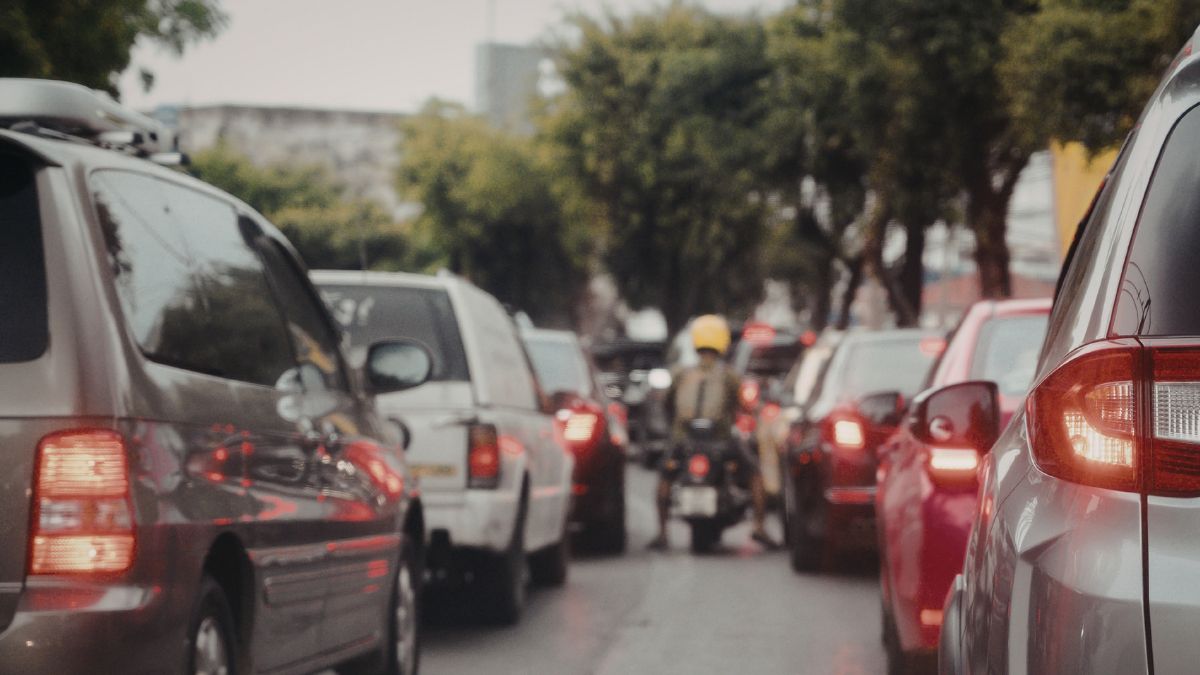
A team of scientists in Japan has unveiled a groundbreaking computing method that transforms everyday road traffic into a powerful data processing system. Researchers from Tohoku University and the University of Tsukuba have demonstrated that the flow of vehicles can serve as a physical reservoir for computational tasks. This concept is part of a newly proposed framework called Harvested Reservoir Computing which utilizes the natural dynamics of existing physical systems to perform calculations. The study suggests that the chaotic yet patterned movement of cars could replace traditional silicon processors for certain artificial intelligence applications. This approach offers a potential solution to the growing energy demands of modern computing infrastructure.
The core technology behind this innovation is known as reservoir computing. This neural network architecture typically relies on a fixed and random dynamical system to map input signals into a higher-dimensional space. The Japanese team discovered that the complex interactions between vehicles on a road network naturally exhibit the necessary properties for this type of processing. Professor Hiroyasu Ando from the Advanced Institute for Materials Research led the study that validated this theory. His team successfully showed that the nonlinear movements of traffic could process information without requiring electricity for the computation itself.
To test their hypothesis, the researchers utilized both numerical simulations and physical experiments. They set up a laboratory environment featuring autonomous miniature cars built to a scale of 1/27. These tiny vehicles navigated a grid-based road network while sensors monitored their collective behaviors and interactions. The data gathered from these experiments confirmed that the traffic system could act as a computational reservoir. The system processes information through the constantly changing spatial and temporal patterns created by the moving vehicles.
One of the most intriguing findings from the study relates to the optimal conditions for this type of computing. The researchers determined that the system performs best when traffic density is at a medium level. Computation accuracy drops if the roads are too empty because there are not enough interactions between vehicles to generate complex data. Performance also suffers during complete gridlock when movement ceases and the system loses its dynamic nature. This sweet spot of flow allows the system to balance memory retention with the nonlinear processing power required for accurate predictions.
This development holds significant promise for the future of smart cities and sustainable technology. Urban planners could potentially harness existing transportation networks to process data related to weather or traffic management itself. Utilizing the physical world for computation dramatically reduces the need for electricity that would otherwise power massive server farms. This method turns the energy already expended by moving vehicles into a valuable computational resource. The researchers believe this is just the beginning of harvesting computational power from the natural and social dynamics around us.
We are curious if you would feel comfortable driving your car knowing it was part of a giant computer processor so please share your thoughts in the comments.