
Intel Confirms Nova Lake CPU Launch for Late 2026

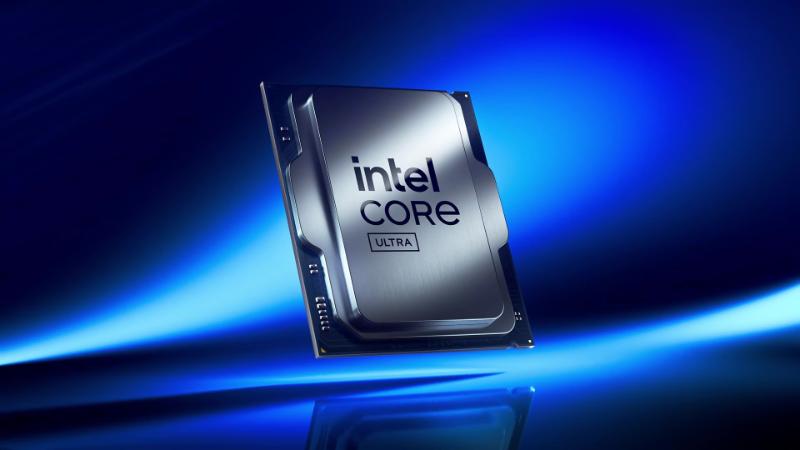
Intel outlined its client processor roadmap, confirming the Nova Lake architecture will debut in the second half of 2026 for both desktop and mobile platforms. The new family introduces up to 52 cores in a 16P+32E+4LP configuration, paired with Xe3 integrated graphics on the LGA 1954 socket. This positions Nova Lake to challenge AMD’s Zen 6 in multi-threaded workloads, targeting gamers and creators with 288 MB of stacked L3 cache for enhanced gaming performance. Production mixes Intel’s 14A node with TSMC’s 2nm process, promising 20% gains in efficiency over prior generations.
Preceding Nova Lake, Intel’s Arrow Lake Refresh arrives early 2026, refining Core Ultra 200 series chips with higher clock speeds up to 5.8 GHz on select SKUs. The refresh addresses initial thermal constraints in the original Arrow Lake, boosting single-thread performance by 15% through optimized voltage curves. Desktop variants like the Core Ultra 9 295K Plus feature 24 cores and 36 MB L3 cache, while mobile editions integrate into ultrabooks with 28W TDP envelopes. Intel’s Q3 earnings call highlighted these as interim steps to maintain parity until Nova Lake’s full rollout.
Nova Lake’s core design expands on Lion Cove P-cores and Skymont E-cores, delivering 1.8x IPC uplift in productivity tasks per internal benchmarks. The Xe3 GPU supports DirectX 13 Ultimate with hardware AV1 encoding, handling 8K playback at 60 fps across four streams. Memory support reaches DDR5-8000 with ECC validation for enterprise users, and PCIe 6.0 lanes total 28 for storage and networking. Socket LGA 1954 doubles pin count from LGA 1851, enabling higher power delivery up to 350W for overclocked configurations.
This timeline aligns with Intel’s foundry ambitions, where 18A node powers interim products like Panther Lake in Q1 2026. Panther Lake, branded Core Ultra Series 3, ships first SKUs in January with 16 cores and 12 Xe3 GPU cores topping at 5.1 GHz boost. Broad availability follows in Q2, focusing on laptops with vPro certification for remote management. Intel’s CEO emphasized during the Goldman Sachs conference that these launches fill “holes on the desktop front” amid competitive pressures from AMD’s 3D V-Cache dominance.
U.S. relevance intensifies as Nova Lake supports Windows 12’s advanced scheduling, optimizing for hybrid work setups with 40% better battery life in thin-and-light designs. Pricing starts at $299 for entry-level desktop chips, scaling to $699 for flagship unlocked models. Intel projects 50 million units shipped in 2027, capturing 35% market share in high-end segments per IDC forecasts. Compatibility requires new motherboards, with Z990 chipsets launching alongside Arrow Lake Refresh.
Broader ecosystem shifts include Thunderbolt 5 integration across all SKUs, offering 120 Gbps bidirectional speeds for external GPUs and docks. Intel’s roadmap counters AMD’s 2026 Zen 6 by emphasizing integrated graphics leadership, where Xe3 outperforms RDNA 3 in rasterization by 25%. Server variants under Xeon branding follow in mid-2027, with Diamond Rapids on 18A delivering 128 E-cores for data centers.
For American consumers, Nova Lake accelerates adoption of AI PCs without dedicated accelerators, relying on CPU vector extensions for up to 2x faster inference on quantized models. Intel’s $20 billion U.S. fab investments ensure domestic supply, mitigating tariff risks on imported silicon. Early access programs with OEMs like Dell and HP target Q4 2026 retail, with custom builds via Puget Systems emphasizing stability testing.
As desktop computing evolves toward modular designs, Nova Lake’s stacked cache innovation rivals AMD’s X3D tech, potentially reducing gaming frame drops by 30% in titles like Cyberpunk 2077 at 4K. Intel’s confidence stems from 18A yields hitting 60% in pilot runs, enabling cost-competitive pricing. This caps a recovery year for Intel, with client revenue projected at $18 billion in 2026.