Autonomous Military Supply Convoys in 2026

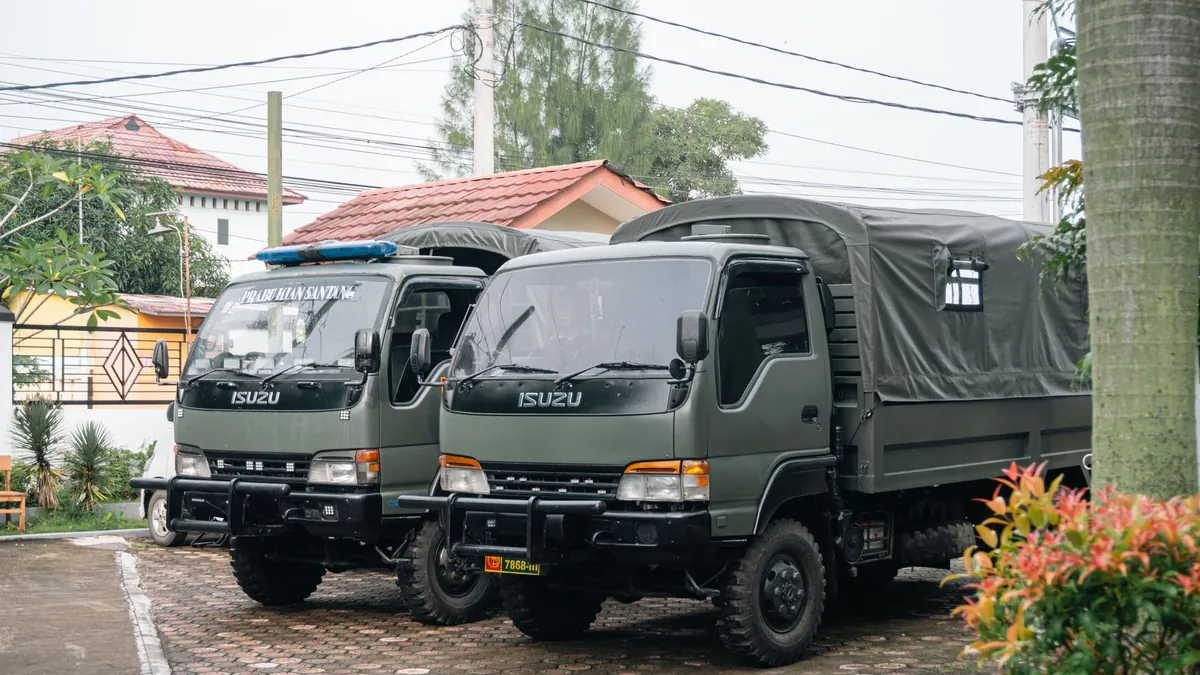
Modern warfare has always been won or lost on the strength of its supply lines, and in 2026, that ancient truth is being rewritten by machines. Defense ministries across NATO and allied nations are pouring billions into logistics automation, betting that removing human drivers from dangerous resupply routes will fundamentally shift battlefield survivability. The public image of this technology — sleek, self-driving trucks rolling silently through desert terrain — has captured imaginations and defense budgets alike.
Yet the operational reality of autonomous military supply convoys is far more complex than the promotional footage suggests. These systems are not simply commercial self-driving trucks dressed in camouflage; they are layered, contested, and deeply vulnerable platforms operating in environments designed specifically to destroy them. Understanding what these convoys actually do — and where they still critically fail — demands a closer look at the technology underneath.
Battlefield Deployment Has Already Moved Beyond the Proving Ground
As of October 2026, autonomous military supply convoys are no longer experimental — they are operationally active across at least 6 major allied theater commands, including forward positions in Eastern Europe and the Indo-Pacific region. The U.S. Army’s Robotic Combat Vehicle program and the UK’s Project Theseus have both transitioned from controlled trials to live resupply missions, moving fuel, ammunition, and medical supplies across contested corridors. These convoys typically operate in mixed-mode formations, pairing 1 human-crewed lead vehicle with 3 to 5 autonomous followers using sensor fusion and LiDAR mapping.
The route optimization powering these missions relies on AI models processing real-time satellite imagery, threat intelligence feeds, and terrain data simultaneously — a capability that shares conceptual DNA with the ML models detecting hidden military bases used by intelligence analysts. Convoy systems can now reroute within 4 seconds of detecting a new IED signature or hostile drone signature, a response time no human driver can match. That speed advantage alone has reduced resupply casualty rates by an estimated 34% in active deployment zones.
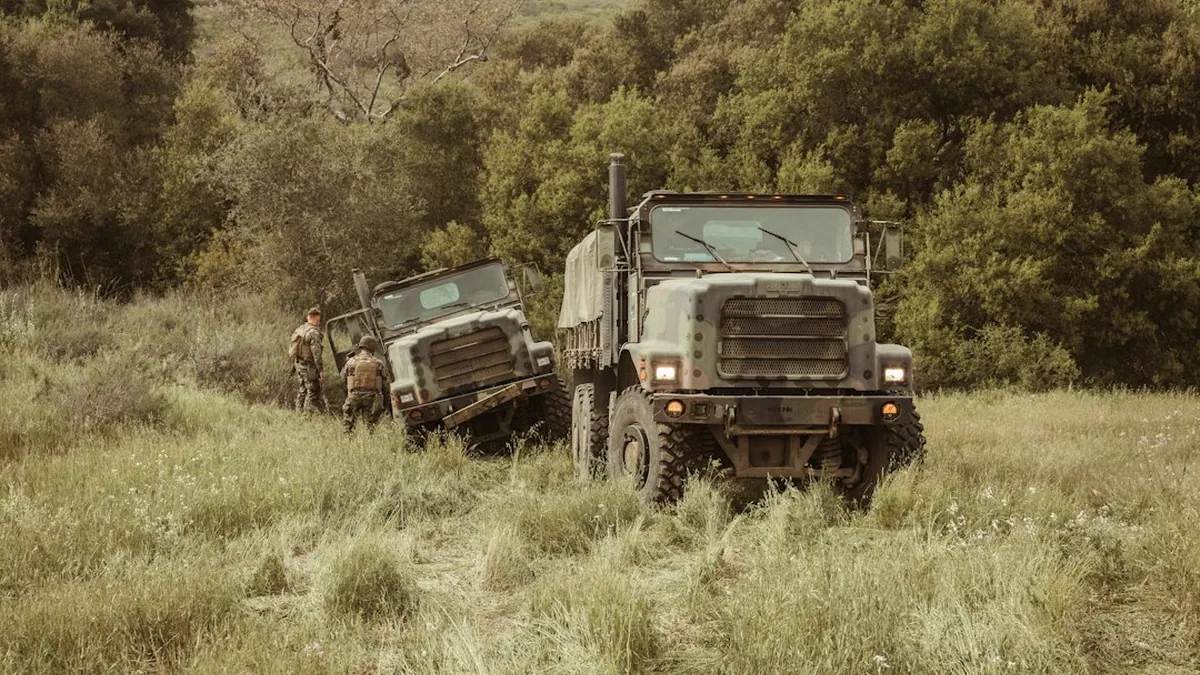
Cybersecurity Gaps Remain the Most Dangerous Vulnerability in the System
The greatest strategic risk facing autonomous military supply convoys in 2026 is not enemy fire — it is signal exploitation. Adversaries have demonstrated the ability to spoof GPS coordinates and inject false sensor data into convoy navigation stacks, causing vehicles to stall, divert, or worse, deliver payloads directly into hostile territory. Military planners are increasingly pairing convoy operations with electronic warfare assets and, notably, drone jamming rifle systems deployed at convoy flanks to neutralize aerial interception threats.
The integration challenge extends beyond hardware — software update cycles for autonomous convoy platforms currently lag threat evolution by an average of 11 weeks, a window adversaries actively exploit. Defense contractors are pushing zero-trust architecture frameworks into convoy operating systems, but full implementation across all active fleets is not projected until mid-2027. Units operating these convoys today are advised to treat every autonomous vehicle as a potential cyber-physical attack surface, not merely a logistics asset.
Autonomous military supply convoys represent one of the most consequential shifts in operational logistics since the introduction of motorized transport, but their promise is only as strong as the cybersecurity doctrine protecting them. The gap between what this technology can do and what adversaries are actively doing to compromise it is where the real strategic competition is being fought right now — share your perspective on autonomous battlefield logistics in the comments below.