7 Underground Military Bunkers Built to Survive Hypersonic Missiles

The age of hypersonic weapons has fundamentally rewritten the calculus of military survival, with missiles now capable of traveling at speeds exceeding Mach 5 and striking targets with near-zero warning time. Nations that once relied on early-detection systems and above-ground fortifications are quietly pivoting to a far older — and far deeper — strategy. The race to build indestructible underground command centers has never been more urgent or more secretive.
Most people assume that no structure can withstand the kinetic devastation of a hypersonic strike, and on the surface, that assumption holds weight. But the engineering reality buried beneath mountains and bedrock tells a far more complicated story — one where geology, shock absorption science, and layered reinforcement combine to challenge even the most advanced warheads. These 7 facilities represent the world’s most formidable answers to the military bunkers hypersonic missiles threat dominating defense strategy in 2026.
1. Cheyenne Mountain Complex: America’s Deep Underground Command Center with Multi-Layered Shock Absorption Technology
Carved 610 meters into the Colorado Rockies, Cheyenne Mountain remains the gold standard of hardened military infrastructure, housing 15 freestanding steel buildings mounted on over 1,300 massive springs designed to absorb catastrophic blast energy. Its reinforced granite shell and electromagnetic pulse shielding make it uniquely equipped to endure hypersonic impact scenarios that would obliterate surface installations. The facility has undergone significant modernization upgrades to address next-generation threat profiles.
- Key Reality: The complex sits under 610 meters of granite, supported by 1,319 steel springs each weighing nearly 1,000 pounds.
2. Yamantau Mountain Facility: Russia’s Massive Subterranean Complex Engineered for Hypersonic Impact Resistance

Russia’s Mount Yamantau in the Southern Urals conceals what Western intelligence analysts describe as a subterranean city spanning an estimated 400 square kilometers of tunnels and command infrastructure. Built to house thousands of personnel and sustain operations independently for extended periods, the facility is widely regarded as Moscow’s ultimate continuity-of-government bunker. Its sheer depth and rock density provide passive hypersonic shielding that no engineered material alone could replicate.
- Key Reality: Estimated construction costs exceeded 6 billion dollars across multiple decades of classified development.
3. Raven Rock Mountain Underground Pentagon: Hardened Bunker System Designed with Advanced Blast Deflection Architecture

Known officially as Site R, Raven Rock Mountain Complex in Pennsylvania functions as an alternate command center for the U.S. Department of Defense, built with multi-stage blast deflection corridors that redirect explosive shockwaves away from critical infrastructure. The facility spans approximately 716,000 square feet of underground space and maintains independent power, water, and communications systems. Its architecture specifically accounts for the compressed-time-of-impact dynamics that hypersonic weapons introduce.
- Key Reality: Raven Rock can reportedly sustain over 3,000 personnel during extended continuity-of-government operations.
4. Mount Paektu Secret Bunker: North Korea’s Fortified Underground Fortress Built Into Solid Rock Formation

North Korea has invested decades and an estimated 2 to 4 billion dollars annually into its underground military network, with facilities near Mount Paektu representing some of the deepest and most geologically shielded installations on the Korean Peninsula. The volcanic rock composition of the region provides natural compression resistance far exceeding standard reinforced concrete. Satellite imagery analysis and defector accounts suggest these tunnels extend well beyond publicly acknowledged depths.
- Key Reality: North Korea maintains an estimated 11,000 underground military facilities nationwide, according to defense research assessments.
5. Bihac Underground Military Facility: Bosnia’s Deep Bunker Network with Reinforced Concrete Hypersonic Shielding
The Željava Air Base complex near Bihac, straddling the Bosnia-Croatia border, remains 1 of the largest and most heavily reinforced underground military facilities ever constructed in Europe, originally built to withstand nuclear strikes. Its reinforced concrete walls reach thicknesses of up to 3.5 meters in critical sections, providing substantial resistance against hypersonic kinetic penetrators. The facility’s multi-entrance tunnel network also complicates any single-strike neutralization strategy. Just as technology advantages and disadvantages shape modern warfare doctrine, dual-use infrastructure like Željava illustrates how legacy engineering still holds strategic relevance.
- Key Reality: Construction of the Željava complex cost an estimated 6 billion dollars in today’s equivalent value.
6. Gotthard Base Tunnel Military Installation: Switzerland’s Alpine Underground Bunker with Precision Shock Mitigation Systems

Switzerland’s legendary neutrality has never meant military unpreparedness — the Alpine nation maintains an extensive network of underground military installations integrated into its civilian tunnel infrastructure, including facilities adjacent to the Gotthard corridor. These bunkers feature precision-engineered shock mitigation systems calibrated to absorb the specific frequency patterns generated by high-velocity impact events. Switzerland’s geological advantage of solid Alpine granite adds a passive defensive layer that engineered materials alone cannot match.
- Key Reality: Switzerland reportedly maintains over 370,000 military bunker positions across its national territory.
7. Zhangbei Underground Command Center: China’s Advanced Subterranean Facility with Hypersonic Missile Defense Integration
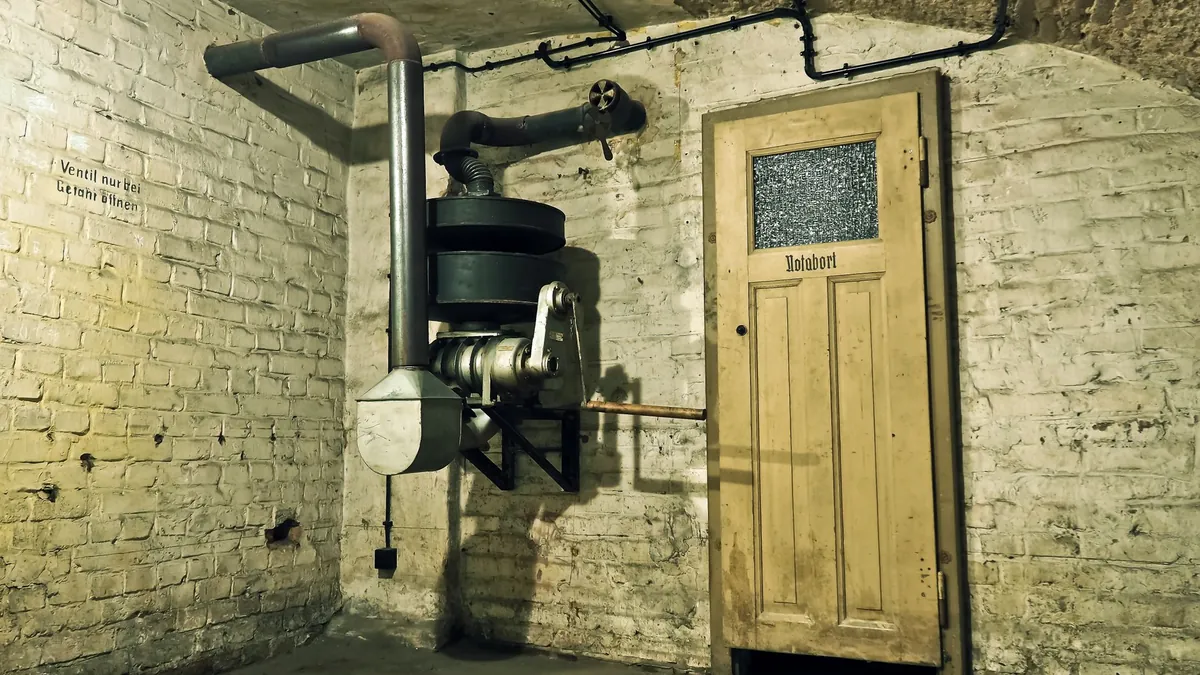
China’s Zhangbei facility represents the most technologically forward-leaning entry on this list, integrating active hypersonic missile defense sensor arrays directly into its underground command architecture — a design philosophy that blurs the line between bunker and weapons system. PLA engineering doctrine prioritizes layered redundancy, with the facility featuring independently sealed compartments capable of sustaining operations even if adjacent sections are compromised. This approach reflects China’s broader investment in AI-assisted defense coordination, where systems similar to those explored in AI creative and operational tools are being adapted for real-time threat response.
- Key Reality: China’s underground military tunnel network, known as the “Underground Great Wall,” is estimated to exceed 5,000 kilometers in total length.
The global arms race between military bunkers and hypersonic missiles is ultimately a contest between human ingenuity above ground and below it — and right now, geology and engineering are holding their own. These 7 facilities prove that depth, rock density, and layered shock absorption remain among the most reliable defensive assets any nation can possess. If you have thoughts on which of these underground fortresses you find most remarkable — or which nation’s approach seems most strategically sound — drop your take in the comments below.