How Kamikaze Drone Boats Reshaped Naval Warfare

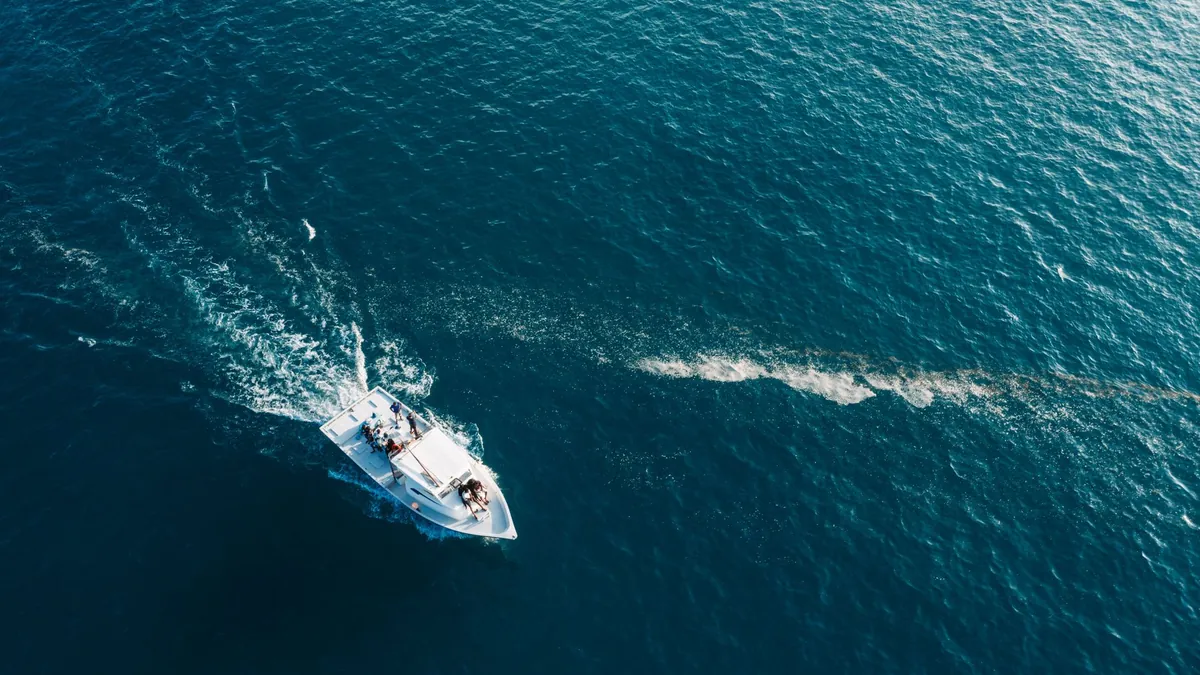
Modern naval warfare has always evolved in dramatic leaps, from ironclad battleships to nuclear submarines, each era forcing militaries to rethink doctrine from the ground up. In 2026, a quieter but equally seismic shift is underway, one that doesn’t involve aircraft carriers or destroyer fleets but rather small, fast, and expendable machines skimming the water’s surface. The public largely underestimates this transformation, still picturing naval conflict as a game of massive ships trading long-range missiles across open ocean.
That conventional picture, however, is rapidly becoming obsolete. Naval kamikaze drone boats — unmanned surface vessels designed to locate, pursue, and detonate against enemy targets — have demonstrated in active conflict zones that asymmetric technology can neutralize billion-dollar warships at a fraction of the cost. What many assumed was a niche tactic has instead proven to be a foundational shift in how maritime dominance is contested.
Autonomous Naval Weapons Rewrote the Rules of Engagement at Sea
The core mechanism behind naval kamikaze drone boats is deceptively straightforward: a small, low-profile hull packed with explosives is guided — autonomously or remotely — toward a high-value target, sacrificing itself on impact. What makes this technology genuinely disruptive is its scalability, since a single operator can theoretically manage swarms of these vessels simultaneously, overwhelming traditional point-defense systems. This shifts the calculus of naval deterrence in ways that legacy doctrine simply wasn’t built to handle.
Active conflict in the Black Sea region provided the world’s first sustained real-world laboratory for these weapons, where drone boat strikes successfully damaged or disabled heavily armored naval vessels. Defense analysts noted that the cost-exchange ratio was staggering — a drone boat costing tens of thousands of dollars inflicting damage on assets worth hundreds of millions. Much like understanding the advantages and disadvantages of technology in broader society, naval powers are now grappling with the double-edged nature of autonomous weapons proliferation.
Naval Doctrine and Defense Strategy Are Scrambling to Catch Up
For naval commanders and defense procurement officers, the practical reality is that existing countermeasures — close-in weapon systems and radar arrays — were designed with different threat profiles in mind, not fast, low-signature surface swarms. A common and costly mistake has been underinvesting in electronic warfare and AI-driven threat detection, leaving fleets exposed in littoral environments where drone boats thrive. Nations that delay integrating AI-driven defense applications into their naval architecture risk falling critically behind adversaries who have already operationalized these systems.
The geopolitical implications extend well beyond individual engagements, reshaping alliance strategies and arms export markets as smaller nations recognize they can now project credible naval threat without maintaining expensive blue-water fleets. Naval doctrine across NATO, Indo-Pacific coalitions, and non-aligned states is being rewritten to account for swarm tactics, electronic spoofing, and autonomous coordination. The era of naval supremacy being defined purely by tonnage and firepower is effectively over.
Naval kamikaze drone boats have compressed decades of theoretical asymmetric warfare into a few years of brutal, empirical proof on contested waters. The militaries that adapt fastest — investing in countermeasures, autonomous response systems, and updated doctrine — will define the next generation of maritime power. Share your perspective on how autonomous naval weapons should be governed in the comments below.