New Crash Clock Predicts Satellite Collisions In Under Three Days

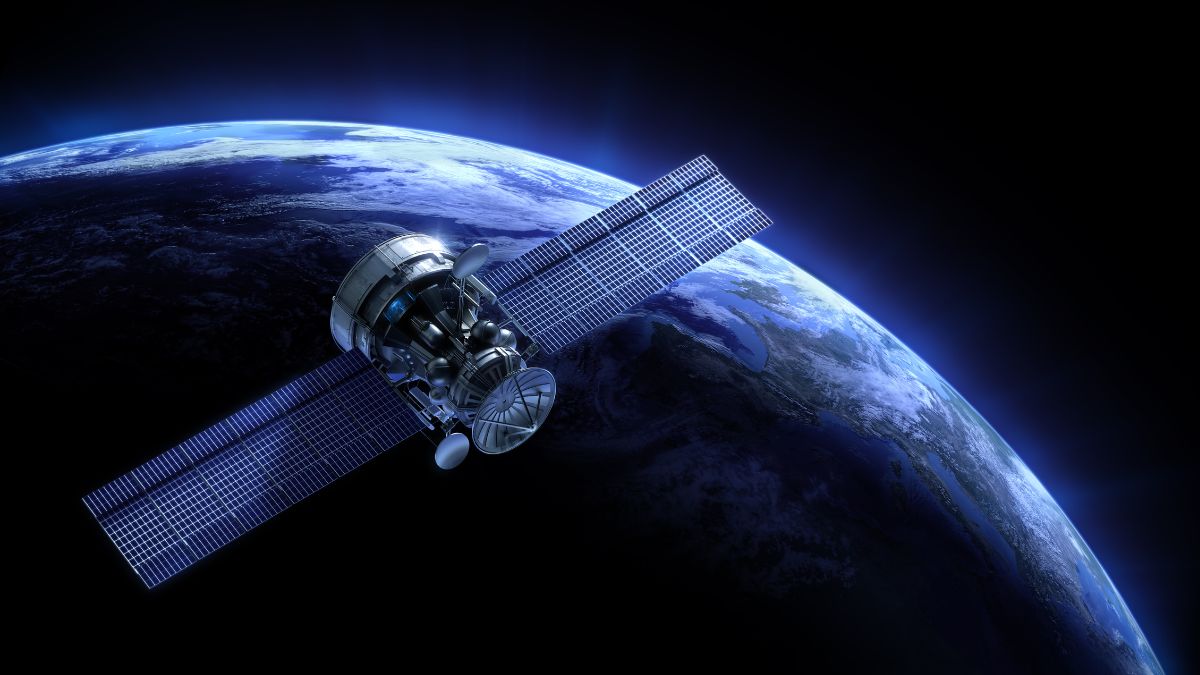
Space has become significantly more crowded in recent years due to the rapid launch of commercial satellite constellations. Researchers have developed a new metric to quantify the danger arising from this congestion in Low Earth Orbit. This tool is known as the CRASH Clock and serves as a stark warning about the fragility of our orbital environment. It estimates that if satellites lost the ability to maneuver today they would likely start colliding in less than three days. This timeline has shortened dramatically compared to just a few years ago.
The term CRASH stands for Collision Realization And Significant Harm. A team including Sarah Thiele from Princeton University and Aaron Boley from the University of British Columbia created this model to measure orbital stress. Their calculations indicate the current value of the clock is approximately 2.8 days. This figure represents the average time until the first collision occurs if active avoidance systems fail. Such a failure could be triggered by a massive solar storm or a widespread cyberattack that disables satellite controls.
The data reveals a concerning trend when compared to historical figures from the recent past. The same model applied to the orbital environment of 2018 would have shown a buffer of roughly 121 days before a collision occurred. The drop from over four months to under three days highlights how dense the population of satellites has become in such a short period. This increase is largely driven by the deployment of megaconstellations that now dominate the night sky. The margin for error has effectively vanished and leaves humanity dependent on perfect mechanical operations to avoid disaster.
A primary fear among experts is the potential for a cascading chain reaction known as the Kessler Syndrome. This theoretical scenario suggests that a single collision could generate a cloud of debris that triggers further impacts in an uncontrollable loop. Such an event was famously depicted in the movie ‘Gravity’ where a debris field destroys everything in its path. The new study suggests we are alarmingly close to a tipping point where this fiction could become reality. A collision cascade would render huge sectors of space unusable for generations and trap us on Earth.
The researchers emphasize that this clock functions similarly to the famous Doomsday Clock regarding its symbolic importance. It acts as an environmental indicator to show policymakers and the public the urgency of the situation. Current safety relies entirely on the ability of operators to constantly adjust trajectories to dodge other objects. A significant geomagnetic storm could disrupt these communications and leave satellites drifting blindly into one another. The 30 percent chance of a smashup within the first 24 hours of such an event is a risk that many scientists find unacceptable.
Global space agencies and private companies must now reckon with the reality that the orbital highways are saturated. The findings from Thiele and her colleagues suggest that immediate action is required to ensure long-term sustainability. Without strict limits on new launches or better debris removal technologies the clock will only tick down further. We are operating in a domain where a single bad day could permanently ruin the final frontier.
Please share your thoughts on the risks of satellite congestion and space debris in the comments.