SoftBank Teams with Yaskawa to Deploy Physical AI Robots in Offices

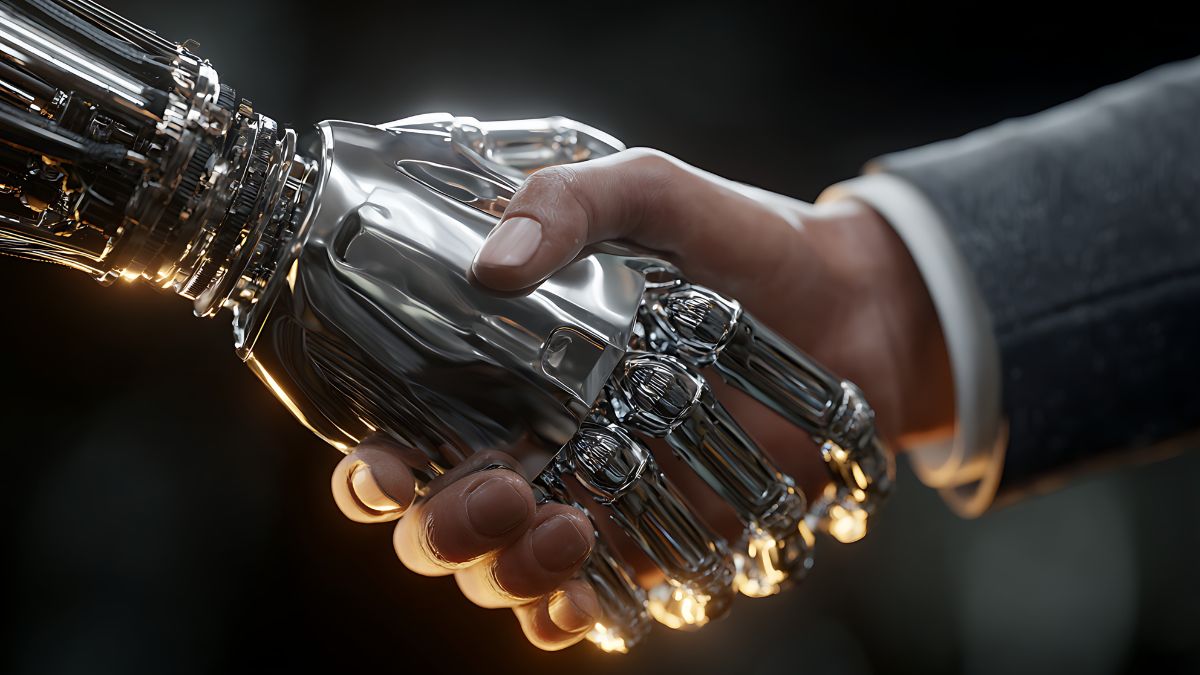
SoftBank Corp. and Yaskawa Electric signed a memorandum of understanding to develop physical AI robots capable of handling multiple tasks in shared human environments. The partnership combines SoftBank’s AI-RAN infrastructure with Yaskawa’s motion control systems, enabling robots to make real-time decisions based on physical laws and sensor data. This initiative targets office automation, where a single robot could replace specialized machines for cleaning, delivery, and security patrols. Demonstration of the prototype occurs at Yaskawa’s booth during the International Robot Exhibition in Tokyo from December 3 to 6.
The core technology stack relies on multi-access edge computing (MEC) deployed across SoftBank’s network of base stations, providing low-latency processing within 10 milliseconds for robot commands. SoftBank’s vision-language model (VLM) analyzes inputs from cameras and LIDAR to generate task sequences, such as navigating cluttered spaces or adjusting grips on irregular objects. Yaskawa’s vision-language-action (VLA) model translates these into precise motor controls, achieving 95% success rates in simulated multi-task scenarios involving up to five concurrent operations. Integration with building management systems allows robots to sync with lighting, HVAC, and access controls for seamless facility operations.
Yaskawa, which has shipped over 600,000 industrial robots worldwide, contributes its MOTOMAN series arms, now augmented with AI for adaptive behaviors beyond programmed paths. The collaboration extends SoftBank’s prior investments in robotics, including a $5.4 billion acquisition of ABB’s robot division set to close in mid-2026, bolstering its portfolio for AI-enhanced hardware. Initial pilots focus on Japanese corporate campuses, with scalability to U.S. markets through SoftBank’s Vision Fund-backed ventures in warehouse automation. Technical benchmarks show the system reduces deployment time from weeks to days via over-the-air updates.
Physical AI addresses limitations in traditional robotics, where rigid scripting fails in dynamic settings like offices with variable foot traffic. MEC nodes, numbering in the thousands across SoftBank’s grid, distribute compute loads to prevent bottlenecks, supporting up to 100 robots per facility without cloud dependency. VLA models train on datasets exceeding 1 million interaction hours, incorporating physics simulations for collision avoidance and energy optimization. Yaskawa reports 30% improvements in task throughput compared to legacy systems, with power consumption capped at 500 watts per unit during peak loads.
This partnership aligns with global shifts toward embodied AI, where robots process multimodal data for intuitive interactions. SoftBank’s AI-RAN, developed over five years, incorporates NVIDIA technologies for accelerated inference, though specifics remain proprietary. U.S. relevance emerges through Yaskawa’s North American operations, which supply 40% of its revenue from automotive and logistics sectors. Industry projections from the International Federation of Robotics estimate physical AI adoption could double robot densities in non-manufacturing spaces by 2030.
Regulatory hurdles include compliance with ISO 10218 standards for collaborative robotics, ensuring force-limiting sensors cap impacts at 150 Newtons. SoftBank and Yaskawa plan joint safety certifications by Q2 2026, ahead of commercial rollouts. The office use case prioritizes modularity, with swappable end-effectors for tasks ranging from object manipulation to environmental monitoring. Early metrics indicate 25% labor cost savings in pilot simulations, factoring in maintenance at 2% of annual capex.
Broader implications extend to supply chain resilience, as physical AI enables just-in-time adaptations amid labor shortages affecting 20% of U.S. office-based roles per Bureau of Labor Statistics data. SoftBank’s ecosystem, spanning telecom and venture capital, positions it to export these solutions to hyperscale environments like Amazon warehouses. Yaskawa’s dual-arm configurations, now AI-driven, handle payloads up to 20 kilograms with sub-centimeter precision. The Tokyo exhibition demo will showcase end-to-end workflows, from VLM tasking to VLA execution in a mock office layout spanning 500 square meters.