Rocket Lab Launches Japanese Earth-Imaging Satellite

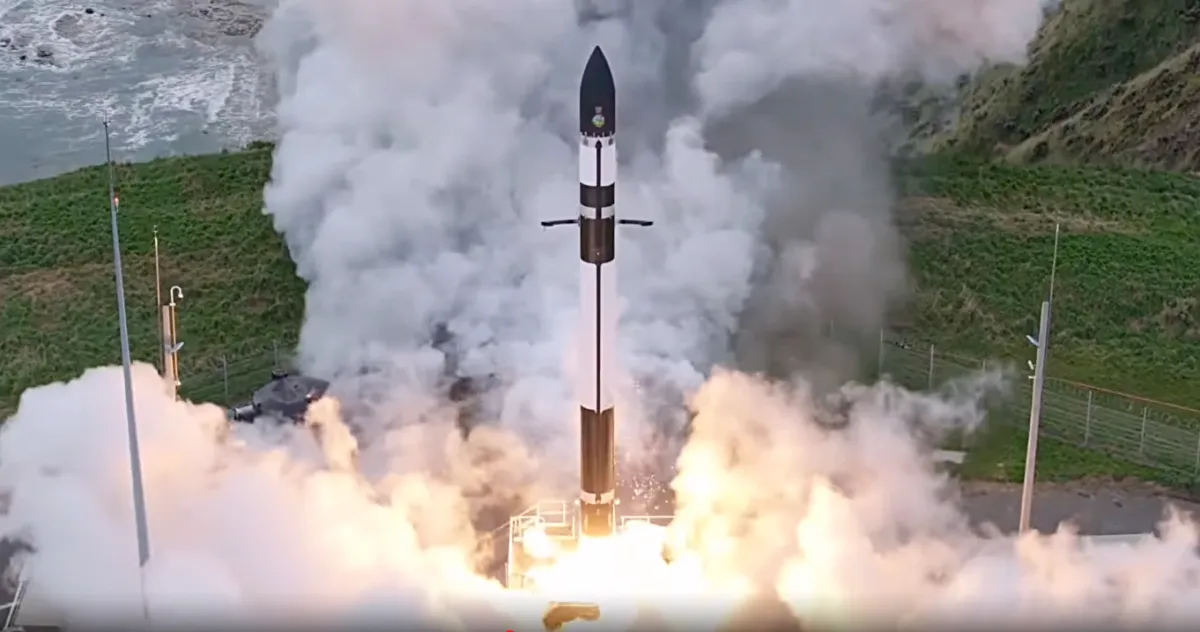
Rocket Lab successfully deployed a synthetic aperture radar satellite for Japanese operator QPS Institute. The Electron rocket lifted off from Launch Complex 1 in New Zealand, carrying the QPS-SAR-15 payload nicknamed “The Wisdom God Guides.” This mission marks the company’s final launch of 2025, expanding a constellation designed for high-resolution imaging regardless of weather or daylight conditions.
The satellite features a deployable antenna measuring 18 square meters in orbit. This structure enables radar imagery at resolutions down to 46 centimeters per pixel in spotlight mode. QPS Institute plans a 36-satellite network to achieve revisit times under 10 minutes globally. The system supports applications in disaster monitoring, agriculture, and infrastructure management.
Electron performed nominally with first-stage separation and second-stage ignition occurring on schedule. The kick stage separated the payload into a 560-kilometer circular orbit. Rocket Lab recovered the first stage booster via parachute for potential reuse analysis. This flight represents the 58th Electron mission overall.
QPS-SAR-15 joins four operational predecessors launched previously by Rocket Lab. The constellation utilizes X-band radar for all-weather penetration and rapid data delivery. Ground stations in Japan process imagery with turnaround times under one hour for priority requests. This capability addresses gaps in optical satellite coverage during cloud cover or nighttime.
The launch window opened at 06:36 UTC with favorable weather conditions reported. Rocket Lab achieved its 12th mission of 2025, maintaining high cadence for small satellite operators. Electron’s dedicated launch model avoids rideshare constraints faced by larger providers. This flexibility supports precise orbital insertions for constellation phasing.
Industry demand for radar imagery continues growing amid climate and security needs. Synthetic aperture systems provide consistent data unavailable from visible-light sensors. QPS Institute secured funding rounds exceeding $200 million for full deployment. Partnerships include data resale agreements with international distributors.
Rocket Lab’s Mahia Peninsula site enables polar and sun-synchronous orbits efficiently. The company’s Neutron medium-lift rocket remains in development for larger payloads starting in 2026. Electron continues serving the 100-300 kilogram class market segment.
This deployment advances Japan’s commercial remote sensing capabilities. The constellation targets daily global coverage upon completion in the late 2020s. Operational satellites have demonstrated imaging of moving targets and change detection algorithms.
Market analysts project sustained growth in small launch vehicles through dedicated missions. Rocket Lab reported over 200 satellites launched across its program history. The QPS partnership highlights recurring customer relationships in Asia-Pacific region.
The successful insertion validates Electron’s reliability metrics exceeding 95 percent across recent flights. Post-mission data review confirms payload separation and initial communications establishment. This concludes Rocket Lab’s most active annual launch campaign to date.