OpenAI Unveils Screenless AI Device Prototype


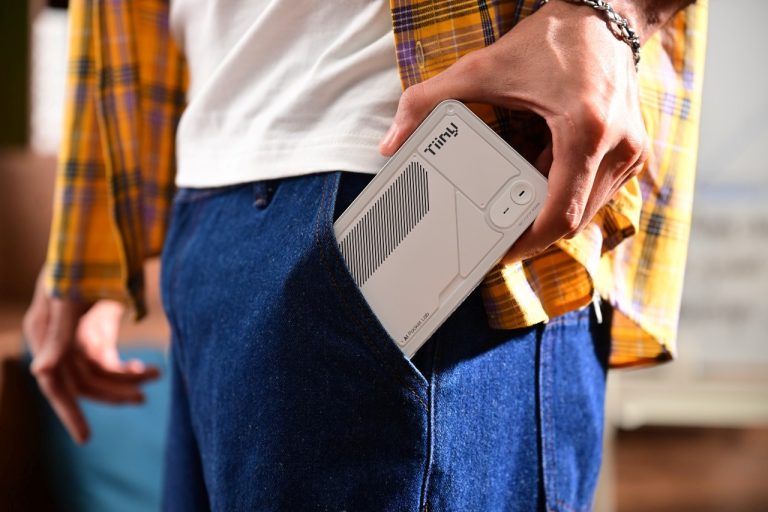
Sam Altman, CEO of OpenAI, has revealed details of a new AI hardware prototype designed to counter the distractions of modern smartphones. The pocket-sized device, developed in partnership with former Apple designer Jony Ive, operates without a screen to promote a sense of calm and focus. Altman described it as feeling like “sitting in the most beautiful cabin by a lake in the mountains,” a deliberate shift from the notification-driven frenzy of devices like the iPhone.
The prototype emerges from OpenAI’s recent acquisition of Ive’s design startup, io, which specializes in hardware innovation. Ive, known for shaping Apple’s aesthetic during his tenure as chief design officer, emphasized the device’s simplicity as its core strength. At a recent event, he confirmed the product will launch within two years, positioning it as a trusted companion that integrates seamlessly into daily life.
Unlike traditional gadgets, the device relies on contextual awareness to deliver information proactively, without user prompts or visual interruptions. Altman highlighted its potential to filter out irrelevant stimuli, allowing autonomous task handling over time. He contrasted this with the iPhone, which he called the “crowning achievement of consumer products” but critiqued for fostering constant engagement through apps and alerts.
The collaboration between OpenAI and Ive’s team focuses on building user trust through intuitive interactions. Early prototypes demonstrate a naive yet sophisticated interface that requires no manual navigation. This approach aims to restore balance in an era where technology often overwhelms, with Ive noting the device’s “vibe” as peaceful and unassuming.
OpenAI’s move into hardware signals a broader industry trend toward AI-centric devices that prioritize well-being over connectivity. The company, valued at over $150 billion following recent funding rounds, has invested heavily in multimodal AI models like GPT-4o to power such innovations. Analysts predict this prototype could disrupt the wearables market, currently dominated by firms like Apple and Google.
Development details remain limited, but the device incorporates advanced natural language processing for voice and gesture inputs. It processes environmental cues to anticipate needs, such as scheduling reminders based on location data. Security features include on-device encryption to protect user privacy, aligning with OpenAI’s commitments under evolving AI regulations.
Ive’s involvement brings Apple’s precision engineering to AI hardware, potentially setting new benchmarks for ergonomics. The prototype’s form factor measures approximately 4 inches in length, fitting easily into pockets without adding bulk. Battery life targets extend beyond 24 hours of continuous use, supported by efficient edge computing.
Market reception has been positive among tech insiders, who view it as a response to growing concerns over screen addiction. Studies from the American Psychological Association indicate that excessive device use contributes to anxiety in 40% of U.S. adults under 35. OpenAI aims to address this through design that encourages mindful engagement.
Competitors like Humane and Rabbit have attempted similar screenless AI pins, but faced challenges with accuracy and adoption. OpenAI’s deeper integration with large language models could provide an edge, enabling more reliable real-time assistance. The device supports third-party app ecosystems via API, allowing developers to extend functionality.
As production scales, manufacturing will occur in facilities across Asia and the U.S., creating an estimated 500 jobs in software engineering. Pricing details are undisclosed, but Altman suggested affordability to reach mainstream consumers. This launch underscores OpenAI’s evolution from software pioneer to full-stack tech provider.
The prototype’s emphasis on serenity reflects broader cultural shifts toward digital minimalism. In surveys by Pew Research, 72% of Americans express desire for less intrusive tech. OpenAI’s device positions itself as a solution, blending cutting-edge AI with human-centered design principles.