Nuclear Bombs Could Help Deflect Asteroids to Protect Earth

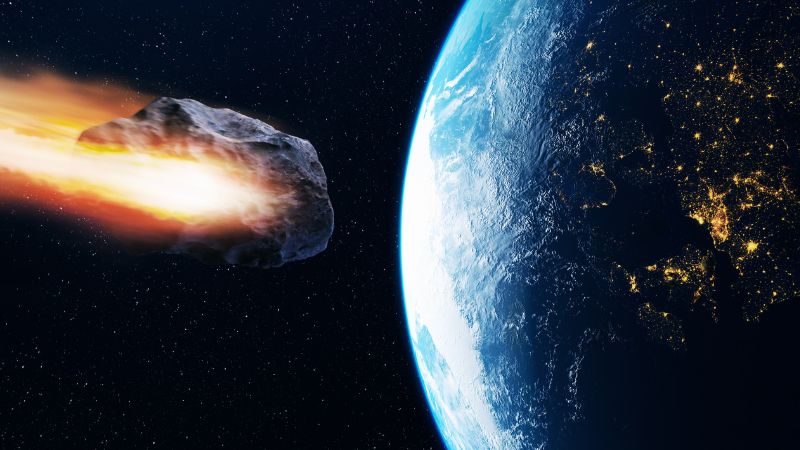
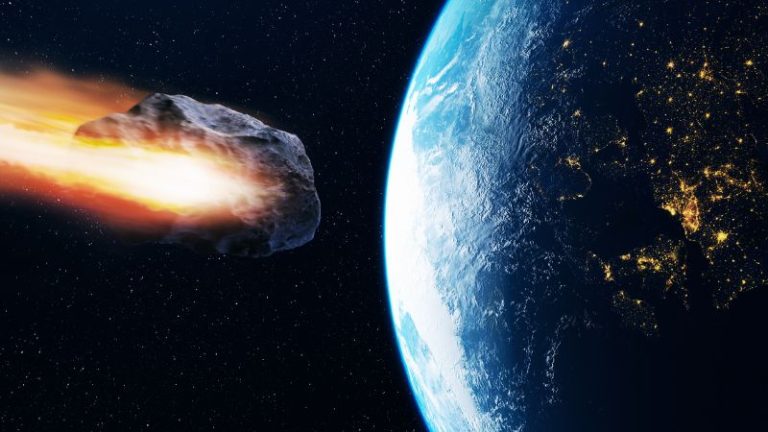
Asteroid impacts that could devastate the planet remain rare yet undeniably real threats from space. Events like the 2013 Chelyabinsk meteor explosion serve as stark reminders of what could happen on a larger scale. When astronomers spot a dangerous object heading our way with enough advance warning, several deflection strategies come into play. Among them, launching a nuclear explosive stands out as a powerful last-resort option to alter its path.
The biggest worry with nuclear deflection has always been fragmentation. A massive asteroid could shatter into many smaller but still hazardous pieces instead of shifting course as one intact body. New laboratory work, however, suggests that certain asteroids can handle far more energy than earlier models predicted. Researchers at CERN used the Super Proton Synchrotron accelerator to test these ideas in a controlled setting.
Scientists selected a sample from the iron-rich Campo del Cielo meteorite for the experiments. They fired intense proton pulses at it to mimic the shock waves a nuclear detonation would create near an asteroid. Surprisingly, the material held together much better than expected and absorbed the energy without breaking apart catastrophically. These results show that metallic asteroids possess greater structural strength than previously thought.
This discovery opens promising possibilities for planetary defense. In scenarios with limited warning time, mission planners could apply stronger forces without fearing uncontrolled breakup. Nuclear options might therefore prove more effective and reliable against metal-rich threats than kinetic impacts alone. The findings were recently detailed in Nature Communications by the research team.
Beyond defense applications, the tests offer valuable clues about the early Solar System. Materials like those in the Campo del Cielo sample formed deep inside ancient protoplanets. Studying how they respond to extreme stress helps reveal processes that shaped planet formation billions of years ago. Future experiments will target rockier asteroid compositions to broaden the insights.
Space missions complement these lab results by revealing asteroid structures in real conditions. NASA and JAXA probes have shown that many near-Earth objects are loosely bound rubble piles rather than solid rocks. The upcoming close approach of asteroid Apophis on April 13, 2029, will provide an ideal natural laboratory. Earth’s gravity during that flyby will stress the object and let scientists observe any surface changes or shifts in its spin.
Combining accelerator data with observations of actual asteroids gives experts the precise information needed for future deflection missions. Metallic bodies appear tougher, while rubble-pile types may require gentler nudges over longer periods. Nuclear explosives could play a crucial role when time is short and the threat is metallic. Ongoing research continues refining these strategies to keep our planet safe.
What do you think about using nuclear devices for asteroid deflection – promising solution or risky gamble? Share your thoughts in the comments.