
Northvolt Files for Chapter 11 Bankruptcy as CEO Peter Carlsson Resigns

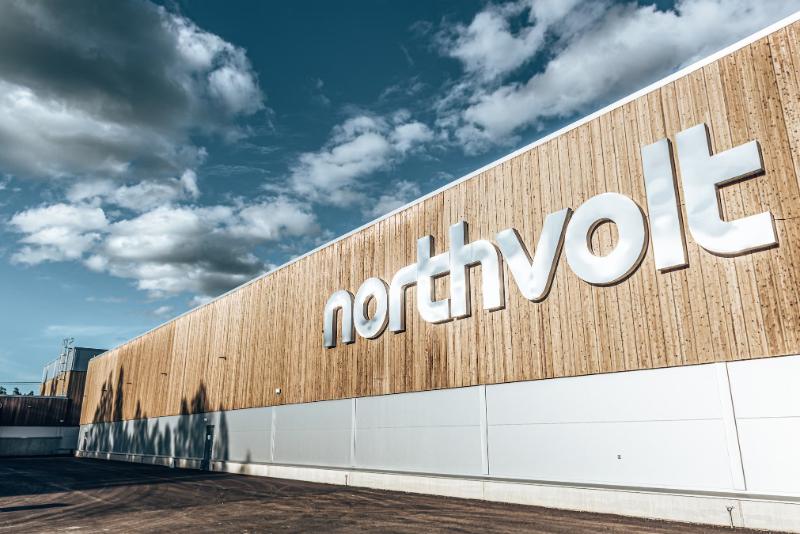
Europe’s ambition to establish an independent electric vehicle battery supply chain suffered a catastrophic collapse this week as Northvolt AB filed for Chapter 11 bankruptcy protection in the United States. The filing, submitted to the U.S. Bankruptcy Court for the Southern District of Texas, reveals a company in desperate financial peril, holding only $30 million in cash reserves against a staggering $5.8 billion in debt. Co-founder Peter Carlsson announced his immediate resignation as CEO, transitioning to a senior advisory role while the company attempts to navigate the restructuring process. The move follows months of severe production failures at its flagship Skellefteå facility, where the manufacturer struggled to ramp up battery cell yields to profitable levels, burning through capital at an unsustainable rate.
The bankruptcy proceedings expose the deep operational bottlenecks that plagued the Swedish manufacturer’s “Northvolt Ett” gigafactory near the Arctic Circle. Despite raising over $15 billion in equity and debt since its inception in 2016, Northvolt failed to master the complex chemical and mechanical processes required to mass-produce lithium-ion cells at automotive-grade quality. Company filings indicate that manufacturing yields—the ratio of usable batteries to scrap—remained persistently low, creating a “production hell” scenario where the cost of goods sold far exceeded revenue. This technical failure was compounded by an aggressive expansion strategy that saw the company attempting to launch additional facilities in Germany and Canada before its primary Swedish plant had achieved stable operations.
The financial tipping point arrived after a series of commercial setbacks, most notably the cancellation of a $2.1 billion supply contract by BMW in June. The German automaker, an early investor in Northvolt, was forced to pivot back to Asian suppliers like Samsung SDI after Northvolt missed multiple delivery deadlines. In the court documents, Northvolt officials admitted that the liquidity crisis had become so acute by November that the remaining $30 million in cash was sufficient for only one week of operations. Without immediate intervention, the company would have been unable to pay its 6,600 employees or maintain the safety systems at its chemical plants.
To maintain operations during the restructuring, Northvolt has secured $100 million in debtor-in-possession (DIP) financing from Scania, its largest customer and a subsidiary of the Volkswagen Group. This lifeline is part of a broader $245 million collateral package designed to stabilize the business through the first quarter of 2025. The financing allows the Skellefteå plant and the Northvolt Labs in Västerås to continue production, ensuring that critical vendors are paid and that the company can attempt to fulfill remaining orders. However, the restructuring will likely result in significant downsizing, adding to the 1,600 jobs already cut in Sweden earlier this year as the company sheds non-core assets and halts expansion projects.
The collapse represents a significant geopolitical setback for the European Union, which had championed Northvolt as its primary bulwark against Chinese dominance in the green energy sector. Northvolt’s brand promise—to produce the “world’s greenest battery” using renewable hydroelectric power—ultimately could not compete with the brutal cost efficiency and mature supply chains of Chinese giants like CATL and BYD. Industry analysts estimate that Chinese battery cells remain approximately 30% cheaper than their European counterparts, a price gap that has widened as global EV demand cools. The failure highlights the immense difficulty of building a vertically integrated battery industry from scratch in a high-cost economic environment without the massive state subsidies seen in Asia.
Looking ahead, the company faces a grueling path to solvency that will require renegotiating billions in liabilities and finding new strategic investors willing to bet on a turnaround. While Volkswagen has expressed intent to support the restructuring, the German automaker is grappling with its own historic factory closures and cost-cutting measures, complicating the potential for a full bailout. The court-supervised process aims to emerge with a leaner operational footprint, likely sacrificing the planned gigafactories in Heide, Germany, and Montreal, Canada, to save the Swedish core. For now, the dream of a sovereign European battery ecosystem remains on life support, dependent on American bankruptcy protections and emergency loans to survive the winter.