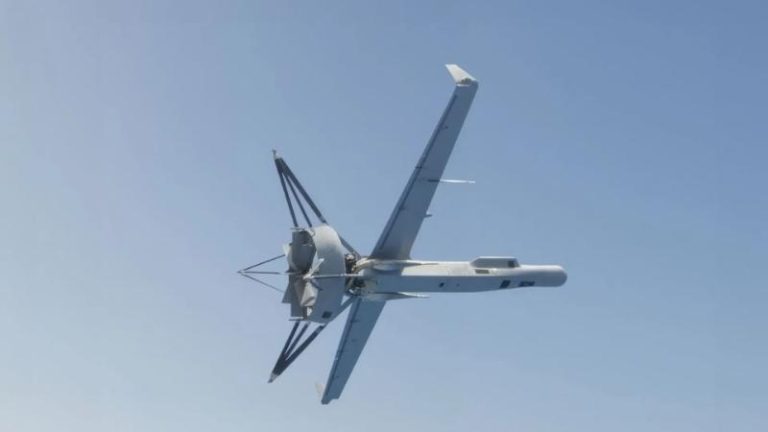
Northrop Grumman Unveils Project Talon Autonomous System


Northrop Grumman has launched Project Talon, an advanced autonomous system designed to accelerate the delivery of unmanned capabilities to U.S. forces amid escalating global threats. The initiative integrates decades of expertise in robotics and sensor fusion to deploy operational prototypes within 24 months, bypassing traditional multi-year acquisition cycles. This move positions the defense contractor at the forefront of rapid prototyping, enabling commanders to counter peer adversaries with swarms of low-cost, attritable drones.
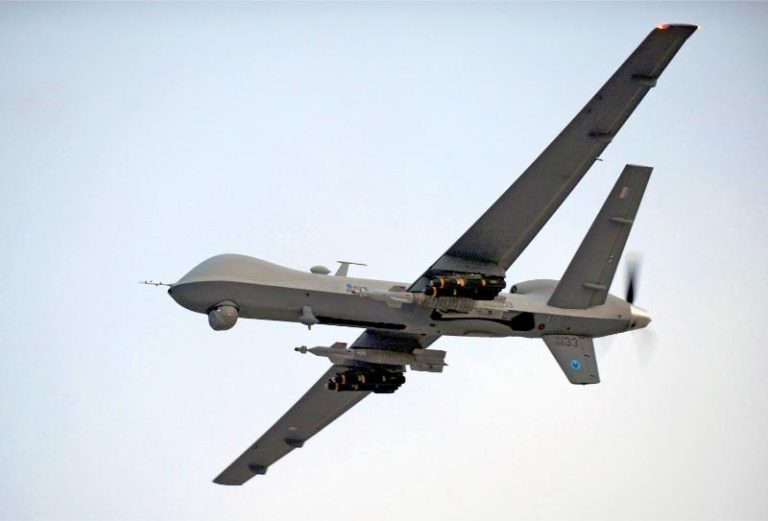
Project Talon builds on Northrop Grumman’s existing portfolio of uncrewed systems, including the RQ-4 Global Hawk and MQ-4C Triton high-altitude platforms. The new system employs modular payloads for intelligence, surveillance, and reconnaissance missions, with AI-driven autonomy for real-time decision-making in contested environments. It supports integration with joint all-domain command and control architectures, allowing seamless data sharing across air, sea, and ground assets.
The announcement came during the Reagan National Defense Forum, where Northrop Grumman CEO Kathy Warden outlined the project’s alignment with Pentagon priorities for speed and innovation. Warden emphasized leveraging commercial off-the-shelf components to reduce costs by up to 40 percent compared to legacy programs. The system undergoes initial testing at White Sands Missile Range, focusing on swarm coordination algorithms that enable 50-unit formations to evade electronic warfare jamming.
This development responds to congressional mandates under the National Defense Authorization Act, which allocate $1.2 billion for autonomous systems in fiscal 2026. Northrop Grumman anticipates initial operational capability by late 2027, with scalability to produce 200 units annually through partnerships with suppliers like Raytheon and Lockheed Martin. The project incorporates cybersecurity protocols compliant with NIST SP 800-171, ensuring resilience against supply chain vulnerabilities.
Project Talon’s dual-use potential extends to disaster response, where autonomous fleets could map wildfires or deliver supplies over 500 miles. The initiative draws from lessons in Ukraine, where drone attrition rates exceeded 80 percent, informing designs for rapid replacement via 3D-printed components. Northrop Grumman’s order backlog now stands at $91.5 billion, bolstered by Talon-related contracts valued at $450 million.
Warden highlighted acquisition reform as key, noting delays in programs like the B-21 Raider have eroded U.S. edges. Project Talon employs agile methodologies, with quarterly sprints for software updates via over-the-air deployments. It integrates with the Golden Dome missile defense shield, providing forward sensors for hypersonic threat detection at ranges beyond 1,000 kilometers.
The U.S. Air Force leads evaluation, with plans to field Talon variants on carrier strike groups by 2028. This accelerates the shift from manned to unmanned operations, projecting a 30 percent reduction in pilot exposure risks. Northrop Grumman invests $250 million internally, matching federal outlays to refine machine learning models trained on petabytes of flight data.
Broader implications include workforce upskilling, with 5,000 engineers reassigned to autonomy labs in California and Maryland. The project aligns with the Department of Defense’s Replicator initiative, aiming for mass production of decoy systems to overwhelm enemy defenses. As tensions rise in the Indo-Pacific, Talon enhances deterrence through persistent presence without escalating human costs.
This unveiling signals a pivot toward software-defined warfare, where updates rival consumer tech cycles. Northrop Grumman’s approach could inspire competitors, fostering an ecosystem of interoperable drones under the Pentagon’s Chief Digital and Artificial Intelligence Office. Stakeholders anticipate Talon setting benchmarks for future solicitations, driving efficiencies across the $886 billion defense budget.