New Research Suggests Uranus and Neptune Are ‘Rocky Giants’, Not Ice Giants

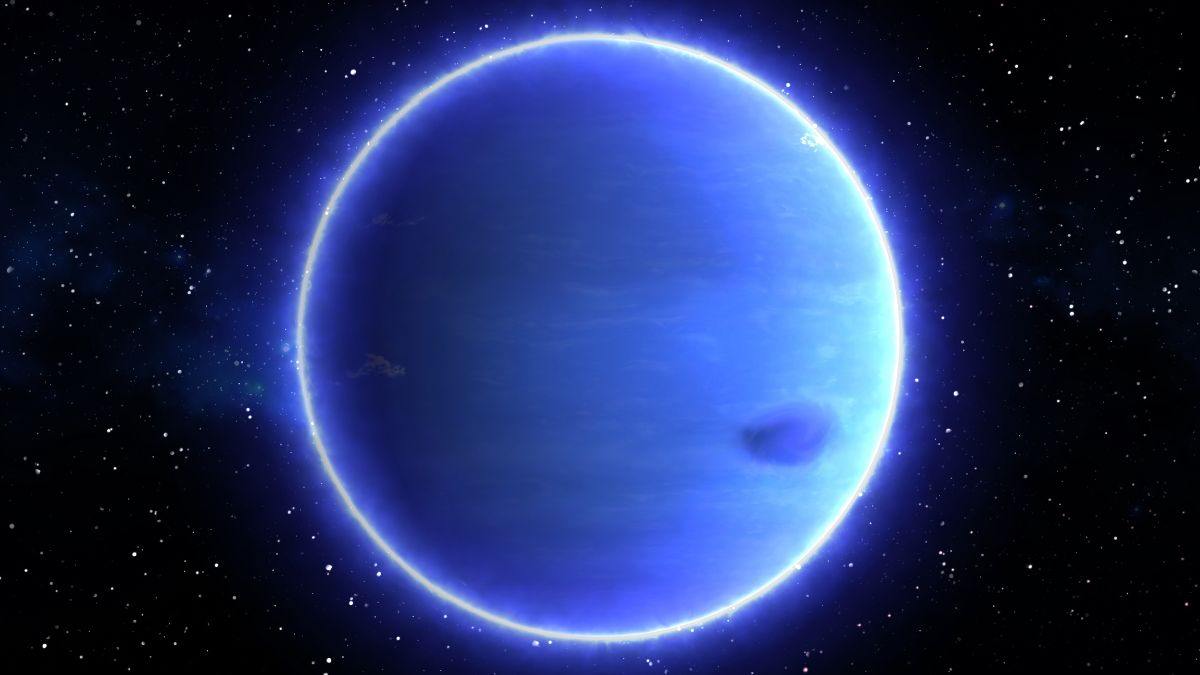
For decades, astronomers have classified Uranus and Neptune as “ice giants,” assuming they consist primarily of frozen water, ammonia, and methane. This distinction separated them from the gas giants Jupiter and Saturn, as well as the rocky terrestrial planets like Earth. However, a new study is challenging this long-held belief, proposing that these distant worlds might be far rockier than we ever imagined.
Researchers from the University of Zurich recently published findings that suggest these planets could actually be dominated by rock rather than ice. By using advanced simulations to model the internal structure of both planets, the team discovered that a rock-heavy composition fits the available data just as well as the traditional icy models.
Lead author Luca Morf and his team developed a new way to analyze the planets’ interiors without relying on rigid, pre-existing assumptions. Their models indicate that Uranus and Neptune could have rocky cores much larger than previously estimated, potentially burying any ice deep beneath a massive envelope of hydrogen and helium.
If these planets are indeed “rocky giants,” it would fundamentally change our understanding of how the outer solar system formed. The study also offers a potential solution to the mystery of their strange magnetic fields, which are misaligned and chaotic compared to Earth’s.
The researchers believe that layers of ionic water or similar conductive materials within a rocky interior could be generating these unique magnetic signatures. This theory provides a better explanation for the data captured by the Voyager 2 probe during its flybys in the 1980s.
Despite these compelling new simulations, definitive proof remains elusive because we haven’t sent a mission to these planets in over thirty years. Scientists argue that a dedicated orbiter is necessary to map their gravitational fields and finally determine what lies beneath their clouds.
Until a new spacecraft arrives, we are left to wonder if our textbooks need a major revision regarding the composition of our solar system’s neighbors.
We would love to hear if you think space agencies should prioritize a new mission to these distant planets, so please share your thoughts in the comments.