
NASA’s Perseverance Rover Identifies Ancient Beach Formations in Jezero Crater

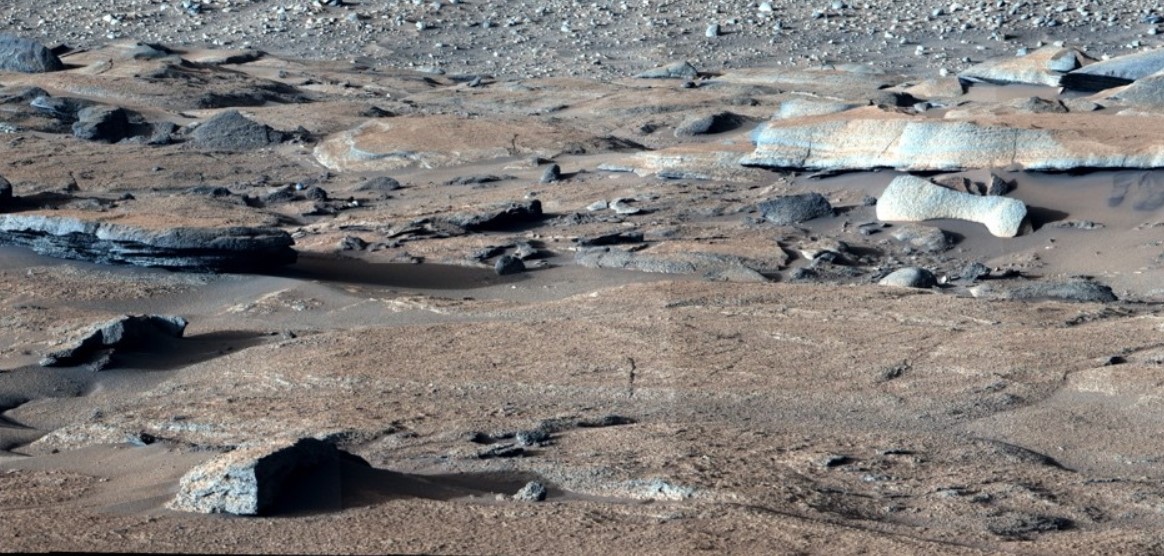
The search for ancient life on the Red Planet has taken a significant leap forward with new findings from the surface. NASA’s Perseverance rover has uncovered clear evidence of ancient shorelines within the massive Jezero Crater. These geological features suggest that water was present for a much longer period than previously estimated. Scientists are now confident that this region once hosted a stable and life-supporting environment.
A team led by researchers at Imperial College London analyzed the data to confirm these findings. PhD student Alex Jones spearheaded the study that focused on a geological formation known as the Margin unit. Previous theories debated whether these rocks were volcanic or sedimentary in origin. The new high-resolution imagery proves that these structures are actually deposits formed by water activity. This settles a long-standing geological mystery about the history of the crater.
The rover sent back detailed images showing curved rock layers that mirror Earth’s coastal geography. Scientists identified specific patterns that can only be created by the rhythmic motion of waves. This confirms that the water in Jezero was not just a stagnant pond. It was a dynamic body of water with active currents that shaped the landscape over millennia.
The presence of carbonate minerals makes this specific site a high-priority target for astrobiology. These minerals precipitate from water and are excellent at trapping delicate organic structures. On Earth, similar environments are teeming with life and often leave behind rich fossil records. If microbial organisms ever swam in the Martian waters, their chemical signatures are likely hiding here.
This evidence challenges the idea that Mars only had brief or chaotic episodes of water. The existence of a well-defined beach implies a climate that was warm and wet for an extended era. Such stability would have provided a much better habitat for life to flourish compared to transient floods. It paints a picture of a planet that looked remarkably similar to Earth in its distant past.
Perseverance has successfully collected three distinct rock samples from this intriguing beachfront location. These cores are packed with potential scientific data that could rewrite our understanding of the solar system. The mission plan originally intended to bring these samples back to Earth for laboratory analysis. Recent budget constraints have cast doubt on the future of the return mission. The rover continues to transmit vital data that preserves the legacy of this discovery.
Share your theories on what kind of life might have existed on these ancient Martian beaches in the comments.