NASA’s MAVEN Orbiter Loses Contact at Mars

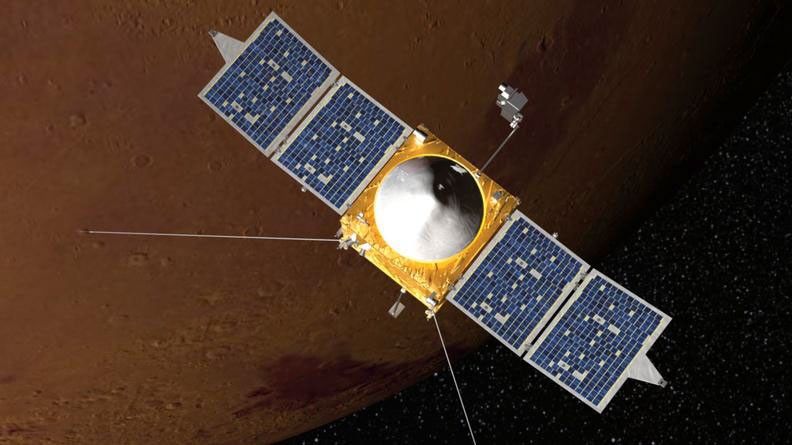
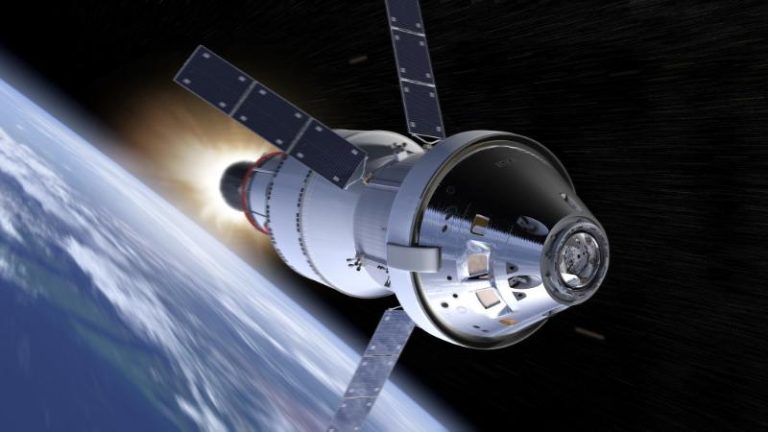
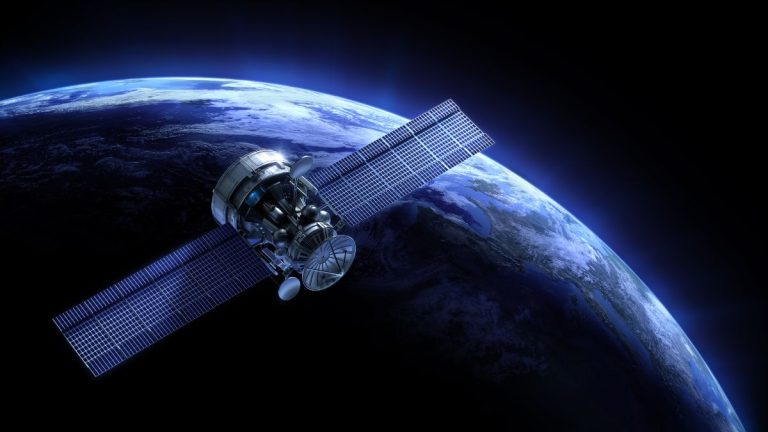
NASA has lost communication with its ‘MAVEN’ spacecraft orbiting Mars since December 4, raising concerns about the mission’s future operations. The orbiter, launched in 2013, studies the Martian upper atmosphere and its interaction with solar wind. Engineers detected a faint signal on December 6 indicating unexpected rotation and possible orbit changes. Recovery efforts continue, but the spacecraft remains silent as of recent updates.
‘MAVEN’ entered safe mode prior to the blackout, triggering automated protective measures. The anomalous spin suggests attitude control issues, potentially from thruster malfunctions or software glitches. Mission controllers at NASA’s Jet Propulsion Laboratory monitor for further signals during daily tracking passes. The probe’s high-gain antenna may not align properly due to the rotation, complicating recovery.
The spacecraft has exceeded its primary mission duration, providing over a decade of data on atmospheric escape processes. ‘MAVEN’ revealed how Mars lost much of its atmosphere, transforming from potentially habitable to arid. It supported relay communications for surface rovers like Perseverance. Extended operations included deep-dip campaigns reaching lower atmospheric layers for detailed measurements.
Loss of ‘MAVEN’ would impact ongoing Mars exploration coordination. The orbiter serves as a backup relay alongside NASA’s older Mars Reconnaissance Orbiter and Mars Atmosphere and Volatile EvolutioN trace gas orbiter from ESA. Recent data transmissions remain intact up to the incident. Engineers explore commands to stabilize orientation and restore full functionality.
The issue highlights challenges of long-duration deep space missions. Solar conjunction periods, when Mars aligns behind the Sun from Earth’s view, temporarily halt commands to avoid interference. ‘MAVEN’ emerged from such a period before the anomaly. Similar incidents affected other Mars orbiters in the past, with varying recovery outcomes.
NASA prioritizes diagnostic telemetry if contact resumes. The spacecraft carries sufficient propellant for attitude adjustments, estimated at several years remaining. Fuel depletion scenarios were planned for controlled deorbit, but current status remains uncertain. Mission extension approvals supported operations through fiscal year 2025.
Data from ‘MAVEN’ informed models of planetary evolution across the solar system. It detected metal ions in the ionosphere and auroral displays driven by solar activity. Collaboration with international partners enhanced coverage of global dust storms and seasonal changes. Archival datasets will continue yielding insights regardless of outcome.
Recovery attempts involve progressively aggressive commands to reset systems. The team draws from experience with past anomalies on Mars missions. ‘MAVEN’ instruments include a magnetometer, mass spectrometer, and imaging ultraviolet spectrograph. All were operational before the event.
This incident occurs amid NASA’s active Mars portfolio, including sample return planning and human exploration preparations. ‘MAVEN’ contributed to understanding radiation environments for future crewed missions. Engineers remain optimistic about reestablishing contact given the faint signal detection.
The spacecraft’s design incorporates redundancy for critical systems. Power generation from solar arrays appears nominal based on limited telemetry. Orbital parameters may have shifted slightly due to drag or thruster activity. Ground simulations aid in predicting behavior for targeted recovery.
NASA provides updates through mission channels as developments occur. The event underscores the resilience required for interplanetary science. ‘MAVEN’ has transmitted over 100 terabits of data throughout its tenure. Ongoing analysis preserves its scientific legacy.