NASA Astronauts Can Now Take Their Own Smartphones Into Space

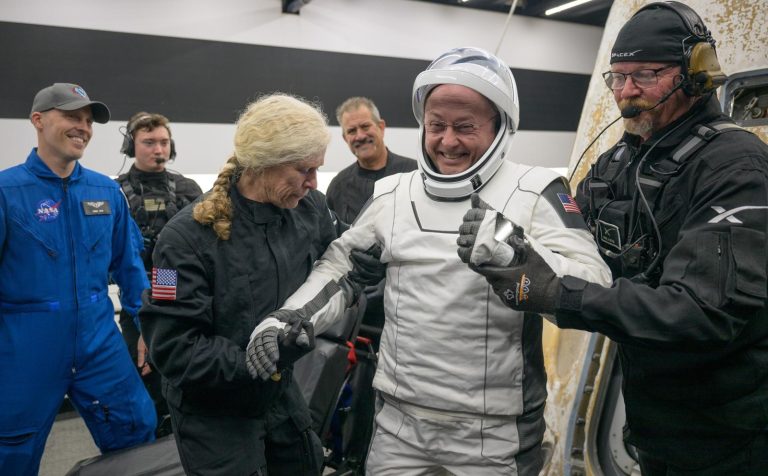
Get ready for space photos that feel a lot more personal. NASA has approved a rule change that will let its astronauts bring their own smartphones on missions beyond Earth. The policy kicks in starting with Crew-12 and Artemis II, which means everyday iPhone and Android devices will be part of the official flight environment. For people watching from home, it could add a new layer of spontaneity to how spaceflight is documented.
Crew-12 is expected to head to the International Space Station soon, while Artemis II has been pushed to March. Artemis II is the long awaited mission that aims to send astronauts around the Moon for the first time since the Apollo era. With phones in their pockets, crews can capture moments quickly without needing to plan around dedicated camera hardware. That might translate into more candid views inside the spacecraft and more real time storytelling.
NASA leadership is framing this as a mix of morale and outreach. Jared Isaacman at NASA wrote on X, “We are giving our crews tools to capture special moments for their families and to share inspiring images and video with the world.” That idea is simple but powerful, because a phone camera is what most people use to record their own lives. Putting that same tool in orbit could make the experience feel more relatable.
It also opens the door to a different kind of astronaut media presence. Astronauts already share photos and short clips, but smartphones make it easier to grab wide angle video, snap quick selfies, and record informal updates. People are already joking about zero gravity TikTok moments, and it is not hard to imagine the internet running with it. Even if the content stays professional, the style may feel less staged.
What is almost as interesting as the phones themselves is how quickly NASA moved to qualify them. Isaacman pointed to the internal shift, writing, “It is equally important that we challenged long standing processes and qualified modern hardware for spaceflight on an accelerated timeline.” Government flight rules tend to move slowly for a reason, and space hardware usually goes through long cycles of testing and certification. A faster approval suggests NASA is trying to cut friction where it can without lowering safety standards.
Spaceflight is unforgiving, and even small failures can cascade. That is why introducing any new consumer tech is a careful decision, especially when batteries, radios, and software are involved. Until now, the newest cameras routinely flown were older Nikon DSLR bodies and GoPro cameras, according to TechCrunch. Those are still capable systems, but they do not offer the same all in one convenience as a modern phone. A smartphone combines a solid camera, editing tools, and a familiar interface in a single device.
The creative difference matters more than it might seem. A DSLR setup is great for planned shots, but it can be bulky and often requires specific lenses, mounts, and workflow steps. A phone encourages fast experimentation, quick framing, and immediate review, which can lead to images no one thought to capture. If a surprising lighting effect appears in a cupola window, an astronaut can record it in seconds. That kind of responsiveness could make upcoming missions feel more vivid to the public.
This is not the first time smartphones have gone to space, but the context is new. SpaceX has already allowed phone use on its private astronaut flights, showing that consumer devices can be managed in a controlled space environment. NASA adopting a similar approach signals growing confidence in modern electronics and in procedures that keep them safe. It also reflects how much cameras have improved in the last decade, with computational photography doing a lot of heavy lifting automatically.
Isaacman also tied the change to broader mission goals, writing, “That operational urgency will serve NASA well as we pursue the most valuable science and exploration in orbit and on the surface of the Moon.” Phones will not replace specialized scientific instruments, but they can support the mission in practical ways. A quick photo of a setup, a short video of a procedure, or a clear image for troubleshooting can save time. Even when the goal is inspiration, better documentation can help teams on the ground learn from what crews experience.
For readers who want a bit of context, NASA’s crewed missions today often involve the International Space Station, a laboratory about 250 miles above Earth that circles the planet roughly every 90 minutes. Artemis is NASA’s program focused on returning humans to the Moon and building experience for future deep space travel. Astronaut photography has always been a big part of connecting those missions to the public, from Apollo film cameras to modern digital systems. Smartphones are simply the next step in that evolution, and their familiar form factor could change the tone of space imagery in a noticeable way.
What do you think this smartphone green light will change most, the quality of the photos, the immediacy of updates, or the way astronauts share their daily life in space, and why?