James Webb Telescope Detects Strongest Evidence of Atmosphere on Rocky Exoplanet

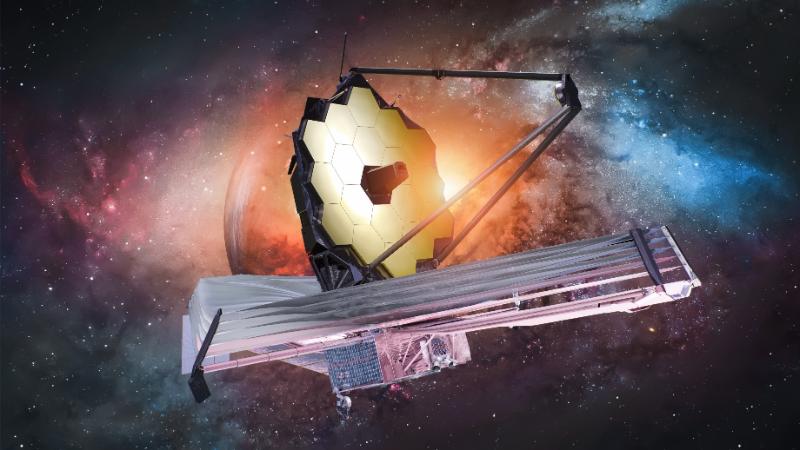
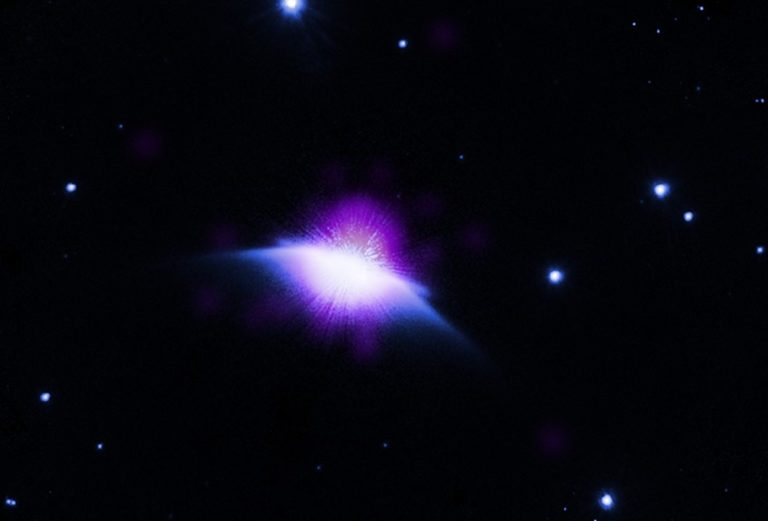
Astronomers achieved a breakthrough in exoplanet research by identifying the most compelling signs yet of an atmosphere surrounding a rocky world beyond the solar system. The James Webb Space Telescope observed the super-Earth designated ’55 Cancri e’, located 41 light-years away in the constellation Cancer. This planet, roughly twice Earth’s size and nine times its mass, orbits extremely close to its host star, completing a revolution every 18 hours.
Data from Webb’s Near-Infrared Camera and Mid-Infrared Instrument revealed carbon monoxide and carbon dioxide in the planet’s potential atmosphere. These gases indicate a dynamic envelope that replenishes itself against the intense stellar radiation stripping material away. The planet’s surface reaches temperatures around 3100 degrees Fahrenheit, likely forming a magma ocean beneath the gaseous layer.
Researchers described the world as resembling a ‘wet lava ball’ due to its volatile-rich composition. Observations showed the dayside facing the star maintains consistent heat, suggesting atmospheric circulation distributes energy efficiently. The atmosphere appears thick relative to the planet’s rocky core, with thickness estimates reaching hundreds of kilometers.
This detection marks the first robust evidence of an atmosphere on a rocky exoplanet, surpassing prior tentative findings. Previous studies of similar worlds detected only bare rock surfaces or thin vapor layers. The presence of carbon-bearing molecules rules out a completely stripped planet and opens pathways to studying secondary atmospheres formed after initial accretion.
The host star, a cool red dwarf, provides stable illumination for repeated observations. Webb’s instruments captured thermal emissions directly from the planet, bypassing the need for transit spectroscopy in this case. Multiple transits yielded high-signal data, enabling precise molecular identification.
Scientists caution the atmosphere remains tentative pending further confirmation. Upcoming observations aim to detect additional species like water vapor or methane. The planet’s extreme conditions offer insights into terrestrial world evolution under intense irradiation.
This milestone advances the search for habitable exoplanets by demonstrating techniques applicable to cooler, Earth-like targets. Future missions may target systems with longer orbital periods for signs of temperate atmospheres. The findings highlight Webb’s role in characterizing diverse planetary architectures.
Industry experts note the discovery validates investments in infrared spectroscopy for exoplanet atmospheres. Data processing involved advanced modeling to separate planetary signals from stellar contamination. International teams collaborated on the analysis, publishing results across multiple papers.
The observation campaign spanned several months, accumulating hours of telescope time. Results align with theoretical predictions for magma ocean planets outgassing volatiles. This class of worlds bridges gaps between gas giants and smaller rocky bodies.
Ongoing monitoring tracks potential variability in atmospheric composition. The planet’s proximity enables detailed follow-up unavailable for distant targets. Researchers emphasize the need for diverse samples to understand atmospheric retention mechanisms.
This development strengthens prospects for identifying biosignatures on rocky exoplanets in habitable zones. Webb continues surveying high-priority targets selected for atmospheric potential. The super-Earth provides a benchmark for interpreting future detections.