Interstellar Comet 3I/ATLAS Completes Closest Earth Approach

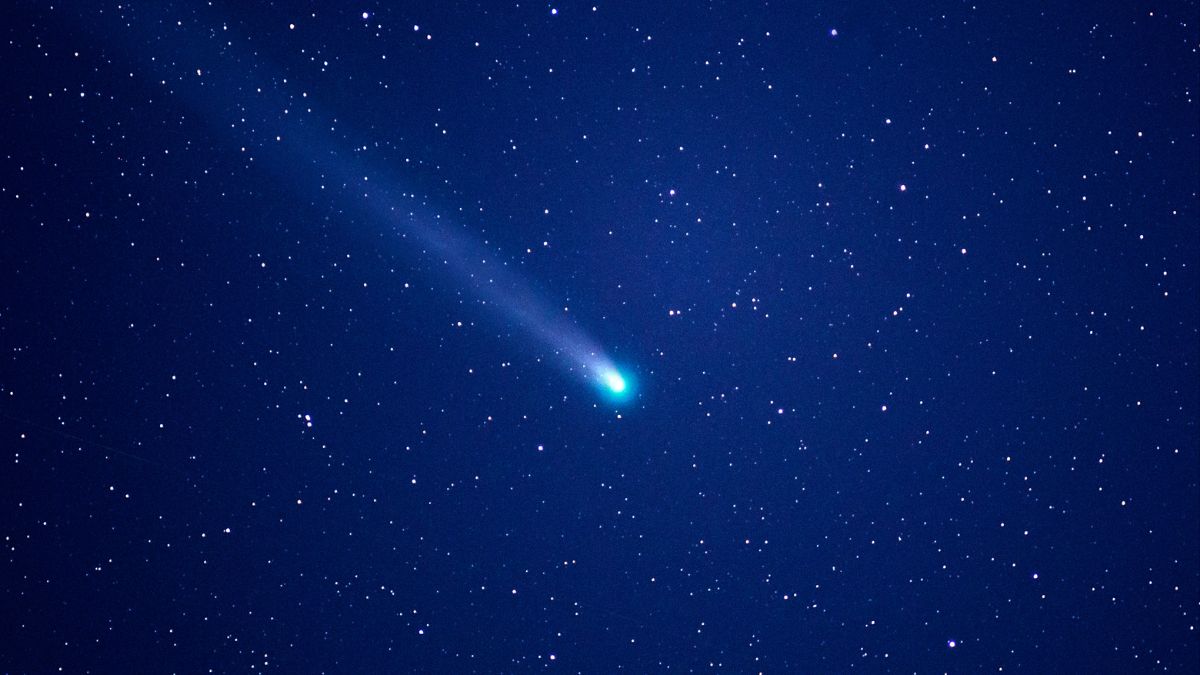
An interstellar comet originating outside the solar system has reached its nearest point to Earth, marking a rare close encounter with an object from another star system. Designated 3I/ATLAS or C/2025 N1 (ATLAS), the comet passed approximately 168 million miles from Earth during the early hours of December 19, 2025 UTC. This distance ensured a safe flyby while providing astronomers optimal viewing conditions for study. Discovered on July 1, 2025, by the Asteroid Terrestrial-impact Last Alert System, it represents the third confirmed interstellar visitor after 1I/’Oumuamua and 2I/Borisov.
The comet achieved perihelion, its closest solar approach, in October 2025 before swinging outward. Observations captured outgassing activity, including oxygen, hydrogen, and dust emissions, indicating high volatility post-perihelion. Instruments on spacecraft like NASA’s Mars Reconnaissance Orbiter and Europa Clipper gathered data during the flyby phase. Ground-based telescopes and the Virtual Telescope Project offered livestreams, enabling public observation despite the comet’s faint visibility requiring binoculars or telescopes under dark skies.
Estimated size ranges from 1,400 feet to 3.5 miles based on Hubble Space Telescope data. The hyperbolic trajectory confirmed its interstellar origin, with velocity exceeding solar escape speed. This event allowed detailed spectral analysis of primordial material from another stellar system. Researchers noted viral public interest driven by timing and social media amplification.
The flyby yielded insights into cometary composition and interstellar medium interactions. No collision risk existed, as the path remained well outside Earth’s orbit. Post-approach, 3I/ATLAS accelerates toward the outer solar system, eventually exiting permanently. This marks the final close observation opportunity for this visitor.
Astronomers continue analyzing data to refine models of interstellar object formation and delivery. The event highlights advancements in survey systems detecting such transients. Future missions may target similar objects for in-situ study, though current technology limits interception capabilities. This close approach underscores the dynamic nature of solar system boundaries.