Incredible Runaway Black Hole Rushes Through Space And Leaves Life Behind

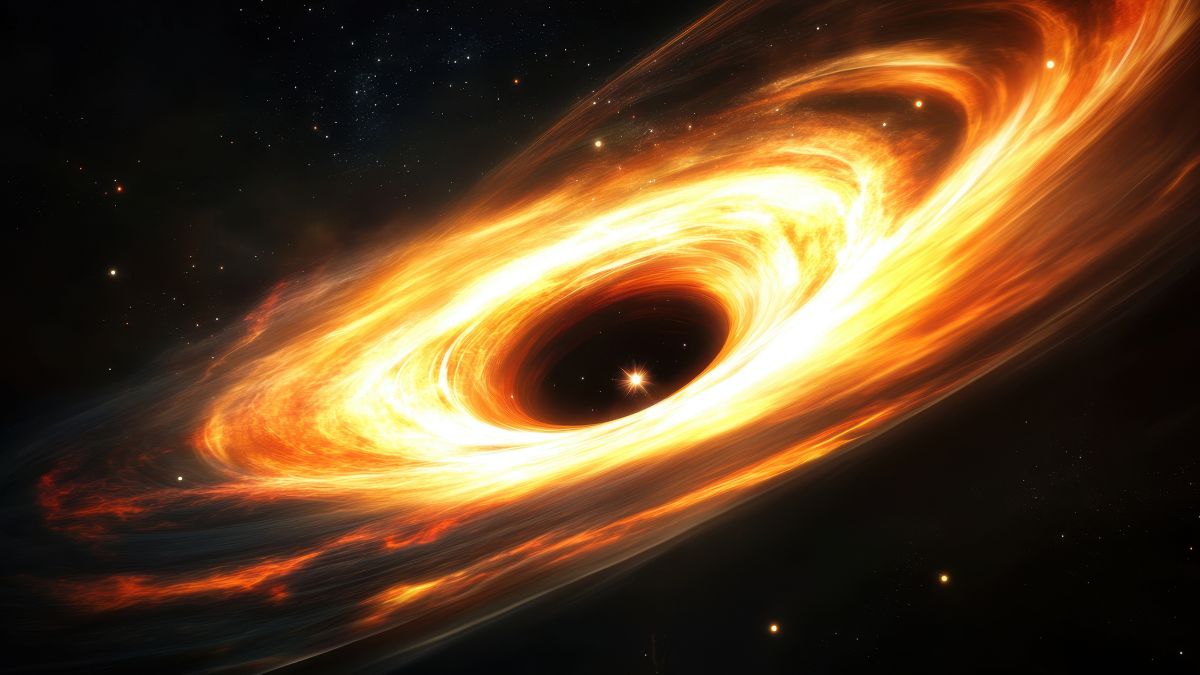
NASA astronomers utilizing the Hubble Space Telescope have uncovered a rare cosmic event that challenges our understanding of the universe. They identified a supermassive black hole that is speeding through the intergalactic medium. This invisible monster is leaving a massive trail of newborn stars in its wake rather than destroying everything. The object weighs roughly twenty million times the mass of our sun. It defies the common perception of black holes as purely destructive forces.
The trail of stars stretches across a staggering two hundred thousand light years of space. This formation is twice the width of the Milky Way galaxy and shines with intense brightness. It consists of young blue stars that formed from compressed gas during the transit. The black hole is moving too fast to consume the matter in front of it. The gas strikes the object and cools down to create new celestial bodies immediately.
Pieter van Dokkum of Yale University was the lead researcher on this accidental discovery. He was originally looking for globular star clusters in a nearby dwarf galaxy when he scanned the data. He noticed a strange streak in the images that did not fit with known astronomical features. Van Dokkum first assumed the line was a cosmic ray artifact or a flaw in the camera. He stated that it looked remarkably like a scratch on the image.
Follow up spectroscopy confirmed that the streak was indeed a physical part of space connected to the galaxy. The researchers concluded it was the aftermath of a black hole flying through gas. The movement creates a shockwave similar to the wake of a ship moving through the ocean. This wake heats the gas and causes it to collapse into star formations. The team published their findings to highlight this unique mechanism of star birth.
The story of this runaway object involves a chaotic interaction between three massive black holes. Two galaxies likely merged about fifty million years ago and brought two black holes together. These two objects settled into a binary orbit around each other. A third galaxy eventually arrived and disrupted the gravitational balance of the system. One of the black holes was violently ejected from the host galaxy.
The speed of the ejected black hole is truly astronomical and difficult to comprehend. It travels fast enough to go from Earth to the Moon in only fourteen minutes. This velocity is four thousand times faster than sound travels through our atmosphere. The other two black holes were likely sent shooting off in the opposite direction. This left the original galaxy without an active central black hole.
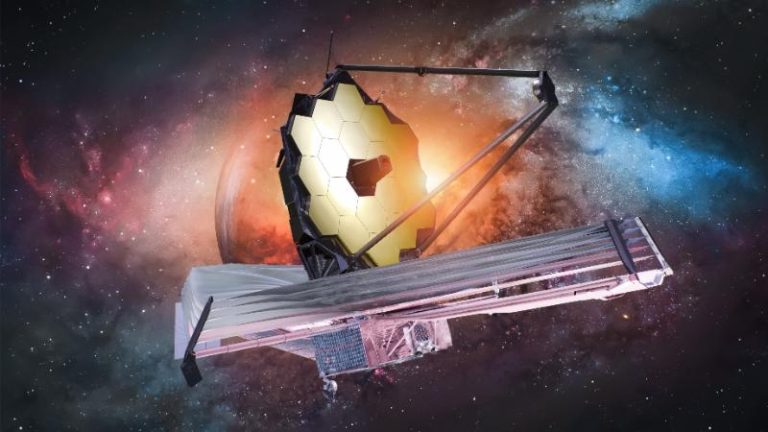
Scientists believe this discovery is just the tip of the iceberg for such events. The upcoming Nancy Roman Space Telescope will help astronomers scan the sky for more star streaks. The James Webb Space Telescope and the Chandra X Ray Observatory will also be used for further study. These instruments will help confirm the complex dynamics of the three black holes. Seeing this process helps explain how galaxies evolve over billions of years.
Please let us know what you think about this runaway cosmic creator in the comments.