High Concentrations of Organic Matter on Mars Suggest Possible Biological Origins

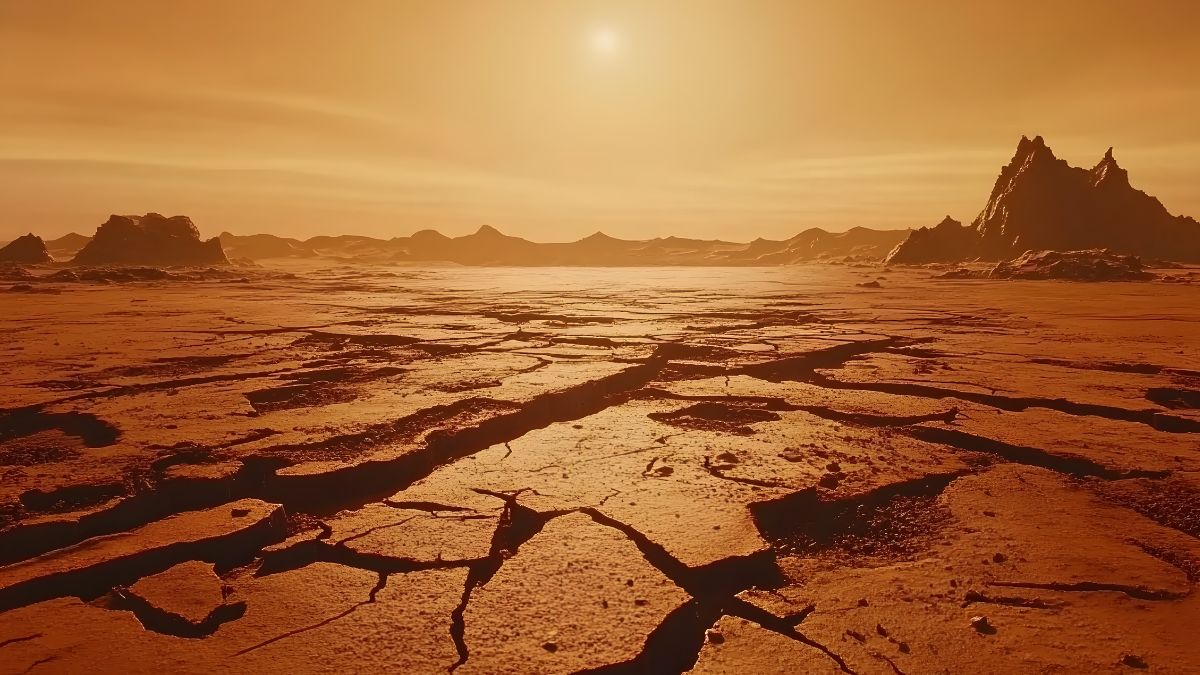
Recent analyses from samples collected by the Curiosity rover in Mars’s Gale Crater have uncovered remarkably high levels of complex organic molecules. These findings include saturated hydrocarbons known as alkanes, which stand out as some of the largest organic compounds detected on the Red Planet so far. Researchers believe these could be remnants of fatty acids preserved in ancient mud deposits from billions of years ago. Such discoveries naturally spark excitement about the potential for past life on Mars.
Back in March 2025, scientists first revealed the presence of these alkanes through the rover’s onboard chemical lab. On Earth, fatty acids are mostly produced by living organisms, though certain geological processes can create them too. Initially, the data from Curiosity left room for debate about whether these molecules came from biological or non-biological sources. To dig deeper, a follow-up study examined common abiotic origins, like organic material delivered by meteorites hitting the planet.
The latest research, published recently in the journal Astrobiology, combined clever techniques to get a clearer picture. Teams ran laboratory experiments simulating radiation exposure, built mathematical models, and incorporated real field data from Mars. This approach allowed them to essentially rewind time by about 80 million years, accounting for the destruction caused by cosmic rays on the surface. Their calculations estimated that the original rocks held between 120 and 7,700 parts per million of long-chain alkanes or fatty acids before degradation set in.
These estimated concentrations far exceed what typical non-living processes could reasonably produce on ancient Mars. For instance, meteorite deliveries and other chemical reactions fall short of explaining such abundance. This gap makes a biological explanation not just possible, but a scientifically valid hypothesis worth pursuing seriously. Still, the researchers stress that more work is needed to pin down exact degradation rates under Martian conditions.
It’s important to approach these results with caution and rigor. As the famous astronomer Carl Sagan once put it, extraordinary claims require extraordinary evidence. Any suggestion of life on another world demands multiple independent lines of confirmation through strict astrobiological standards. Right now, the data offers compelling hints but stops short of definitive proof.
The extreme environment on Mars, with its intense radiation and harsh chemistry, complicates preserving organic signatures over eons. Future missions and studies will focus on better understanding how these molecules interact with the planet’s surface over time. This could refine our models and bring us closer to answering whether life ever existed there. Discoveries like these keep pushing the boundaries of what we think is possible in our solar system.
What continues to captivate scientists is how these organics survived at all in such a hostile setting. The Gale Crater itself was once a lake bed, potentially habitable billions of years ago when water flowed freely. Preserved fragments in mudstones hint at a richer chemical history than previously imagined. Ongoing rover explorations and sample return plans will be crucial for unlocking more secrets.
These findings reopen big questions about Mars’s past and the origins of life beyond Earth. They remind us how much there is still to learn about our neighboring planet. Each new piece of data builds on decades of exploration, from early orbiters to today’s advanced rovers. The search for signs of ancient biology remains one of the most thrilling pursuits in science.
Share your thoughts on whether these organic discoveries could finally point to past life on Mars in the comments.