China’s Pioneering Quantum Satellite Micius Disintegrates

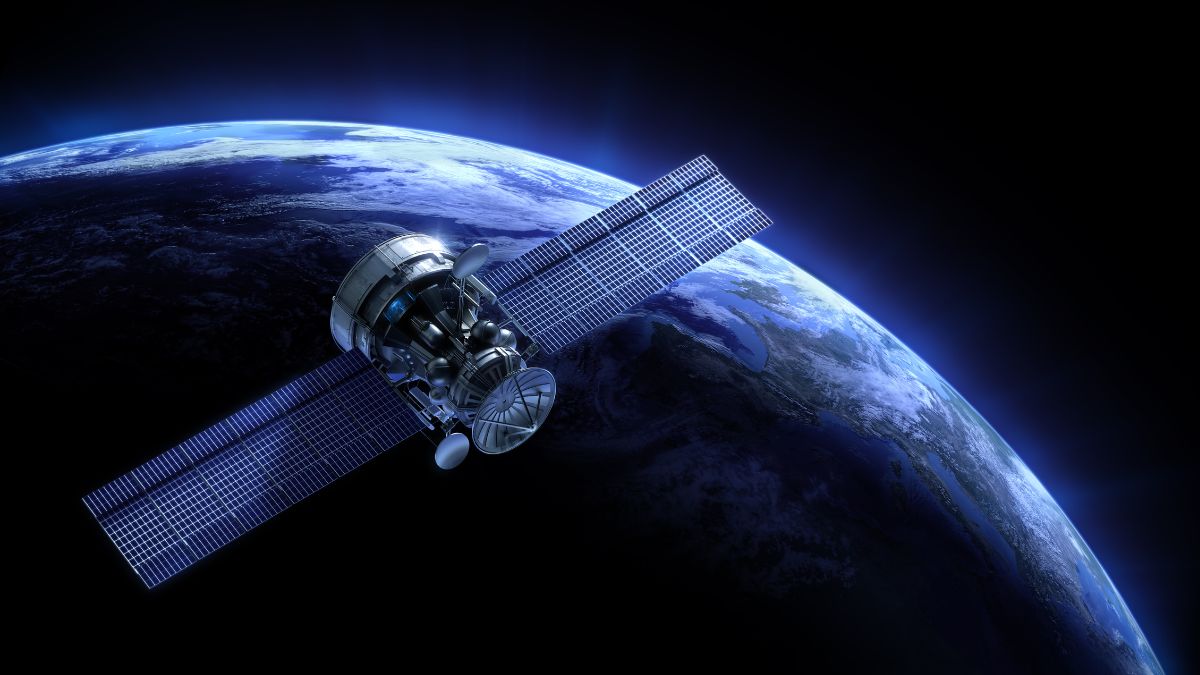
China’s groundbreaking quantum satellite known as Micius has left orbit and disintegrated. The popular tracking platform N2YO confirmed that the spacecraft is no longer active among thousands of others it monitors. Launched nearly a decade ago, Micius marked a major milestone in space-based quantum experiments. Its end came on January 25 after years of successful operation.
The satellite took off on August 15, 2016, from the Jiuquan Satellite Launch Center in China. Scientists named it after the ancient Chinese philosopher Mozi, whose Latinized name is Micius. The mission focused on proving that quantum communication could work reliably over vast distances from space. This technology promises completely secure message transmission that cannot be intercepted without detection.
Micius carried out several key experiments during its time in orbit. It achieved quantum key distribution between space and ground stations farther apart than any prior Earth-based tests. Researchers in China built dedicated receiving stations for these trials. Partners at the University of Vienna and the Austrian Academy of Sciences operated European ground facilities to capture the signals.
One notable test involved laser communication with the Tiangong-2 space laboratory module. These efforts showed that quantum entanglement and key sharing could function across hundreds of miles. The results opened the door to future global networks for unhackable data exchange. Military, financial, and corporate users could benefit greatly from such ultra-secure channels.
China has already moved forward with a follow-up mission. In July 2022, the country launched the Jinan-1 satellite using a Lijian-1 rocket, also from Jiuquan. This newer spacecraft continues demonstrating space-to-ground quantum communication capabilities. It builds directly on the foundation laid by Micius and keeps the research momentum going.
The loss of Micius highlights the natural lifecycle of low-Earth orbit satellites. Without ongoing propulsion, atmospheric drag gradually pulls them downward until they burn up. Tracking services like N2YO provide real-time updates that help confirm these events. The satellite’s controlled end poses no reported risk to people or property on the ground.
Quantum communication remains a fast-evolving field with huge potential. Space-based systems offer advantages over fiber-optic lines for long-range security. Successful tests by Micius proved the concept works in real conditions. Ongoing projects worldwide now aim to expand these networks for practical use.
The achievements of this mission continue to influence new developments in the technology. Researchers can study the data collected over years of operation. Future satellites will likely incorporate lessons learned from Micius. Secure global communication edges closer to reality thanks to these early steps.
Share your thoughts on what the end of Micius means for the future of quantum networks in the comments.