BAE Systems Secures $1.7 Billion Navy Contract for Virginia-Class Submarine Construction

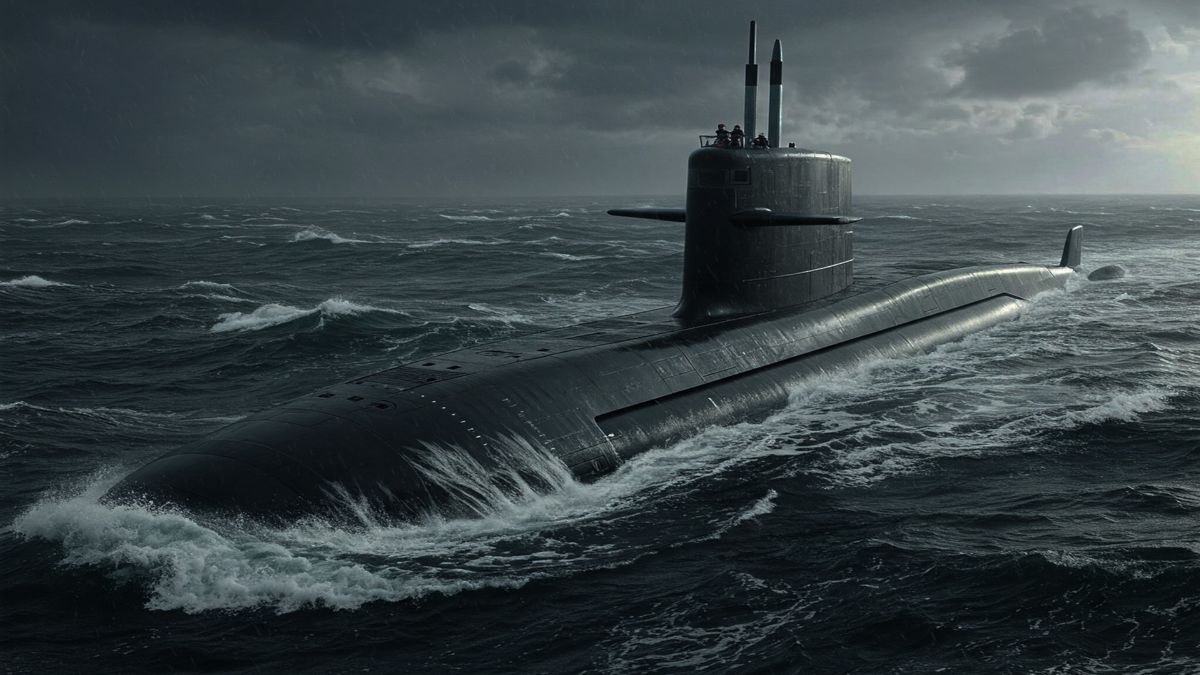
The U.S. Navy awards a major contract to BAE Systems for advancing its submarine fleet, bolstering underwater capabilities amid rising geopolitical tensions in the Indo-Pacific. The deal funds the construction of the final two boats in the Block V configuration of the Virginia-class program, incorporating enhanced payload modules for extended missile strikes. This infusion supports a production rate targeting two submarines annually, addressing a shortfall that has delayed fleet modernization by 18 months since 2023.
BAE Systems, a British defense contractor with U.S. operations in Groton, Connecticut, will integrate the Virginia Payload Tube system, adding four large-diameter tubes to accommodate up to 28 Tomahawk cruise missiles or future hypersonic weapons. Each 7,800-ton submarine features an acoustic quieting hull with advanced anechoic coatings reducing sonar detectability by 40 percent compared to Seawolf-class predecessors. The Block V variant extends operational range to 25,000 nautical miles through improved lithium-ion battery prototypes, enabling 33-day submerged patrols at speeds exceeding 25 knots.
The contract, valued at $1.7 billion, splits evenly between BAE and General Dynamics Electric Boat, the program’s co-builder in Groton and Quonset Point, Rhode Island. Under the teaming agreement, BAE handles 27 percent of total Virginia-class work, including reactor compartment fabrication and sail construction using computer-aided design models with 99.9 percent dimensional accuracy. Delivery timelines schedule SSN-802 for 2031 and SSN-803 for 2032, aligning with the Navy’s goal of 66 attack submarines by 2045 to counter China’s projected 80-sub fleet.
This award stems from the fiscal 2025 National Defense Authorization Act, allocating $7.3 billion for nine Virginia-class boats across Blocks IV and V. The submarines employ fly-by-wire controls and photonics masts with electro-optical sensors providing 360-degree situational awareness, replacing traditional periscopes since 2004. Integration of the AN/BQQ-10 sonar suite, featuring conformal array transducers, enhances passive detection ranges to 50 nautical miles against quiet diesel-electric adversaries.
For the Navy’s undersea warfare enterprise, the contract mitigates supply chain risks, including titanium forgings sourced domestically under the Defense Production Act amendments of 2024. BAE’s facilities employ 5,000 workers on the program, with modular construction techniques assembling 80 percent of hull sections off-site to accelerate throughput by 25 percent. The payload enhancements support distributed maritime operations, allowing submarines to launch networked strikes coordinated via the Consolidated Afloat Networks and Enterprise Services backbone.
Technological upgrades include the Common Missile Compartment shared with the Columbia-class ballistic missile submarine, standardizing 87-inch diameter tubes across 12 boats for economies of scale estimated at $2 billion in savings. Crew reductions to 135 personnel per boat incorporate automated damage control systems using fiber-optic sensors monitoring 1,000 hull points in real time. The Navy’s Program Executive Office for Submarines oversees quality through digital twins simulating 10,000 operational scenarios annually.
BAE Systems CEO Charles Woodburn stated in a December 10 release, “This contract reinforces our commitment to delivering cutting-edge capabilities that ensure undersea superiority for decades.” The deal extends BAE’s unbroken streak of submarine contracts since 1997, contributing to a $10.5 billion U.S. order backlog. As peer competitors like Russia’s Yasen-M class achieve 35-knot sprints with pump-jet propulsors, these Virginia enhancements prioritize endurance over speed, with auxiliary systems supporting unmanned underwater vehicle deployments for mine countermeasures.
Broader implications tie into the AUKUS pact, where Australia plans to acquire Virginia-class boats post-2030, fostering trilateral production sharing of propulsor designs. The contract funds R&D for next-generation propulsors achieving 95 percent efficiency, reducing acoustic signatures to 110 decibels at full speed. With 49 Virginias delivered since 2004, the fleet logs 1.2 million steaming hours, underscoring reliability in missions from intelligence gathering to special operations insertions.
This procurement occurs against a $34.5 billion submarine budget in fiscal 2026, representing 12 percent of the Navy’s shipbuilding outlay. Challenges persist in workforce certification, with 2,000 welders trained annually under the Submarine Industrial Base workforce initiative. As the program transitions to Block VI in 2035, incorporating directed-energy weapons for self-defense, the contract positions BAE to capture 30 percent of a $150 billion market through 2040.