Astronomers Confirm Super-Earth in Habitable Zone of Nearby Star


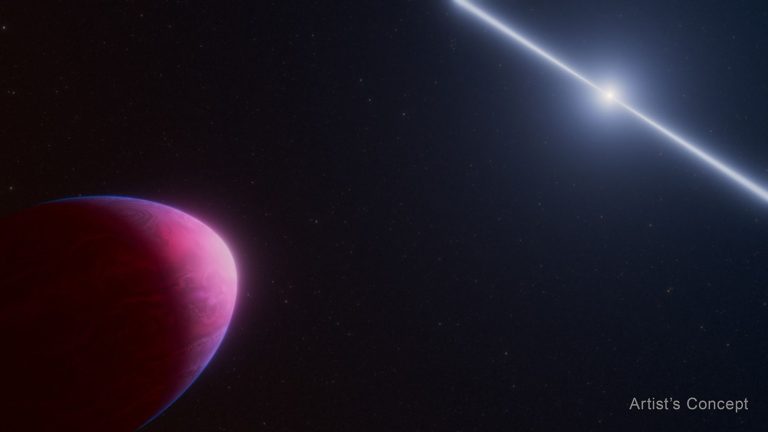
An international team has verified the existence of HD 20794 d, a super-Earth planet orbiting within the habitable zone of a Sun-like star just 20 light-years from Earth. The planet possesses approximately six times Earth’s mass and follows an elliptical orbit that positions it favorably for potential liquid water surface conditions. Initial detection occurred in 2022 using radial velocity measurements from high-precision spectrographs. Subsequent observations solidified the orbital parameters and planetary characteristics.
HD 20794 represents a G-type main-sequence star similar in spectral class and luminosity to the Sun. The system’s proximity enables detailed atmospheric studies with current and upcoming telescopes. Researchers employed data from the HARPS and ESPRESSO instruments to refine the planet’s minimum mass and orbital period of roughly 800 days. This configuration places HD 20794 d within the conservative habitable zone boundaries.
The discovery expands the catalog of nearby potentially habitable worlds beyond the well-studied Proxima Centauri system. Super-Earths in this mass range often feature thick atmospheres capable of retaining heat and volatiles. Models indicate the planet receives stellar flux comparable to Earth’s insolation despite orbital eccentricity effects. Future missions could target it for transmission spectroscopy to detect water vapor or biosignature gases.
Radial velocity techniques detected the gravitational tug on the host star, producing velocity amplitudes of several meters per second. Multiple datasets spanning years ruled out stellar activity mimics. The planet joins a small group of confirmed low-mass worlds in habitable zones around solar analogs. Its distance facilitates high signal-to-noise observations relative to more remote targets.
This finding underscores the prevalence of terrestrial-mass planets around common stellar types. Over 5,500 exoplanets are now confirmed, with habitable zone occupants remaining prime candidates for habitability assessments. HD 20794 d ranks among the closest and most accessible for direct imaging attempts with next-generation instruments. It provides a benchmark for comparative planetology studies.
U.S. astronomers contributed through access to southern hemisphere facilities tracking the star. The verification process involved cross-correlation of independent datasets. Orbital solutions yield low eccentricity compatible with stable climate zones. This super-Earth enhances prospects for characterizing rocky worlds in the solar neighborhood.
Researchers anticipate follow-up with the James Webb Space Telescope for atmospheric constraints. The planet’s equilibrium temperature supports liquid water under appropriate greenhouse conditions. Discoveries like HD 20794 d drive instrumentation development for exoplanet demographics. They inform target selection for life-detection missions in coming decades.