Astronomers Capture Young Version of the Sun Blowing Giant Bubbles

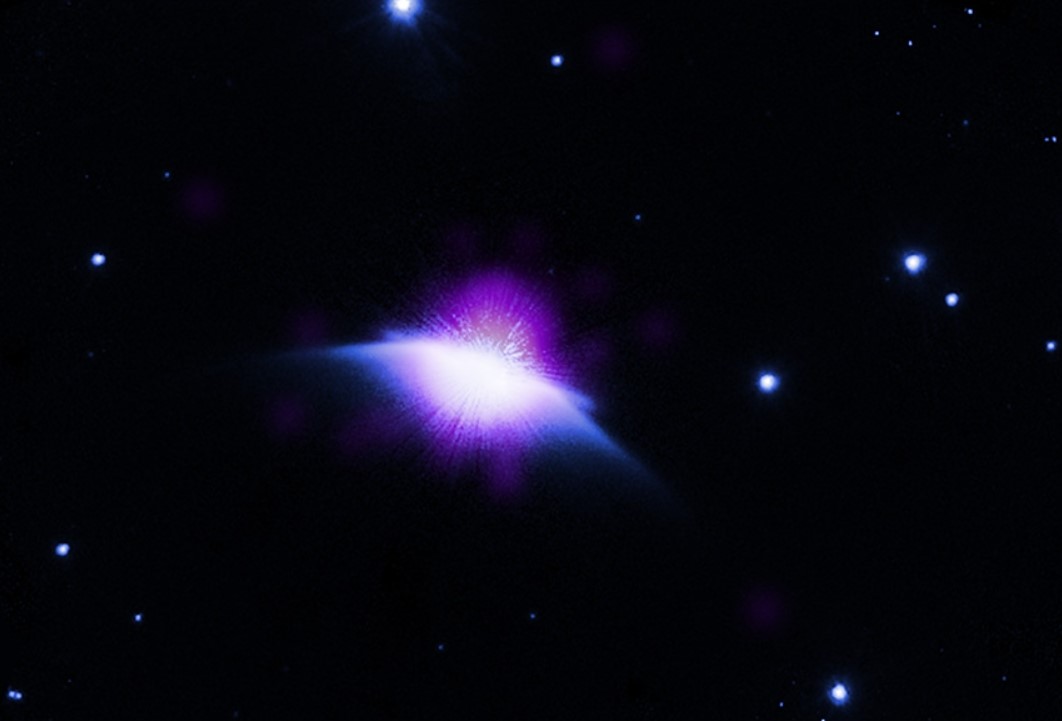
Astronomers have achieved a remarkable feat by capturing the first clear image of a protective bubble surrounding a star remarkably similar to our Sun in its youth. Using NASA’s Chandra X-ray Observatory, they observed the star HD 61005, which lies about 120 light-years away from Earth. This star matches the Sun closely in mass and temperature yet remains far younger at roughly 100 million years old, offering a fascinating window into what our own star was like billions of years ago when it was just getting started.
The structure they imaged is called an astrosphere, essentially a vast bubble of hot gas created as powerful stellar winds from the star slam into the cooler surrounding interstellar medium of gas and dust. These winds push outward, inflating the bubble and filling it with heated material in the process. While our Sun maintains a similar shield known as the heliosphere that safeguards the planets from much cosmic radiation, this marks the first time such a feature has been directly imaged around a Sun-like star beyond our solar system.
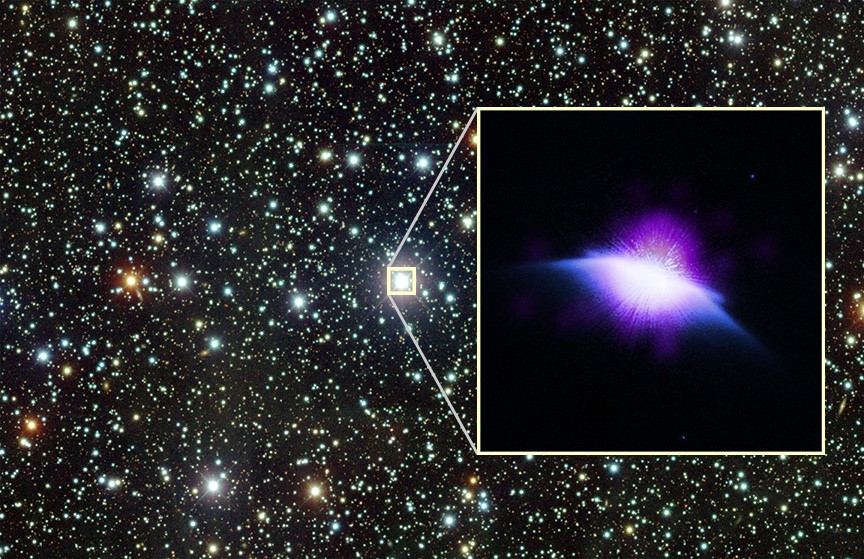
HD 61005 stands out because of its unusually strong stellar winds, which are about 25 times denser and travel three times faster than those from the modern Sun. This intensity dramatically shapes its astrosphere and mirrors the more aggressive activity our Sun likely exhibited in its early days. The surrounding environment also plays a role, with interstellar material around this star proving roughly 1,000 times denser than what our solar system experiences today, contributing to the bubble’s distinct formation and visibility in X-rays.
The astrosphere around HD 61005 spans a diameter approximately 200 times the Earth-Sun distance, which equates to about 18.6 billion miles. In contrast, if our current Sun were placed in such a dense region, its heliosphere would shrink dramatically, perhaps extending only as far as Saturn’s orbit. Conversely, placing HD 61005 in our Sun’s current location would result in an astrosphere roughly ten times wider, highlighting how environment and stellar age influence these protective structures.
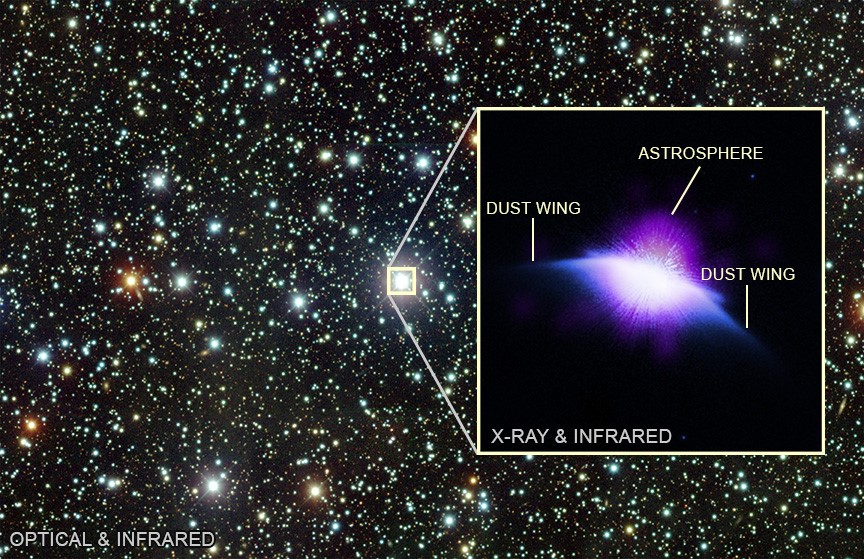
The star has earned the nickname “Moth” due to the striking wing-like pattern of surrounding dust observed earlier with the Hubble Space Telescope. Chandra’s sharp X-ray vision revealed the hot gas emission from the wind collisions, providing concrete evidence of the dynamic processes at work. This breakthrough helps scientists piece together the evolution of stellar winds and astrospheres over time, shedding light on how such bubbles influenced planetary habitability in young systems.
Observations like these deepen our understanding of the Sun’s past behavior and the protective role these bubbles play against galactic hazards. They connect distant cosmic phenomena directly to our home star’s history.
What do you think this discovery reveals about the early days of our solar system? Share your thoughts in the comments.